Wednesday, August 28, 2013

The Grandmaster Review


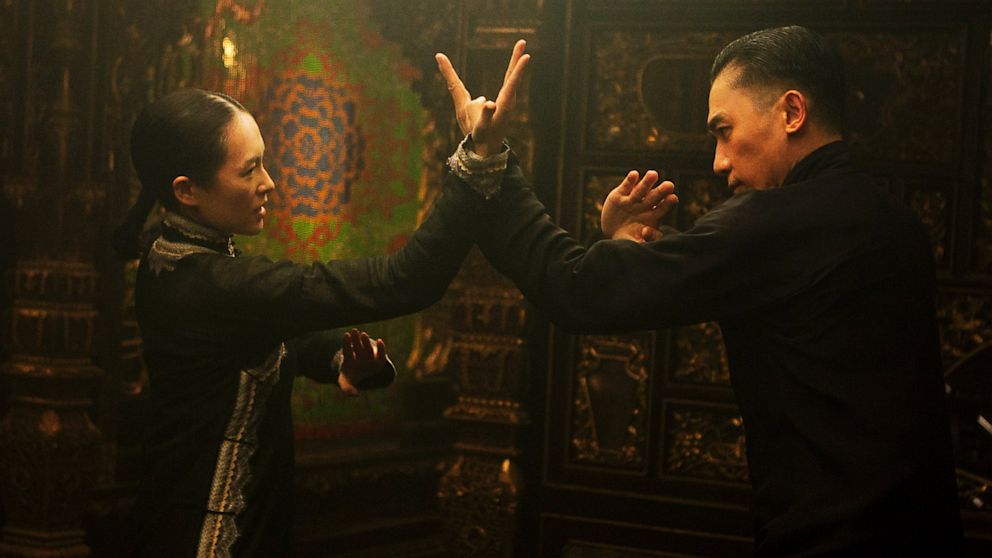
Wong Kar-wai’s “The Grandmaster” is a movie I respect more than I actually like. In this summer of one generic, CGI heavy action movie after another it’s refreshing to see something as graceful and beautiful as Kar-wai’s film, which captures the spirit and style of old fashioned, choreographed martial art movies. There’s no CGI and no buildings are destroyed. What a relief. The picture tells the real life story of legendary martial art master IP Man (Tony Leung), who’s perhaps most known for teaching fellow martial arts icon Bruce Lee. The movie begins in 1930’s Foshan China. The city is split into a northern and southern martial art clans and this first part of the movie follows IP Man’s confrontation with a northern grandmaster Gong Yutian (Qingxiang) and his romantic encounters with Yutian’s daughter Gong Er (Zhang Ziyi, as fierce as always). However, due to the Second Sino-Japanese war IP Man had to flee to Hong Kong, and so the movie picks up in 1950’s where IP Man teaches at a martial arts school.

Aside from this strong sense of Chinese history, the other major factor that informs “The Grandmaster” is a strong appreciation of martial arts. Watching the movie you can tell that Kar-wai has the utmost respect for them, not just for IP Man’s preferred style Wing Chung but for multiple forms and he gives each one its due time. As already stated “The Grandmaster” is a gorgeous film, mainly because it has some of the best looking action in any movie so far this year. Kar-wai uses quick cuts and slow motion (common characteristics of American action movies) but unlike a lot of American action films these days he doesn’t use them to disorient us or make us seasick. Instead, he uses the techniques to emphasize the brutal, fluid beauty of these martial art forms, as well as the intricacy that goes into them. Kar-wai stages them more like ballets than fight scenes. He achieves a gracefulness that’s hardly ever seen in American action movies. This again goes back to this immense appreciation of martial arts apparent in every frame of the picture.

However, probably the best thing about “The Grandmaster” is that even though it is a martial arts movie Kar-wai doesn’t overwhelm us with one fight scene after another. During the opening confrontation—in which we see IP Man face off against a large group of thugs during a heavy rainfall—I rolled my eyes and thought to myself: “Oh great, how many of these are we going to have?” Turns out that’s the only massive confrontation we see. Kar-wai uses the fight scenes sparingly, so we’re not completely exhausted by the end. Each confrontation has some kind of weight or significance behind it and that’s the most effective way to use action in any movie, American or not. And more often than not it’s the non-violent confrontations that leave a greater impression. For example, when IP Man goes to face Yutian we’re expecting a five or six minute fight but instead it turns out to be an exchange of philosophical ideas instead of fists. We don’t see it coming and so it turns out to be far more effective and special than just having the two men duke it out physically.

 Now comes the hard part of this review. While I admired the movie’s craftsmanship it still suffers from one major flaw, which is that Kar-wai doesn’t fully develop IP Man’s character. I have nothing against Leung (who gives a stern and assured performance) but after watching the entire film I didn’t learn very much about IP Man, which is peculiar considering the movie spans two decades or so. Even with this massive time frame, Kar-wai fails to provide us with a comprehensive picture of IP Man’s life and none of the individual chapters of his life that are emphasized feel fully elaborated. On top of that, the narrative (what little there is) relies on far too much voice over narration and information cards. In the end the movie is more about Gong Er (the two encounter each other again in the 1950’s) and her quest to avenge her father’s death and restore honor to her family. That’s all well and good but it’s still told from IP Man’s point of view and so her character doesn’t feel fully established either. I realize that other IP Man movies have come before this one so maybe Kar-wai would have been better off focusing on one specific portion of his life, like when he starts mentoring Bruce Lee.

Wong Kar-wai cut three different versions of “The Grandmaster,” the original Chinese cut is two hours and twenty minutes, the second version (which appeared at the 2013 Berlin International Film Festival) runs two hours and three minutes and finally this version (distributed by the Weinstein Company) is the shortest at an hour and forty eight minutes. I haven’t seen either the Chinese cut or the Berlin Film Festival cut but I think the American version could have benefited from being longer. As it is right now this version is beautifully crafted and I still have respect for what Kar-wai is trying to do, but at the same time it’s lacking in both character development and story telling.

C+

Monday, August 26, 2013

Closed Circuit Review


James Crowley’s “Closed Circuit” takes an icy cold and cynical look at the British government, a government that, in the movie, acts as a powerful, oppressive force capable of carrying out (or covering up) anything they want despite the efforts of even the most determined and honest lawyers (or the British equivalent of a lawyer). There is no defeating them. Or escaping them, for that matter, not with the many closed circuit security cameras perched all around London. As the tagline states: “They see your every move.” Even though Crowley’s film takes place in London and therefore deals with things pertaining to British law, its subject matter (government monitoring of citizen activity) should prove relevant and timely to American audiences, in light of the recent scandals involving the NSA monitoring of emails and phone calls. Although the situation in London appears to be much more extreme, the NSA isn’t monitoring our actions with street surveillance cameras…at least not yet.

However, aside from that real life connection, “Closed Circuit” is a fairly standard conspiracy thriller (structure wise) that’s somewhat intriguing but ultimately undone by uninteresting characters. It starts rather abruptly when a bomb goes off in a populated area of London, followed by a suspect named Farroukh Erdogan (Denis Moschitto) being apprehended. Two lawyers, Martin Vickers (Eric Bana) and Claudia Simmons-Howe (Rebecca Hall) are assigned to his defense. At first everything seems normal, weird things happen now and again (Martin somehow catches the exact same taxi numerous times at different locations around the city) but nothing to get alarmed about.

But then—as they get deeper into the case— the weird happenings start to escalate and it becomes clear that there are mysterious, ominous forces at work, interfering with Martin and Claudia’s work. They soon become paranoid, looking over their shoulders, constantly getting the sensation that they’re being watched. And with all of those security cameras seemingly positioned at every street corner, they are being watched. An unnerving, impending sense of doom pulses through every frame in “Closed Circuit.” While watching it you can’t help but be reminded of the same eerie paranoia felt in other conspiracy movies such as Francis Ford Coppola’s “The Conversation” and Brian De Palma’s “Blow Out.” And like those pictures, “Closed Circuit” has a similar pessimistic ending.

The movie is well made. Jim Clay’s production design is handsome and neat, the cinematography by Adriano Goldman is simple but effective in creating a sense of paranoia, and he photographs the entire movie in a dark blue/greyish light. Crowley moves the picture along at a steady pace and Joby Talbot’s score heightens the eeriness and intrigue. Yet, despite all of this and despite Bana and Hall’s best efforts, “Closed Circuit” fails to create compelling protagonists and therefore we have a hard time getting invested in the movie’s twists and turns. The protagonists in “The Conversation” and “Blow out” (played by Gene Hackman and John Travolta) had an imperfect, everyman quality that made them fascinating to watch. They had personality, but Martin and Claudia come off too clean and one note. They’re good honest lawyers, dedicated to the case…whoop-de-doo. Martin has an estranged son but this matter is hardly ever brought up and so it comes off as a lame attempt at characterization. Also, in an attempt to create some backstory and tension between the two lawyers, we find out early that Martin and Claudia used to be romantically involved with each other. But Crowley and screenwriter Steven Knight don’t really do anything with this development after introducing it. It doesn’t affect anything else in the plot and doesn’t seem to be much of a problem for Claudia and Martin; they can work on the case just fine. And for playing ex lovers Bana and Hall have almost zero chemistry together.

To put it simply, they’re forgettable, ultimately making the entire film rather forgettable and making its other minor flaws more blatant. All of which is a shame considering the movie’s craftsmanship and its relevance to current events.

 C

Friday, August 23, 2013

The Worlds End Review


With “The World’s End,” British director Edgar Wright completes his buddy comedy trilogy (dubbed the “Cornetto” trilogy because Cornetto brand ice cream is seen in each one) that began in 2004 with “Shaun of the Dead” and “Hot Fuzz” in 2007. As far as great comedy movies are concerned, I consider both “Hot Fuzz” and “Shaun” two of the very best comedies around. Aside from their wonderfully zany situations (“Shaun” was a comedy set during a zombie apocalypse and “Fuzz” was an action/cop comedy) and their vulgar but not too vulgar brand of verbal comedy the best thing those movies did was formally introduce American audiences to one of the funniest comedy duos to ever grace the screen: Simon Pegg and Nick Frost. With Pegg as the confident leader and Frost as the oafish sidekick the perfect onscreen comedic chemistry that they create each time is the essence of the Cordetto trilogy. No matter the scenario or the setting (all three of the films are in no way related to each other) they always play buddies and in one way or the other that relationship is always tested. It helps immensely that Frost and Pegg have been friends in real life since childhood. Watching them banter back and forth with one another (in some ways they resemble a modern day Laurel and Hardy) is like watching two real friends having a conversation, and cameras just happen to be rolling. With their impeccable timing, it never feels like they’re giving performances. No matter how ridiculous the scenario is their buddy comedy chemistry always remains authentic, and with Wright in the director’s chair, the trio has been unstoppable.

In many ways “The World’s End” is a meditation on the first two pictures, combining the supernatural element from “Shaun of the Dead” with the seemingly idyllic small town (that’s actually hiding a deadly secret) setting of “Hot Fuzz.” And while “The World’s End” isn’t as strong as “Shaun” or “Fuzz” story wise the comedic interaction between Pegg and Frost is just as great.

Pegg plays Gary King, a man in his early forties who just hasn’t grown up. On the last day of school in his hometown of Newton Haven Gary, along with his chaps, attempted a ritual called The Golden Mile. A ritual in which one must drink a pint of lager at all twelve of Newton Haven’s bars (ending with The World’s End, hence the film’s title) in one day. Sadly, they couldn’t finish and this failure has left Gary incomplete and so he has remained an alcohol and drug addicted adolescent. His friends on the other hand have grown up and gotten normal jobs. However, Gary somehow convinces all of them to come back to Newton Haven with him for one last weekend to finally finish the ritual.

The first ten to twenty minutes of “The World’s End”-- as Gary anxiously leads the rest of the lads around to each bar like a child-- is truly great because it’s like watching real friends having conversations and drinking. No crazy antics, just five guys having some laughs, maybe a little bit of arguing and more importantly reliving fond memories. In addition to Frost as Andy Knightley, (who hasn’t had a drop of alcohol since a drunk driving accident) there’s Oliver (Martin Freeman), Steven (Paddy Considine) and Peter (Eddie Marsan). All of them are fantastic together and even though the picture does get more and more ridiculous as it goes on, that genuine sense of friendship is never lost. The humor—for the most part—is achieved through rapid-fire verbal comedy, that again is vulgar but not too vulgar. Instead of overwhelming the audience with f-bombs and sex jokes like you see in most American comedies these days, they’re used sparingly and effectively in “The World’s End.” There are very few lazy physical comedy bits and there’s almost no gross out humor. Considering that the “five Musketeers” (as Gary calls them) gradually get more intoxicated as the night goes on it’s a relief that the movie doesn’t contain even one vomit scene.

At the halfway point things take a turn for the weird. Apparently, after the five friends left Newton Haven the town was taken over by an extraterrestrial force. Now, while the residents look normal on the outside they’re actually blue blooded, emotionless robots. As much as it pains me to say it, this sudden twist of events is where I start to have issues with “The World’s End.” The “Invasion of the Body Snatchers-esque” premise isn’t nearly as fresh or inspired as the zombie apocalypse premise in “Shaun of the Dead” was, nor is the rest of the story as clever as the excellent, multilayered murder mystery in “Hot Fuzz.” The first bare-knuckled brawl the five friends have with a few of the robots (in one of the pub bathrooms) is funny and exciting because it comes completely out of nowhere, but after awhile the robot fighting gets to be a little repetitive and tiresome. Furthermore, the rest of the movie basically becomes one big exhaustive chase, as the lads go from one bar to the next.

Now, I’m not saying the rest of the movie (after the robots are introduced) is bad, there are still plenty of laughs to be had and like in the other two movies Pegg and Frost’s relationship is the central force. It’s just that it doesn’t quite match the great quality of the beginning or the great quality of the other two. In fact if the movie had just been about the five friends doing The Golden Mile without having to fight robots I would have liked it just as much, or even more than “Shaun” or “Fuzz.”

There’s more I could talk about but when it comes to comedies, the less you say the better. “The World’s End” is the lesser of the Cordetto trilogy, but considering how great the first two are and considering that this one is still a lot of fun, that’s not much of a criticism. Though the movie contains a wild and outrageous sci-fi premise the human element—Gary and Andy’s friendship-- still remains intact and we’re reminded yet again that Pegg and Frost are one of the best modern comedy duos.

B+

Thursday, August 22, 2013

You're Next Review


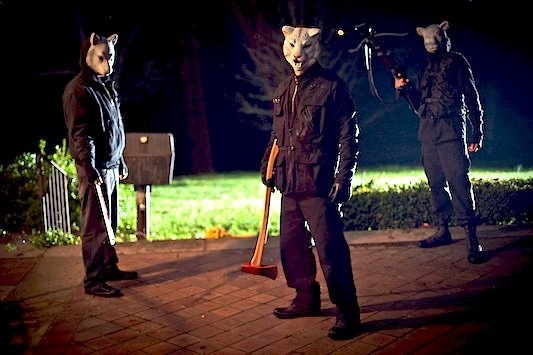
Adam Wingard’s “You’re Next”—an old-school style slasher movie—leads you to believe that it’s going to be more clever and innovative than it actually is. In the brisk opening scene a random couple is having sex and then are killed off by maniacs wearing simple plastic animal masks. A very typical opening scene for a slasher film, right? But we accept it and we accept the very standard setup that follows.

A family (mom, dad, three sons, two daughters, along with their significant others) head up to an old creaky mansion, belonging to the parents, out in the middle of the country to spend some time together. Now you don’t have to be a genius to figure out—for the most part-- what’s going to happen next. Based off of the opening scene and the title we know some of these people are going to be killed off by those animal mask wearing maniacs, but again you go along with it because you expect that there will be some kind of clever twist or innovation on the horizon, much in the same way Drew Goddard’s horror/comedy “The Cabin in The Woods” did last year. At this point “You’re Next” is so simple and routine, the characters so thin, that there has to be something more to it…right?

So anyway, not long after the family arrives, those maniacs return and gory mayhem begins. While the family is eating dinner (and while two of the brothers, played by AJ Bowen and Nicholas Tucci, are having a heated argument), arrows start flying through the window, killing one of the significant others. From there, the score by Mads Heldtberg, Jasper Justice Lee and Kyle McKinnon (which is a combination of classic horror movie string music and 80’s synthesizer horror music) picks up, the camera starts shaking and whirling around and chaos ensues.

There’s some B-slasher movie fun to be had here. The script by Simon Barrett contains some funny one-liners, delivered by the actors with the right amount deadpan, and the killings should satisfy your slasher movie appetite, if you have one that is. And then the twist we’ve all been waiting for finally comes towards the end, but sadly it’s really not all that good or innovative of a twist--unlike the twist in “Cabin In the Woods.” Yes, you may not see it coming but when it does come you sort of shrug and go: “alright then.” I think Wingard and Simon Barrett rely too much on the killings, the comedic one-liners and the overall old school slasher movie vibe “You’re Next” gives off. But none of that is enough. The picture thinks it’s being really cool and clever; man! Aren’t those killings gnarly bro? Can’t that protagonist chick (played by Shami Vinson) kick ass? Aren’t those animal masks creepy? But ultimately it isn’t and its B movie thrills wear off immediately after watching. “You’re Next” isn’t bad per se, it’s just disappointing.

 I can see the midnight horror movie audience loving “You’re Next” and ever since it premiered at the 2011 International Film Festival it has received early critical acclaim. The audience at my preview screening seemed to be having a ball. I was never flat out bored during the film and it’s a quick ninety minutes but I guess I wanted more from it. Maybe I shouldn’t have gone into it expecting a clever or innovative twist, but then that would make the movie even more forgettable and pointless. When it comes to horror I need more than just gnarly killings and creepy masks.

C

Wednesday, August 21, 2013

Mortal Instruments: City of Bones Review


Of all the young adult book series adaptations to come out recently, “Mortal Instruments: City Of Bones” (based on the book series by Cassandra Clare) has to be the most convoluted. Where “Percy Jackson: Sea Of Monsters” just felt uninspired and phoned in, “City Of Bones” tries to incorporate too many ingredients, without any of them really making much of an impression. It’s almost as if it was conceived entirely in a focus group. The movie is essentially a mash up of “Harry Potter” “Twilight, “Blade,” and “Underworld” along with some “Star Wars”. And that’s not even all of it. Here’s a movie that’s so densely plotted and only concerned with how many cool things from other fantasy and supernatural works it can toss in.

 Set in modern day New York City (I highlight this because during all of the fantasy and supernatural happenings some characters still use iPhones), the story revolves around teenager Clary Fray (Lilly Collins), an average “Too Cool For School” adolescent. She’s just going along doing her thing, hanging out with her goofy hipster friend Simon (Robert Sheehan) and not getting along with her mother Jocelyn (Lena Headey). But then, uh oh! Her world suddenly turns upside down, when she discovers a secret world hidden within the real world that’s full of demons. Or Vampires. I’m not exactly sure, both terms are used. Either way, they take the form of Mundanes (“Muggles”, for all you “Harry Potter” fans and “humans” for everyone else) and like to hang out in freaky raver nightclubs. One day two muscled biker-looking thugs break into her home and attack Jocelyn. They’re searching for a cup, or (using the pronunciation of the lead thug played by Kevin Durand) a caahhuup! It’s a very special caahhuup! that has to do with immortality… or something like that. Jocelyn is the only one who knows where it is and instead of being tortured or killed by these guys she takes some kind of potion and sends herself to another dimension. Man! What a potion!

Amidst all of this commotion Clary meets Jace (Jamie Campbell Bower) a tattooed, leather jacket wearing hunk known as a Shadowhunter (a half angel, half human demon/vampire hunter essentially). Jace, along with Simon and Clary complete the movie’s love triangle. Jace of course is Clary’s obvious choice for a suitor; with his chiseled face, gorgeous long blonde hair and British accent. And he can kill demons, what more could one want from a guy? He’s the Edward Cullen of this movie, which also means he’s a gigantic bore. Bower delivers his lines with almost no emotion, keeps the same serious expression on his face and does a lot of intense staring across the room at Clary. Simon on the other hand has liked her for a long time and has always been there for her, but Clary thinks of him as a friend instead of a lover. Aside from looks I don’t know what Clary could possibly see in Jace. Simon at least has some personality.

Moving on, Jace takes Clary and Simon to a Hogwarts style invisible safe haven (right in the middle of the city) where he and all of the other tattooed, leather wearing Shadowhunters live. There’s Alec (Kevin Zegers) and Isabelle (Jemima West) who, aside from being more attractive young people, serve little to no purpose in the story. While there, Clary discovers that she too is a Shadowhunter and for a little while you think the movie is going to turn into “Clary Fray: Demon/Vampire Hunter.” But no! it all goes back to that stupid cup mentioned earlier. It’s a very powerful, Holy Grail-esque chalice that, if placed in the wrong hands, can be very dangerous. So it’s up to Clary and the gang to run around town fighting vampires and demons to retrieve it before this other rogue Shadowhunter guy Valentine (Jonathon Rhys Meyers) gets it first and does evil stuff with it.

There’s more. Oh lord you better believe there’s more! Instead of building character the movie is just one left turn after another, introducing more and more fantasy/supernatural elements with no nuance and very little coherence. It’s got something for everybody! You want a blue liquid portal that allows you to go to other dimensions? You got it! You want an enchanted garden full of magical flowers? You got it! You want a scruffy leather jacket wearing werewolf army? You got it! You want creepy demons made of ash? You got it! Oh wait; Clara possesses some extraordinary ability (like being able to pull out objects that have been hidden in magic cards) all of a sudden. Sure, why not? She’s the chosen lady. There’s one big revelation (this is where “Star Wars” comes into the mix) that comes near the end involving Clary and Jace that’s so out-of-left-field and ridiculous that’s it’s just too much. Even worse, the movie then immediately proceeds to make that revelation ambiguous in a poor attempt to create interest in the next story.

In short: the movie is a tedious mess that ends up being too complicated and bloated for its own good.

It’s not hard to see why Clare’s book series (there are six) would be so popular among young adults. They have everything! I mean literally, they have almost everything a young adult might be interested in; vampires, werewolves, demons, attractive half angel people, objects that need to be retrieved, portals, prophecies, teen love triangles, iPhones. But by having all of this stuff just sort of shoved in there and by trying to appeal to everyone “Mortal Instruments” amounts to practically nothing in the end. Another utterly worthless attempt to capitalize on a young adult book series for some box office dollars.

D-