Thursday, October 3, 2013

Gravity Review


Alfonso Cuaron’s “Gravity” opens with a static shot of the earth as seen from space. After two or three still seconds we see a distant spaceship enter the movie from the right side of the screen. It gradually drifts toward us, getting bigger and bigger. From there, the camera floats and glides around the ship, introducing us to our protagonists: Dr. Ryan Stone (Sandra Bullock) on her first space mission and Matt Kowalsky (George Clooney a veteran astronaut, as they’re working on repairs from outside the spacecraft. Sometimes the camera follows Matt, as he himself is floating around monitoring Ryan’s work, before slowly weaving back into Ryan. The situation is calm and besides some casual smalltalk going on between them, it’s quiet because there’s no sound in space. Can you imagine that? Silence.

But this serenity soon evaporates and “Gravity” becomes terrifying and intense. Floating debris from a nearby satellite comes shooting by at bullet speed and without going into too much detail, Stone gets detached and is soon drifting in empty space. The scene is exhilarating and appears to unfold in a single take (I say, “appears” because, since the movie utilizes CGI and green screens, there’s a possibility that Cuaron and co editor Mark Sanger did a really good job of hiding the cuts). And this is the nature of the rest of “Gravity:” a series of extended, fluid and graceful shots/scenes of Ryan and Matt as they try to find a way to get back to earth.

From a filmmaking standpoint, “Gravity” is a near masterpiece. Specifically because it makes you feel like you’re in space, floating and rotating around with the characters. The camera never seems to be mounted anywhere, even when it’s not moving (like at the beginning of that first scene); you still get the sense that it’s levitating, almost like Cuaron was able to suspend gravity momentarily in the studio. He and cinematographer Emmanuel Lubezki make good use of the 3D, not just by adding nice little touches like having objects fly out of the screen at you but also by bringing the audience into the world of the picture. You may as well be wearing an astronaut suit yourself.

Steven Price’s score starts off faint and as the tension mounts it gets louder and more thundering. And the fact that there’s no sound in space makes some of the action set pieces (the debris crashing into the spaceship, causing explosions) appear more haunting and beautiful. The acting is great across the board; Clooney is his usual relaxed, smart-alec self and Bullock’s performance goes from panicky and panty to confident and in control.

It’s easy to get wrapped up in these visual and auditory pleasures, but at the same time “Gravity” is a case of style and spectacle over substance. As cool and unique a survivalist tale set in space sounds, there’s only so much you the survivalist can do, only so much you have control over and so most of the time it's just Ryan floating around in space. The movie can get repetitive at times. Now, I don’t mean to say that “Gravity” has no substance whatsoever but even at a brief ninety minutes the story does feel a little too stretched at times. The ending feels especially drawn-out and I think it could have come five minutes earlier.


On top of that, some of the CGI (the explosions) looks unfinished and as great as the 3D looks it still dims the picture considerably. In addition, there’s a character motivation involving Ryan’s daughter stated early in the film that I wish Cuaron would have revealed more subtly or, even better,  merely hinted at.

I don’t mean to come down too hard on “Gravity.” Visually it’s astonishing and it should be experienced on the biggest movie theater screen you can find. Cuaron is an immensely talented filmmaker but considering how rich and vast his last feature “Children of Men” (all the way back in 2006!) was, “Gravity” feels like a slight step in the wrong direction.

B+

Wednesday, September 25, 2013

Don Jon Review


“Don Jon”—the writing and directorial debut of actor Joseph Gordon-Levitt—is easy enough to enjoy. It’s fairly straightforward, it has some wonderfully funny and vulgar bits and Levitt brings a certain level of energy and zaniness to the whole affair that makes it hard to completely dislike. At the same time however, you can tell that it’s a directorial debut. Despite its simple pleasures, Levitt’s screenplay doesn’t cut deep enough. Most of the characters remain underdeveloped, he tosses around certain themes that aren’t explored very much, and there are major plot points and revelations that come a little too late. On a whole it’s a worthy effort even if it doesn’t entirely work.

Levitt plays the title character Jon, a loud mouthed hot headed New Jersey male, you know sort of like the kind you would see on a show like “Jersey Shore.” He only seems to care about a few things in life: women, working out, and spending time with his family on Sunday after church. And when he’s not spending time with family or pumping iron he and his bone headed buddies can be found at the club grinding on chicks.

Levitt himself is probably the main reason to even consider seeing “Don Jon.” Even though the role doesn’t fit into his history of playing intelligent (sometimes charming), witty, nice guys (Jon is almost the exact opposite), he’s still likable. He may not be the brightest bulb but there’s something genuine and upfront about him that makes you remain on his side the entire time. He also has a few little quirks--like being a clean freak and confessing his sins every Sunday even though he doesn’t try to improve himself—that add a bit more to his personality.

 In most respects he’s the classic romantic comedy stud; it usually takes only a single glance and he’s in bed with a smokin’ hot girl and then never sees her again. That is, until he encounters Barbara (a gum snapping Scarlett Johansson with a Jersey accent) who, in Jon’s words is a “dime” (perfect ten). She doesn’t sleep with him right away but instead makes him play “the long game” (I know, bummer right?). He does, and pretty soon they’re going out and after a month he finally gets to seal the deal. But then there’s this other chick Esther (Julianne Moore) who’s in one of his night school courses. She’s older, not as attractive, kooky, meddlesome and kind of a mess (they first meet each other when he sees her crying in a doorway) and yet slowly but surely a spark appears between them.

Though, Jon has one peculiar obsession that sets him apart from all of the other rom-com studs: he loves Internet porn. No I mean really loves porn. In fact he loves it more than actual sex because it’s one sided. When you sleep with another human being you can’t always do what you want to do, you know because there’s two people, whereas on the Internet you’re in control. And every so often when goes to his next session we get voice over commentary from him telling us his justification for doing it.

So when he’s not with his family, pumping iron, or hitting the clubs he’s spanking the monkey. Sometimes, the morning after he’s slept with someone (including Barbara) he sneaks off to rub one out before they wake up. It’s pretty much an addiction. In this way, “Don Jon” shares a little bit of DNA with Steve McQueen’s 2011 movie “Shame” in which Michael Fassbender played a sex addict. But of course McQueen’s movie takes the matter very seriously--the sex and masturbating in that picture didn’t look fun one bit—and in “Don Jon” it’s treated lightly. This isn’t a bad thing and it proves to be a mildly interesting quirk but after a few masturbation scenes it starts to get a little stale and repetitive, Levitt doesn’t take it anywhere very remarkable or exciting. We get it, he’s a selfish guy and by the end he’s probably going to change.

This isn’t the only problem with “Don Jon.” Levitt also spends too much time on the Jon/Barbara relationship. Johansson does what she can but the role doesn’t have much substance. She’s a knockout in the looks department and she makes him wait on having sex but those seem to be the only reasons why Jon is enamored by her. Towards the end there is a suggestion that she too has a one sided approach to relationships but it comes a little too late and isn’t explored any further.

What Levitt should have focused on was the Jon/Esther relationship, because it turns out to be the central relationship. She’s not Jon’s typical girl but she sees right through his shtick and exposes his flaws. As good as Levitt and Moore are together their relationship isn’t given enough time to develop naturally. I didn’t quite buy his attraction to her, or vice versa. On top of that there’s a rather important scene where we find out why Esther is such a mess (the only real serious, emotional scene in the whole movie) that should have come sooner; in its current place it comes too much out of left field, doesn’t match the rest of the movie’s comedic tone and it’s sort of just discarded after that scene.

The movie is largely repetitive. Jon drives to church in his Mustang, goes to confession, has brunch with his family: dad (Tony Danza), mom (Glenne Headly) and sister Monica (a criminally underused Brie Larson). Then he goes to the gym (where he recites his Hail Marys), then he either goes out clubbing or spends time with Monica, and finally he goes to his college class where he talks to Esther. Oh, and throw in at least two or three masturbation sessions. I gather that this is intentional, Levitt is trying to give the story’s structure a rhythmic quality (and at the end there’s a sense that this “routine” is broken) but the movie is repetitive without giving us much new information or developing the characters.

Other than the fact that his father is an aging version of him, we don’t learn much about Jon Sr. and their relationship seems to only consist of yelling at each other across the table or agreeing on how hot Barbara is. The mother and sister remain even more one note and the same can be said for Jon’s club buddies. Perhaps the film could be longer (it’s only ninety minutes) although I’m not sure it utilizes the time it does have very well. Overall, the picture doesn’t come together and it ends midstory.

I don’t mean to come down too hard on “Don Jon.” It is a first feature and it’s not terrible. Levitt has now shown that he has some talent (when it comes to comedy) not just in front of the camera but behind it as well, and I think if he continues to direct he could definitely improve. I was never bored during the movie, there are some clever bits of humor and all of the acting is solid, but “Don Jon” is simply not fully realized.

C+

Rush Review


The best thing about “Rush”—Ron Howard’s exhilarating new movie—is that it’s one hundred percent character driven. Forget the fact that the movie is about Formula One Racing, or tells the true story of the 1970’s rivalry between British driver James Hunt (Chris Hemsworth) and German Niki Lauda (Daniel Bruhl), Howard’s main goal is to develop the lives of these fascinating guys, who had very different approaches to the sport. Approaches that yielded both strengths and weaknesses.

The film is about their rivalry but Howard doesn’t choose sides. He doesn’t make one driver appear better than the other; he doesn’t set the movie from the point of view of either driver. Instead he gives each one ample time, remaining objective. “Rush” has some of the best character development of any movie I’ve seen this year, in fact to call them “characters” is kind of insulting. As portrayed in the movie, Hunt and Lauda are human beings, with strengths and flaws.

Hunt is the more aggressive of the two. To him racing is the ultimate ride, an adrenaline rush (no puns intended) and he has no problem staring death in the face during each and every race. With his classic good looks (chiseled face and long flowing blonde hair) and his all-around charming personality, James is made out to be the likable one, initially. But Howard digs beneath this likable exterior and exposes his downfalls. As much as he likes attention and to be around people (you can see him having a celebratory drink after just about every race) he’s incredibly selfish and arrogant, rubbing his victories in his rivals’ faces. On top of that, while his aggression and headstrongness does pay off in some regards, he’s also wildly inconsistent when it comes to winning. Not to mention his playboy tendencies; I lost count of how many women he has sex with during the movie. He does take a wife, a women named Suzy (Olivia Wilde) but it’s mainly just for show and it ends badly when he violently snaps at her after a bad race.

Overall, what we can gather about James is that he’s restless and unable to settle down which proves to have dire consequences; at the end we’re informed that he died of a heart attack at age forty-five. This is by far the most complex character Hemsworth has portrayed, and yet it still plays to his sensibilities as an actor. He slips into the role with almost no effort.

Though, Bruhl has the more difficult role to play. Where Hunt initially comes off charming and likable, Lauda comes off cold and unpleasant, and unlike Hunt he doesn’t have the good looks (Hunt even remarks that he looks like a rat). To him, Formula One racing is a science more than a sport. He knows more about the cars from a technological standpoint but he doesn’t appear to be having much fun doing it. For him, safety is the number one concern and he likes to have everything calculated out. Sometimes this comes in handy and sometimes he over calculates (when he gets in a violent crash). His philosophy is almost the exact opposite of Hunt’s. On top of that he doesn’t like to socialize all that much and he has this smug sense of entitlement; to him his way is the best and only way. All of this contributes to his cold exterior.

At the same time, there’s something to be said for Lauda’s disciplined approach to the sport. He’s more consistent when it comes to winning, he doesn’t spend a lot of time basking in his victories and when he gets married (to a gal played by Natalie Dormer) you can see a legitimate connection between them. To Lauda, Formula One racing isn’t a game but an art form. Ultimately, we can surmise that Lauda is more passionate about the sport itself; he’s more dedicated, whereas Hunt is more of a thrill seeker and a showman. Bruhl injects sly wit into his performance, and even though Lauda remains unlikable for much of the movie you can’t take your eyes off of him.

The filmmakers immerse us into this intense and exciting environment. Howard and cinematographer Anthony Dod Mantle (Danny Boyle’s regular cinematographer) utilize hand held cameras--a lot of them, apparently. There are cameras all over the place; in the air, in the crowds, on the racetrack and there appear to be about six or seven attached to the cars alone (there are a number of POV shots). Howard keeps the picture going at a breezy pace and the editing by Daniel P Hanley and Mike Hill is fast paced. The film zips from one scene to another with so much kinetic force that it’s exhilarating. Howard brings us up close and personal to all of the fury. You can almost smell the burnt rubber and exhaust, and hear the engines roar. It’s overwhelming, in a good way.

 Besides the rivalry, Peter Morgan’s (“The Queen”) multilayered screenplay addresses a number of other issues associated with Formula One, or any kind of racing for that matter, such as the impersonality of the sport. For all the thrill and excitement Formula One is a business and the more money you have the better chance you’ll have of racing. You can be a very talented driver but if you can’t find any sponsors you can’t compete. More importantly the film addresses the very real danger connected with racing. For as fun and freewheeling (again, no pun intended) as the movie can be, Howard takes this aspect extremely seriously. As we see later on, accidents can happen and serious injuries can occur. This adds another layer of tension to the movie.

Even with these issues addressed though, everything goes back to Hunt and Lauda. They’re the central force of the picture. It’s absolutely mesmerizing watching them, as they take shots at each another at races or at press conferences, as they interact with their spouses and crewmembers and seeing what motivates them on and off the racetrack. You may be rooting for them one minute, or detesting them the next but no matter what they always keep your interest.

A

Thursday, September 19, 2013

Prisoners Review


If you’ve seen the trailer for Denis Villeneuve’s new movie “Prisoners” and you’re a little angry that it appears to spoil much of the movie, I can now happily say, having seen the whole movie, that there’s nothing to worry about. Yes, the trailer does give away some important plot points (if you can avoid seeing any trailers that would be your best bet) but it only scratches the surface.

The movie is a kidnapping drama/thriller but it’s also much more than that. The screenplay by Aaron Guzikowski is multilayered and full of plenty of twists and turns not seen in the trailer and Villeneuve’s blunt, restrained handling of the picture will—excuse the cliché—actually keep you on the edge of your seat.

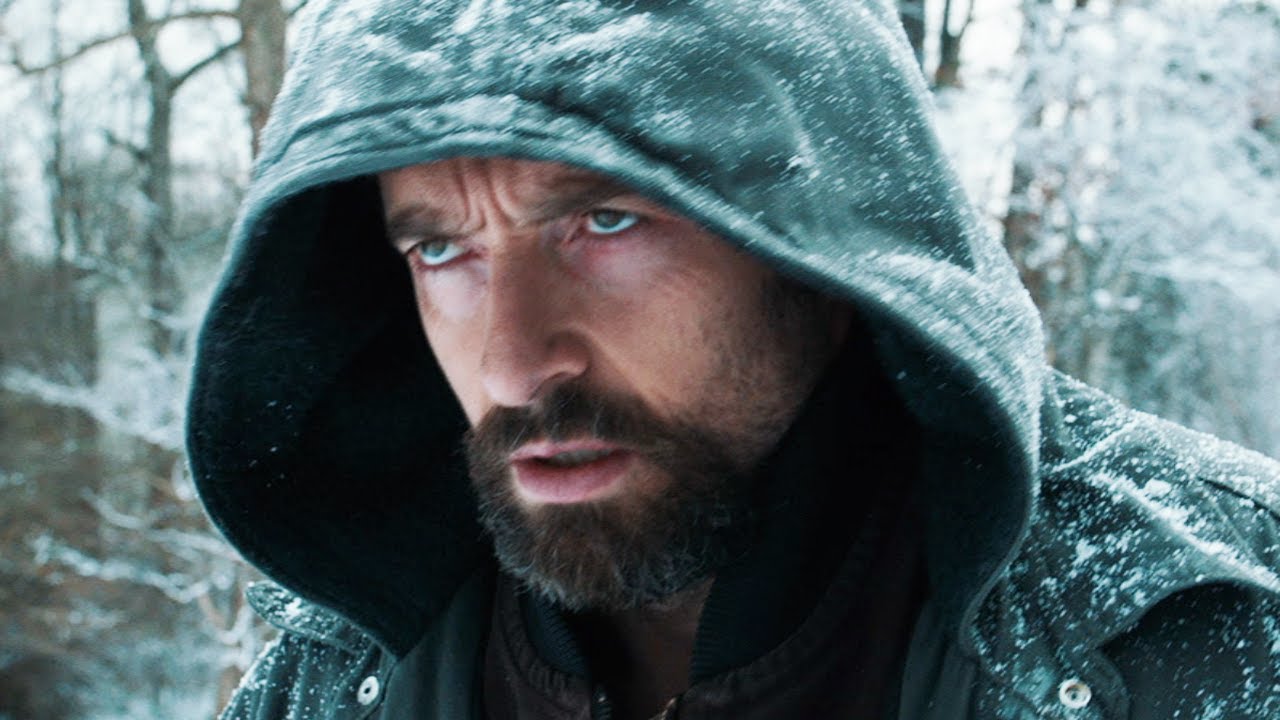
“Prisoners” begins on a calm and peaceful note, probably the only peaceful moment in the entire movie. Two families--the Dovers, led by Keller and Grace (Hugh Jackman and Maria Bello) and the Birchs, led by Franklin and Nancy (Terrence Howard and Viola Davis), along with their kids--gather for a meal. This is a happy occasion, but there’s also a sense of dread looming over the whole ordeal. You can tell something bad is going to happen and sure enough the young daughters in both families suddenly go missing. Keller’s oldest son remembers seeing a mysterious RV parked near their house, but it’s gone now.

Instead of spending too much time on this moment and letting the movie turn into a melodramatic Life Time kidnapping drama (thankfully we don’t get a long sequence where either mother breaks out into tears and goes around shouting “where is my daughter?”) Villeneuve keeps the action moving and switches over to Loki (Jake Gyllenhaal), the loner detective who’s assigned to the case. Within hours after the kidnapping is reported he tracks down the RV and the first suspect Alex (a wonderfully creepy and pitiful Paul Dano) is brought in, but the girls are still missing.

He seems to fit the kidnapper bill at first; he’s creepy looking and mentally unstable, plus what was he doing driving that RV around by himself in a neighborhood where he doesn’t live? Or does he? Immediately your mind starts asking questions. Alex is the first suspect and usually in mysteries the first suspect is never the perpetrator, right? Or, is that what Villeneuve and Guzikowski want us to think? We find out that Alex has the IQ of a ten year old and is looked after by his aunt Holly (an almost unrecognizable Melissa Leo). He looks pathetic and incapable of hiding two girls, but what if this is all an act? What if he’s much smarter than he appears to be? From there the plot thickens, Villeneuve gradually unravels Guzikowski’s complex screenplay, and the tension and sense of dread slowly increase.

“Prisoners” is by no means a happy movie; its tone remains rather cold and morose for the duration of its running time. Gray, cloudy skies and pouring rain dominate the movie’s small town setting. There are a few minor moments of humor but overall it’s treated very seriously, as it should be. Child abduction is a serious matter. This of course won’t appeal to everyone’s tastes but I appreciated the fact that Villeneuve doesn’t overplay the emotions and dramatics in any scene. He never uses one bit of melodrama; everything feels grounded in reality and is presented straightforwardly. Johann Johannsson’s score is used subtly and sparingly, mainly to amp up the tension. There is some cringe-worthy violence but not a lot and it never feels exploitive; Villeneuve shows us just enough to warrant a reaction and then cuts away.

At times during some of the most dramatic and tense moments, the audience at the advanced screening I attended would burst out laughing, not because the scenes were poorly made, but because they made you uneasy, sort of like when you laugh during a tense moment in a horror movie. “Prisoners” contains some horror movie moments (a scene involving boxes of snakes towards the end) and it does make you feel uncomfortable at times, but that’s a good thing.

The film’s pace might also be a little too deliberate for some general audience members, and at two and a half hours it is long. But in this age of fast paced thrillers it’s nice to see a mainstream movie that’s as patient as “Prisoners.” Villeneuve isn’t in a hurry to get through the story. Instead of just presenting a clue or a plot point and then quickly moving on to the next one, Villeneuve slows down and lets us examine the situation for ourselves and come up with our own answers before going on. Villeneuve, along with master cinematographer Roger Deakins (who’s done a number of Coen brothers movies) stage each scene delicately and gracefully. It’s a relief to see a movie with smooth pans and tracking shots, as opposed to shaky handheld camera ones we’ve been seeing a lot of lately.

While detective Loki is off pursuing various leads, Keller is also looking for his daughter, but in a different way. “Prisoners” is as much a character study about Keller—a decent family man who descends into depression and darkness—as it is a kidnapping/rescue thriller. Keller is, after all, the head of the family and he feels like he’s let everyone down. Now he feels obligated to search for his daughter in any way he can. The film asks the questions: how far would you go to find someone you love? And would you operate outside the law? Loki is doing the best he can but he also has to operate within the judicial system, a system filled with many rules and technicalities. Keller is impatient and wants to find answers his way.

In this regard, the characters in “Prisoners” do a lot of acting on their emotions (on their gut reactions) instead of assessing the situations logically. When Alex is released from the police due to lack of evidence, Keller kidnaps and tortures him in an abandoned house without even thinking about the repercussions. He’s driven solely by his guilt and determination to rescue his daughter. This is probably the darkest character Jackman has ever played.

Much like his character in David Fincher’s own dark, complex crime thriller “Zodiac,” Gyllenhaal’s Loki is dedicated and humble but develops an almost unhealthy obsession with the case. He uses unorthodox interrogation methods and enters houses forcefully. Sometimes this aggressive method pays off and at other times it doesn’t, like when he pushes another unstable suspect to suicide during an interrogation. This is some of the best acting work both Gylenhaal and Jackman have ever done, both actors immersing themselves in their roles, not afraid to show us the darker, more visceral parts of their characters.

There are a few minor weak parts in “Prisoners,” specifically the fact that the wife characters aren’t given a whole lot to do. Bello makes the most of her few scenes but for the most part she spends the majority of the movie lying in bed acting depressed and except for one scene where she’s included in some of the major activity, Davis is also left to sit around and a wait for the men to bring her child home. Even so, “Prisoners” is still an outstanding movie, and a far more complex one than the trailers would suggest.

It won’t be for everyone (despite the many recognizable names in the cast); it’s downbeat and not always easy to watch, but then again should a movie always have to be upbeat and easy to watch? If a film can make you uncomfortable while at the same time keeping you invested and on edge, then I’d call that a success.

A-