Showing posts with label Katherine Waterson. Show all posts

Tuesday, August 15, 2017

Logan Lucky Review (2017)


While watching “Oceans Eleven” back in 2001 did you ever wonder what that heist comedy (directed by prolific auteur Steven Soderbergh) would be like if it was not about glamorous thieves robbing a snazzy Las Vegas casino but about a group blue collar folks from West Virginia and North Carolina who decide to rob a NASCAR track? Well, Soderbergh did, and he’s come out of retirement (from feature filmmaking) to make “Logan Lucky--” the exuberant redneck “Oceans Eleven” remake you didn’t know you wanted.

The film primarily revolves around brothers Jimmy (Channing Tatum, in his fourth collaboration with Soderbergh) and Clyde Logan (Adam Driver) who are down on their luck. Jimmy was a high school football star/failed NFL prospect, while Clyde got his hand blown off in Iraq. Believing that their entire family is cursed, they decide to rob the Charlotte Motor Speedway during a major race. It’s one of those elaborate, outrageous heists that can only be pulled off in the movies. Among other components, the brothers will need to break well-known safe buster Joe Bang (Daniel Craig) out of jail for the job and then sneak him back into jail without anyone noticing. The Logan brothers also enlist the help of Joe’s brothers, Sam (Brian Gleeson) and Fish (Jack Quaid).
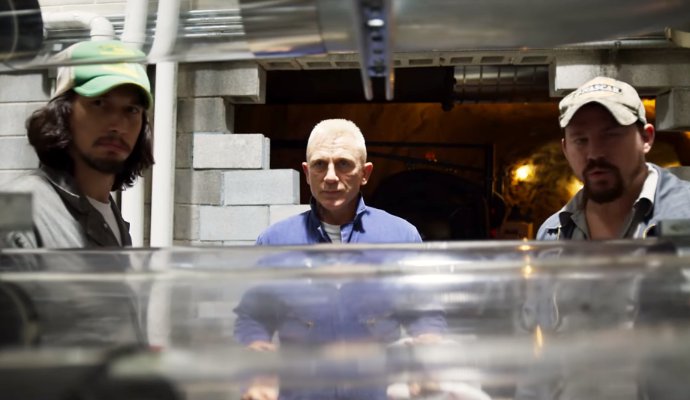


Despite how that plot synopsis might read, the dramatic stakes aren’t particularly high in “Logan Lucky.” The picture’s tone is loose and playful, while the pacing is relaxed all the way through. The mechanics of the heist can be confusing and not a lot of things really go wrong, even during the extended heist sequence itself. There are a few minor narrative hiccups the characters run into along the way but overall everything goes very smoothly, perhaps too smoothly for a film about a heist. In this regard,  “Logan Lucky” can feel predictable.

On top of that, the motivation for wanting to rob the racetrack in the first place is hazy and lacking in urgency. Soderbergh and screenwriter Rebecca Blunt (who may or may not be a real person) don’t establish the Logan brothers as desperate people who are caught in a bind and forced to commit a crime. Yes, they’re middle to lower class and Jimmy loses his blue-collar job at the beginning but the decision to execute the heist is treated very casually. That might have been okay, except that the film also doesn’t establish these characters as the career criminal types who would want to pull off such an elaborate crime.
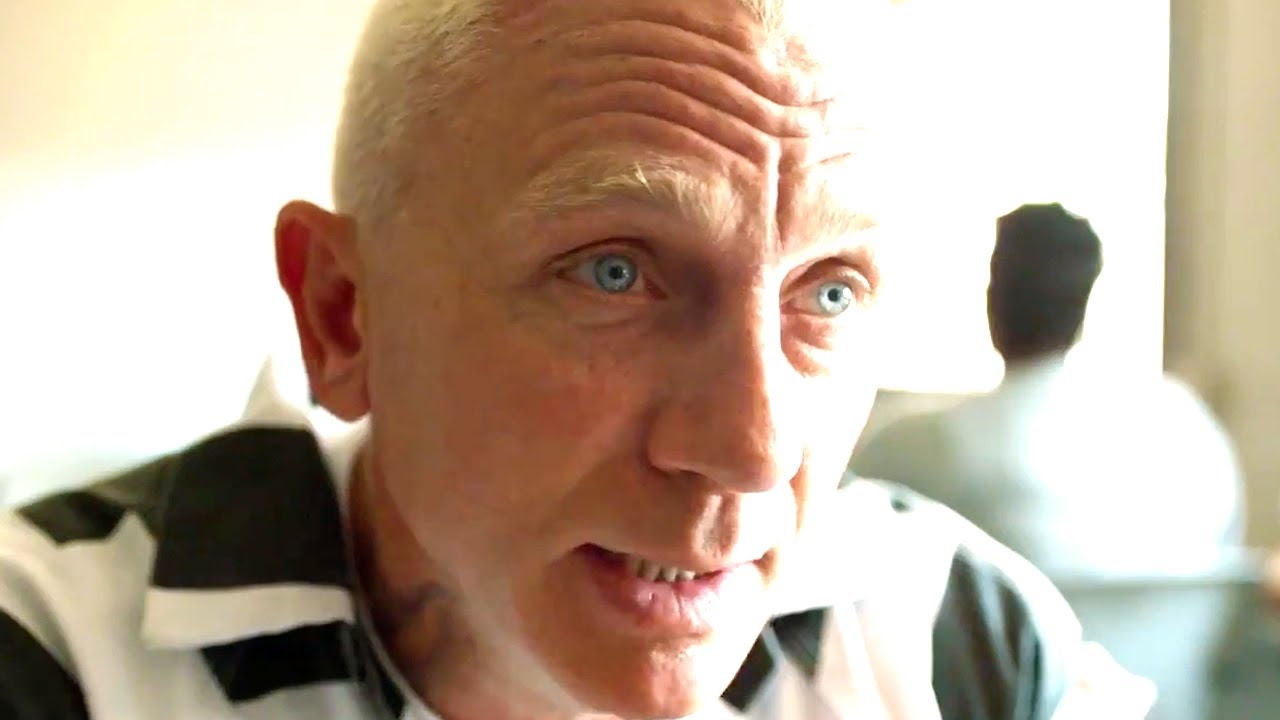


And yet, “Logan Lucky” is still a lot of fun, primarily due to the cast and Blunt’s witty screenplay. In addition to Tatum and Driver, who turn in amusing and earnest performances, Soderbergh assembles a superb ensemble cast made up of young and old talent including: Daniel Craig, Riley Keough, Katie Holmes, Dwight Yoakam, Hilary Swank and Katherine Waterston, among others. Some of these actors only pop in for a scene or two (usually in a nonchalant manner) but they always make a memorably goofy impression. Also, can I say how great it is to see Craig playing a character that isn’t Bond, especially an eccentric, bleach blonde haired safe buster? Mr. Craig, you’ve been missed.

Aside from the cast, what keeps us engaged in “Logan Lucky” are the small comedic moments and details rather than the broad narrative beats. The nutty, bumbling interactions between the Logan and Bang brothers as they painstakingly plan the robbery. Those little quirks that make the characters feel human instead of comedic caricatures (Clyde’s insistence that he lost his hand and not his arm). Those off beat, absurdist scenes that make you forget about the film’s predictable nature.

For example, the Logan brothers meet one of Joe’s contacts nicknamed “The Bear” to acquire some materials for the heist, who turns out to be a man in a bear suit; a delightfully out of left moment that generated a hardy laugh from the audience at my preview screening. On a scene-by-scene basis, “Logan Lucky” is packed with laughs. It may not be great but Soderbergh’s return to filmmaking is a light, entertaining affair.

 B


Tuesday, May 16, 2017

Alien: Covenant Review (2017)


Though it may not appear to be the case, Ridley Scott’s “Alien: Covenant” could very easily be called “Prometheus 2.” So if you haven’t seen the first one (also directed by Scott) or haven’t seen it in a while, it’s best to give it a look before going into this new film. “Prometheus” was an ambitious, if also clunky, Sci fi blockbuster (a prequel of sorts to both “Alien” and “Aliens”) that explored the potential origins of mankind as well as the turbulent relationship between gods and their creation; what if you came face to face with your creator and they wanted to destroy you because they were ashamed of you?

“Alien: Covenant” traverses similar territory, expanding on the mythology introduced in “Prometheus” and further developing that film’s most interesting character, a mysterious android named David (Michael Fassbender) in a satisfyingly pessimistic way. At the same time “Alien: Covenant” is an “Alien” film, meaning the iconic Xenomorphs are back to cause mayhem in cramped spaces and kill foolish humans. As an “Alien” film, “Covenant” is perfectly solid— yielding a handful of bloody, visceral kill sequences but it can also feel stale and repetitive, especially when juxtaposed with the more compelling “Prometheus” material.


The picture gets off to a slow and redundant start. We meet yet another crew of space explorers led by Oram (Billy Crudup) and Daniels (Katharine Waterson, who gives a sturdy performance even if her character isn’t given much to do beyond moving the plot forward). The crew is prematurely awakened from their hypersleep and they decide to answer a distress call from an unknown planet. Things pick up a bit when Oram, Daniels and a few others touch down on the alien planet, which is covered in temperate forest and mountains. Then, just like “Alien” and “Prometheus,” the crew is terrorized by the alien virus in both proto and Xenomorphic forms. This leads to a pulse pounding, superbly crafted action sequence, set on an alien marsh and within the confines of the crew’s transportation vessel, that’s giddily ultraviolent.

However, it isn’t until the crew, now stranded on the planet, encounters David that “Alien: Covenant” really finds its stride. The film pivots into a tense, twisted and philosophical mad scientist narrative that has much more on its mind than simply rehashing familiar “Alien” thrills. If “Prometheus” asked: what if your creator wanted to destroy you, “Alien: Covenant” asks the inverse: what if your creation wanted to kill you? Charming yet devious, passive yet dangerous, compliant yet reckless and unpredictable, David was the MVP of “Prometheus” and he’s the MVP here as well. Fassbender gives a brilliant, multifaceted performance. “Alien: Covenant” is at its best when the focus is on David and his sinister ambitions rather than the Xenomorphs. The smooth talking, handsome megalomaniac android proves to be more terrifying than the aliens ever could be.


Unfortunately, “Alien: Covenant” wants to be an “Alien” movie too, which has a tendency to undermine the David/”Prometheus” material, particularly towards the end. The climactic Xenomorph fight (that’s reminiscent of both “Alien” and “Aliens”) feels underwhelming—tacked on to appease the disappointed audience members who went into “Prometheus” expecting more of an “Alien” film. In fact, pretty much all of the crews encounters with the Xenomorphs themselves are simply bland. After six or so movies the menace of those drooling, snarling jaws has waned. Ultimately, the film’s insistence on adhering to the classic “Alien” formula/structure and Xenomorph fatigue hold “Alien: Covenant” back somewhat.

And yet I would gladly watch a third “Prometheus” film in a heartbeat, just as long as Scott and co. move away from the “Alien” blueprint and make it more David-centric. He’s the X factor in this new series. Sorry Xenomorphs, there’s a new monster in town.


Monday, August 31, 2015

Queen of Earth Review (2015)


Alex Ross Perry’s “Queen of Earth” is a bizarre, chilling, mesmerizing portrait of one woman’s (played by “Mad Men’s” Elizabeth Moss) psychological breakdown and the degrading effect said breakdown has on her relationship with a lifelong friend.

In the wake of her father’s suicide and dumping by her boyfriend, Catherine (Moss) goes to a lake house with her friend Virginia (Katherine Waterson) for a week of solace and recovery. And well, that’s pretty much it. The peculiar thing about “Queen of Earth” is that not a lot “happens:” the two do a lot of sitting and lying around. Catherine paints Virginia’s portrait, they go walking in the woods. They argue, they connect, a meddling patronizing neighbor Rich (Patrick Fugit) hangs around. At the same time, there’s a feeling of dread and uneasiness the viewer can’t shake. This is mostly due to Keegan DeWitt’s haunting instrumental score, which is soothing yet eerie, peaceful yet distressing-- flaring up at particular moments like a horror movie soundtrack. In addition, cinematographer Sean Price Williams primarily uses lengthy shots and slow pans and zoom in’s, giving the film a heightened, almost slow motion, dreamy reality. Just about everything that happens in “Queen of Earth” is mundane and ordinary but the tone is creepy and chaotic.

Through the creepy score, dreamy cinematography and elegant direction, Perry brings the deeply internalized feelings of panic, anxiety, alienation, sadness and concern associated with Catherine’s break down to the surface with unnerving, disturbing energy. In this regard “Queen of Earth” is a horror movie but it’s not about ghosts, murders or even trippy visions. It’s a horror movie about depression, a much more frightening and ominous entity because it’s a real condition thousands of people suffer from.


What is supposed to be a week of relaxation turns into one of discomfort and tension. Catherine gets progressively worse as the days count down. The serenity and seclusion of the lake house, while initially welcoming, becomes suffocating. It’s amazing that a place so beautiful and tranquil (with its crystal clear lake water and a lush forest surrounding with sunlight peaking through the tree’s) could be the setting for such an intense psychological breakdown. Perry crafts one uncomfortable, nail-biting scene after another. Catherine’s demeanor becomes more hostile and anxious; she hardly sleeps, has mood swings and complains about her face aching (even though nothing physical is wrong with her).  It’s like the walls of her psyche are closing in on her. The movie is reminiscent of Roman Polanski’s claustrophobic paranoid thriller “Repulsion” (another movie in which a woman suffers from psychosis) sans the nightmarish hallucinations.

  We also see the gradual decay of her friendship with Virginia. At first the two share a few warm and intimate moments; there’s a great scene (shot in a single take close up, the camera moving back and forth between their faces) where they open up to each other about past romantic relationships that gives us a great sense of their closeness and trust. However, due to Catherine’s increasing hostility, it gets to a point where they act like strangers-- saying few words and awkwardly avoiding each other. There’s a beautiful shot near the end of the film in which Virginia lies on a couch in the living room reading her magazine while Catherine stands outside a window (that’s slightly above than her) looking in. Virginia looks up from her magazine but the two never make eye contact, emphasizing the emotional and psychological distance growing between them.


It also helps that Perry found two incredibly talented rising actresses. Moss is phenomenal-- playing Catherine with a perfect blend of sympathy and menace, not going overboard with the craziness. We experience the immense internal suffering she’s going through right along with her. When she rubs her face in pain we can’t help but rub our faces too. Often times her pained facial expressions say more than any line of dialogue. At the same time, she has clearly snapped and you wait (on edge) for her to do something drastic—either inflicting pain on herself or someone else. At one point, after encountering a random man in the backyard one night, she says to him, with a chilling smile: “I could murder you right now and no one would ever know.” Perhaps best of all, Moss doesn’t paint Catherine entirely as a victim. In flashbacks to last year’s trip to the lake house, she’s depicted as selfish and inconsiderate, the result of living a privileged comfortable life and depending on others (her father and boyfriends) to be taken care of. Overall, Catherine is a tragic, flawed, multifaceted heroine.

Waterson gives a wonderfully restrained, nuanced performance as someone witnessing her best friend’s horrifying descent into madness. Virginia has an obligation to stay strong and supportive (especially considering she went through her own bout of depression) but as Catherine’s condition worsens it becomes difficult for Virginia to conceal own her growing frustration and sadness.

On the whole, “Queen of Earth” is a beautiful, remarkable film showing just how terrifying depression can be for both the person who is depressed and the friends/ family members affected by it second hand.