Showing posts with label Ryan Gosling. Show all posts

Wednesday, October 4, 2017

Blade Runner 2049 Review (2017)


Ridley Scott’s hypnotic futuristic thriller “Blade Runner” builds to an incredibly poignant and surprising moment of empathy. Up until then, the Replicants (artificial bio engineered androids meant to resemble humans and perform slave labor) are painted as the antagonists. After a series of violent rebellions, Replicant production is outlawed and any remaining Replicants are to be hunted down and killed by cops known as Blade Runners. But during the picture’s climax, atop a decrepit apartment building in dystopian Los Angeles, Scott flips the script. We come to see the Replicants not as robots gone awry but as naïve and tragically misunderstood beings that weren’t given a fair shake.

From this perspective, Replicants aren’t just machines created to be our servants but subjective beings with agency. Beings that are capable of feeling love and compassion. Beings that can express free will and have their own goals and individual aspirations. We come to empathize with them just as we would a human trapped in an oppressive situation. In fact, we care more about them than most of the human characters. In the film, humans are mostly cold and wasteful beings who caused the planet to fall into a state of dystopian chaos. They designed the Replicants to resemble themselves but outlawed them the minute they began acting too human. This earth shattering, emotionally touching shift in perspective and audience sympathy resonates throughout the sequel “Blade Runner 2049.”

Directed by Denis Villenueve and scripted by Hampton Fancher and Michael Green, “Blade Runner 2049” expands upon the original film’s interests in the shaky ethical dimensions surrounding A.I. creation/use, oppression, agency and empathy. And it manages to take these themes in a fresh direction thick with theological allusions and thought provoking philosophical questions. Among other things, the picture explores the nuances of artifice. In this decaying, desolate future wherein synthetic organisms outnumber organic ones the film asks us to question traditional notions of what’s authentic and “real.” Can one machine be more human than another? Can a relationship between two man made machines be just as authentic as a relationship between two humans?
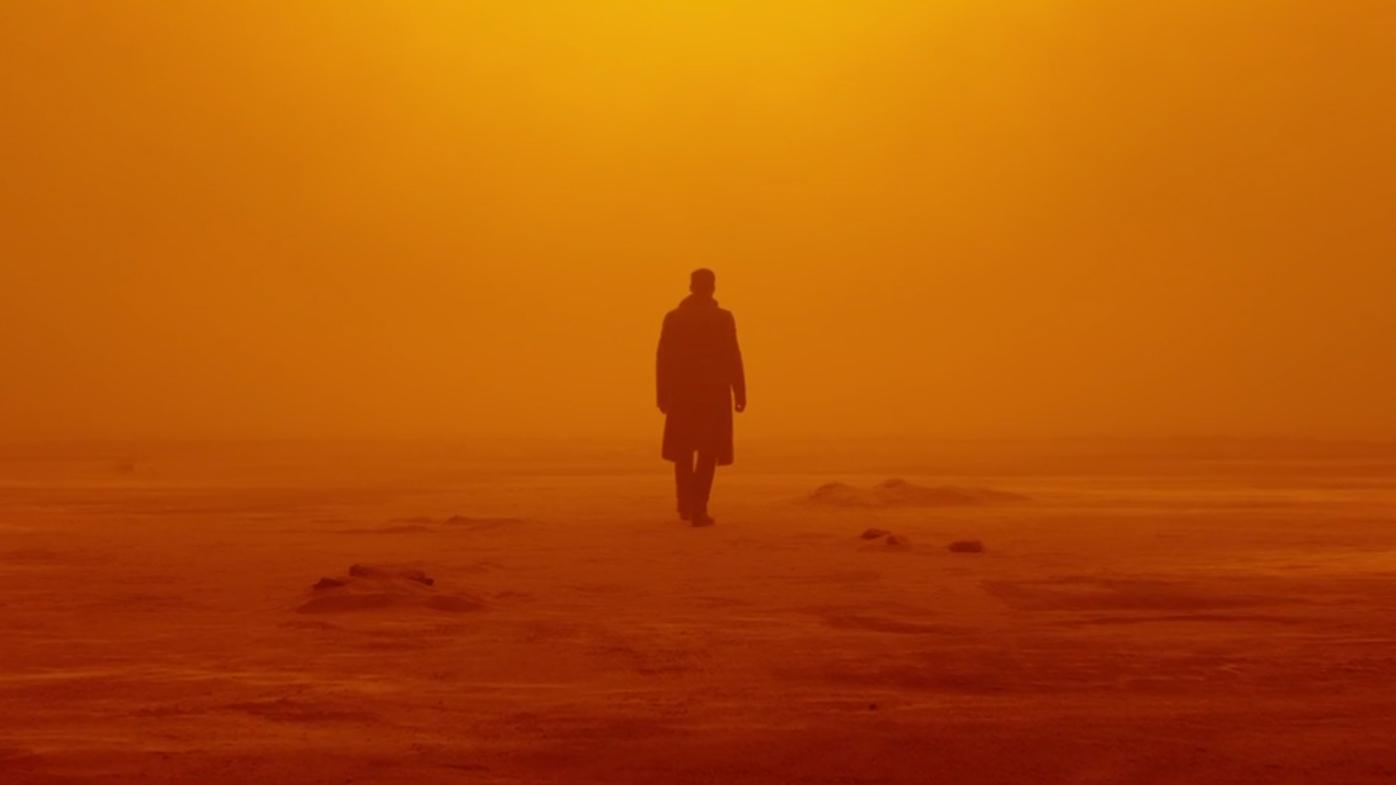


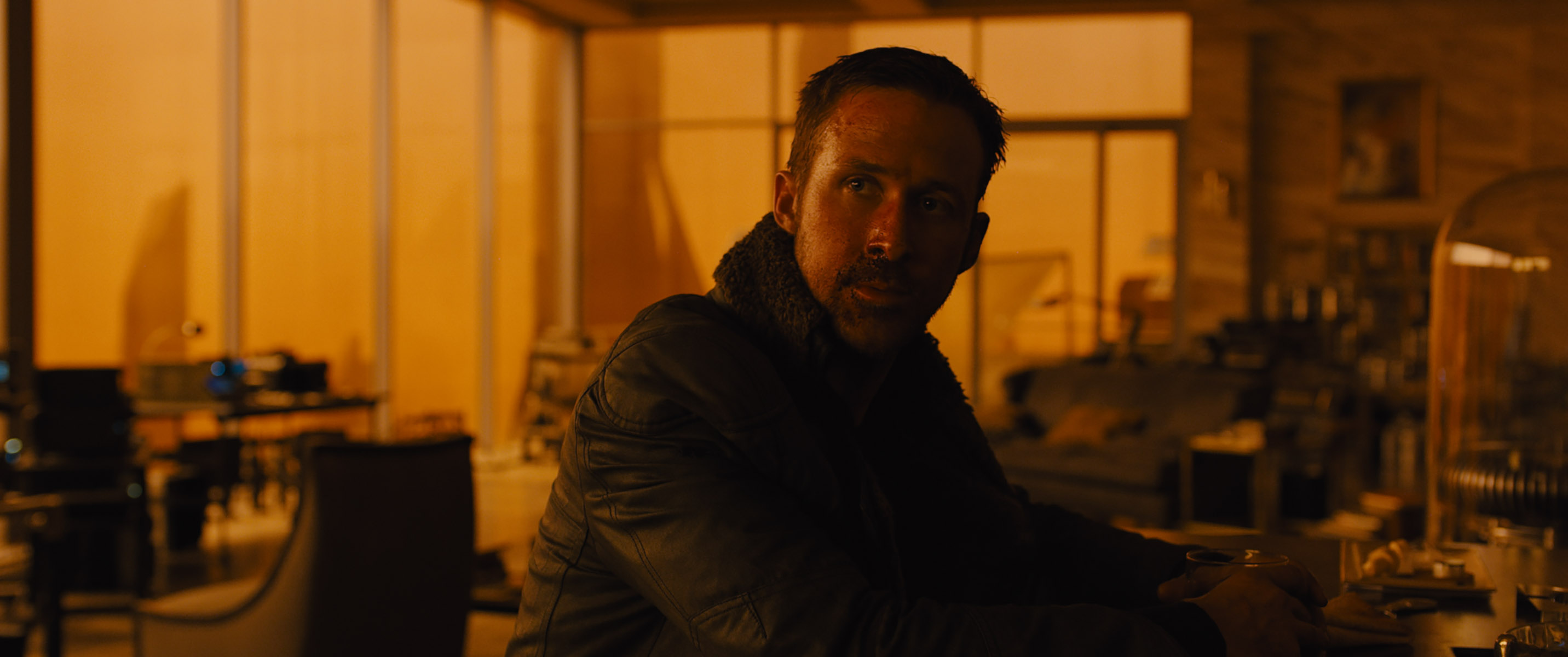
“Blade Runner 2049” weaves together a complex mystery, at the center of which lies a massive conspiracy that threatens to dismantle the remnants of societal order. The narrative revolves around K, (Ryan Gosling) a Blade Runner as he embarks on his latest case. As K unravels said conspiracy, he begins to experience an identity crisis-- his identity and personal sense of reality is jarringly called into question. The film is intense and unpredictable. At multiple points during my viewing I thought I had figured out the mystery and every time Villenueve proved me wrong. At the same time “Blade Runner 2049” is deceptively dense. It’s a heavy philosophical drama wrapped in sleek, visually lush neo noir that requires your undivided attention. Important clues are scattered throughout every scene. Blink and you might miss something.


The picture moves at a glaciers pace. Villeneuve elegantly eases us back into gloomy, dread filled world of “Blade Runner” and proceeds to bask in every moment--every staggering shot of dreary overcrowded L.A., the vast junkyards or the desolate ruins of once grand metropolises. In his films (“Sicario,” “Arrival” to name a couple) Villenueve has never felt the need to rush through his stories and here he lets us soak up “Blade Runner’s” haunting, enigma rich atmosphere for (almost) three drawn out hours. Like its predecessor, “2049” has an overwhelming sense of place; its dystopian sets feel lived in and three-dimensional.  There’s a lot of ground to cover but Villeneuve takes his time the narrative never feels hurried or convoluted and K is given ample time to develop into a multidimensional character full of anxieties and burning questions.

I wish this review could be a little more specific but the studio has asked all members of the press to avoid any potential spoilers. As a writer and a critic it’s a little frustrating but at the same time a lot happens here. So, I’ll just leave it at this for now: “Blade Runner 2049” is a beautiful and challenging film that leads to a deeply touching and ambivalent conclusion.


A- 

Wednesday, December 14, 2016

La La Land Review (2016)


Damien Chazelle’s musical “La La Land” is a delightful, energetic motion picture experience. For those who thought Chazelle’s last film “Whiplash” was too intense will be soothed and seduced by this film’s easygoing, vivacious charm. From the very first frame—a retro version of the Summit Entertainment logo,  “La La Land” descends into a magical, heavily nostalgic romp. A love letter to old school Hollywood musicals and studio films in general. A love letter to the art of pure jazz, which is not relaxing background fair but a music genre rife with conflict and spontaneous ingenuity.

Los Angeles is transformed into a glamorous, sparkling dreamscape where there are still independent movie theaters that play nothing but old films and cozy coffee shops with live Jazz performances. The cinematography by Linus Sandegren is fluid and dynamic—the way the camera constantly swoops, glides through and spins around the film’s environment is dizzying and electrifying. The film’s color palette glossy and vibrant—the nighttime scenes have a beautiful, slightly mysterious blue tint to them, while the streetlights emit a warmly romantic glow. Chazelle has a knack for making films that leave you feeling buzzed.

And then there’s the magnificent onscreen duo of Emma Stone and Ryan Gosling. Gosling plays Sebastian an arrogant Jazz pianist who wants to open his own Jazz club, while Stone is the wide-eyed aspiring actress Mia containing the usual Emma Stone spunkiness that provides the perfect foil for Gosling’s bumbling, self absorbed persona. The two struggling artists get entangled in an old school romantic comedy, they can’t stand each other at first but before long that tension gives way to affectionate ribbing, before their collective struggle in pursuing their dreams solidifies their romantic relationship (and also comes to threaten it).


Gosling and Stone have such effortless chemistry, their interactions containing an infectious screwball rhythm. Watching them walk and talk down an artificial street on a studio back lot (a self conscious ode to the mingling of Alvy Singer and Annie Hall in “Annie Hall” or Jesse and Celine in the “Before” trilogy, among other famous romantic film duos), share a warm embrace via piano duet fills you with utter joy.

Though perhaps the most surprising and emotionally resonating thing about “La La Land” is the focus on the agony of pursuing a full time gig in an artistic field. Constant rejection and rotten luck (going all the way to a film audition only to be rejected within thirty seconds), the gut-wrenching feeling of going nowhere, those moments of private anxiety when you ask yourself: am I any good at this? Why do I even bother? And then the moment afterwards when you lift yourself out of that foul mood and continue on, fighting to do the thing you love. It’s an exciting, unstable, terrifying life of maddening persistence that (a life I currently find myself in) that Chazelle is clearly sympathetic towards.


That being said, Chazelle acknowledges the stubbornness and ego that can hold young aspiring artists back—being so committed to your dream, the exact vision of said dream that you’re resistant to change or adaption, and are therefore continually stuck in a rut. This is exhibited most clearly in Sebastian’s character, who loves pure Jazz and wants to play nothing but pure Jazz, who then complains about how Jazz is dying because he can’t open the pure Jazz club of his dreams. Chazelle takes opportunities to mock Sebastian’s snobbiness (and Gosling’s performance is self aware), by making him play in a tacky band that covers eighties new wave snythpop as a scut job, for example.

Ultimately you may have to modify your dreams as you grow up in order to make progress. At one point, one of Sebastian’s old school friends Keith (John Legend), tells him to stop talking about the “death of Jazz” and concentrate on the “future of Jazz” saying, “how can you be a revolutionary if you’re a traditionalist?” Being stuck in the past, being stuck in your fantasy, continually sulking about being unsuccessful, isn’t always productive. You may have to adapt your mindset, adjust your plan, allow yourself to go down other paths to follow your passion.


Chazelle is supportive and admiring of his dreamer characters as they pursue their wild visions (one of the songs is all about “those fools who dream”) but this other more critical/cautious view of aspiring artists is strongly felt

You may love “La La Land” for totally different reasons—it’s utter charm, the colorful music numbers, Gosling and Stone, the sweet and sourness of its romantic story etc. While I liked all these things, the picture’s focus on the rocky path of pursuing a creative endeavor (and the ego of the young artist) resonated with me on a deeply personal level; an angle I wasn’t expecting to find in this lavish, nostalgia fueled musical.

A-


Tuesday, December 22, 2015

The Big Short Review (2015)


Adam McKay’s “The Big Short” tackles a weighty subject through a peculiar blend of comedy and drama—a blend that’s mostly successful. Based on the nonfiction book of the same name by Michael Lewis the film follows several people in the world of high finance who essentially predicted the credit and housing bubble collapse--that caused the 2008 financial crisis—and profited from it. 

Now that doesn’t sound like a laughing matter, does it? Which is why McKay’s (who wrote the screenplay with Charles Randolph) semi comedic approach seems odd at first. However McKay doesn’t trivialize the situation nor does he glorify the people involved. Instead the humor is used to emphasize the sheer ridiculousness and chaos of the situation, the utter stupidity and greed of those involved in this massive financial collapse (in a lot of ways the picture’s black comedic vibes are similar to Martin Scorsese’s “The Wolf of Wall Street”). When we laugh, it’s usually out of discomfort or disbelief.

The picture also takes many opportunities to poke fun at its main characters--an eclectic band of smart socially awkward weirdo’s, to say the least. Leading the bunch is hedge fund manager Michael Burry, (Christian Bale using his chameleon like acting abilities to disappear into his role once again) the first one to catch on to this unfortunate trend in housing. As the movie goes on Bale’s presence decreases. He spends the majority of his scenes barricaded in his office like a hermit, listening to heavy metal music on full blast or banging on his own set of drums. Then there’s eccentric money manager Mark Baum (Steve Carell) who appears to have come equipped with a permanent BS detector—not afraid to speak his mind or call other people’s stupidity out during meetings. Also along for the ride is Jared Vennett, (Ryan Gosling, arrogant and with a tan) Vinnie Daniel, (Jeremy Strong) who works with Baum, Charlie Geller, (John Magaro) Jamie Shipley (Finn Wittrock) and Ben Rickert (Brad Pitt, in an effective low key role) among others. While it could be argued that Baum emerges as the main character, “The Big Short” is very much an ensemble film. Each actor carries their respective weight, forming a cohesive unit, and when they cross paths they have an effortless tragi-comedic chemistry.

In terms of style, the picture switches back and forth between realistic hand held cinema Verite style scenes and hectic absurdist asides; sudden flashbacks and flash-forwards, characters breaking the fourth wall, slick montages and cutaways (“Wolf Of Wall Street” actress Margot Robbie in a bathtub explaining what sub prime mortgages are, for example) that contribute to the film’s comedic demeanor. These stylistic and structural flourishes keep the film zipping along at a steady pace and show awareness (on the filmmakers part) of the complexity of the material in relation to a general audience member. “The Big Short” presents a lot of information to the viewer, dry technical terms and concepts pertaining to finance and the housing market (terms that aren’t going to make sense to a novice like myself) in engaging and often humorous ways. At times, the movie plays like an entertaining housing market tutorial video. 


Yet at its core “The Big Short” is very serious, terrifying even and Mckay knows that. During the last third everything slows down and there are no comedic asides. The film sheds its black comedic tone and simply turns black.  The air has been sucked out the room. Our weirdo’s, who up until this point have practically been celebrating their success and insider knowledge, suddenly aren’t so excited anymore; they can’t quite comprehend what’s happened. “The Big Short” is about a group of people who bet against the U.S economy…and win. Could you imagine being in that situation? Could you imagine being one of the few who knew the economy would fall as hard as it did? As much as one may laugh during “The Big Short” you ultimately walk out feeling icky. McKay’s picture may not always work—it loses focus at times and there are a few comedic montages that could be cut out—but it’s an absorbing film nonetheless.

B+