Wednesday, October 4, 2017

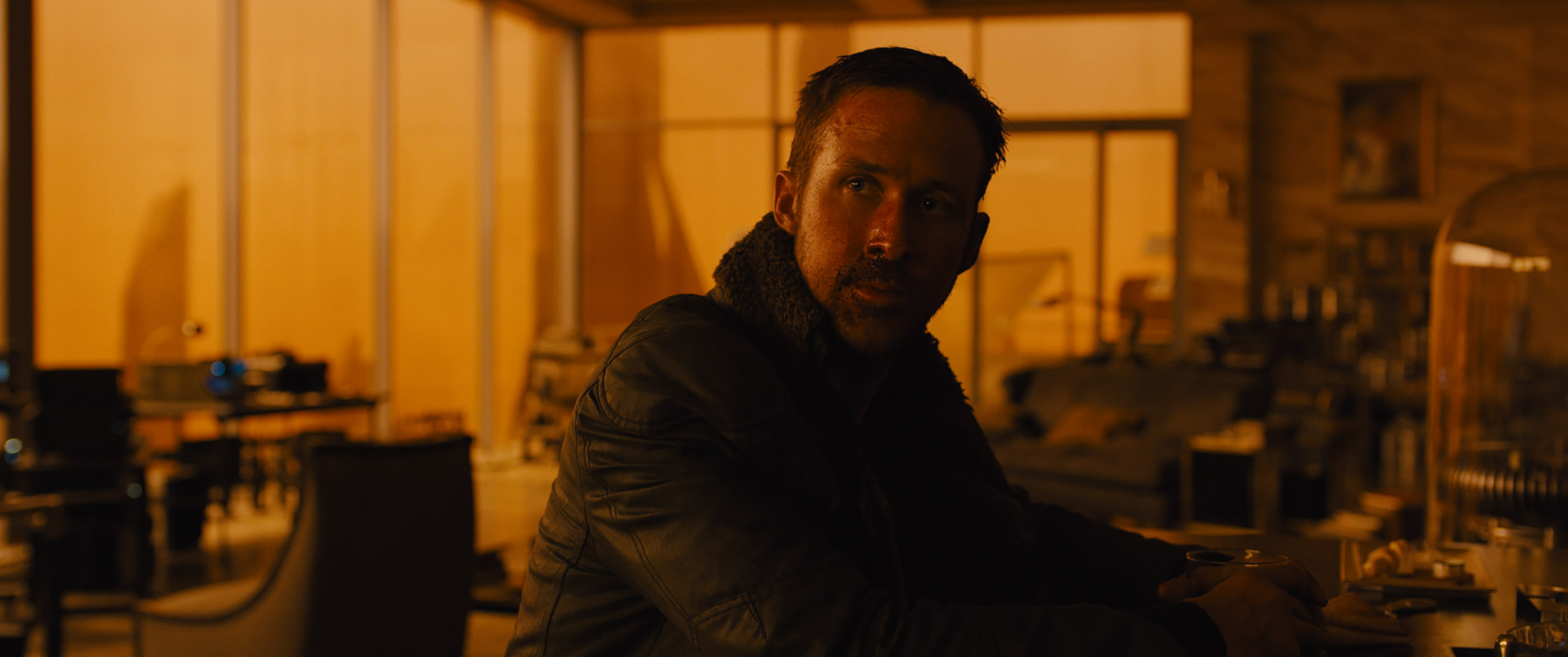
Blade Runner 2049 Review (2017)


Ridley Scott’s hypnotic futuristic thriller “Blade Runner” builds to an incredibly poignant and surprising moment of empathy. Up until then, the Replicants (artificial bio engineered androids meant to resemble humans and perform slave labor) are painted as the antagonists. After a series of violent rebellions, Replicant production is outlawed and any remaining Replicants are to be hunted down and killed by cops known as Blade Runners. But during the picture’s climax, atop a decrepit apartment building in dystopian Los Angeles, Scott flips the script. We come to see the Replicants not as robots gone awry but as naïve and tragically misunderstood beings that weren’t given a fair shake.

From this perspective, Replicants aren’t just machines created to be our servants but subjective beings with agency. Beings that are capable of feeling love and compassion. Beings that can express free will and have their own goals and individual aspirations. We come to empathize with them just as we would a human trapped in an oppressive situation. In fact, we care more about them than most of the human characters. In the film, humans are mostly cold and wasteful beings who caused the planet to fall into a state of dystopian chaos. They designed the Replicants to resemble themselves but outlawed them the minute they began acting too human. This earth shattering, emotionally touching shift in perspective and audience sympathy resonates throughout the sequel “Blade Runner 2049.”

Directed by Denis Villenueve and scripted by Hampton Fancher and Michael Green, “Blade Runner 2049” expands upon the original film’s interests in the shaky ethical dimensions surrounding A.I. creation/use, oppression, agency and empathy. And it manages to take these themes in a fresh direction thick with theological allusions and thought provoking philosophical questions. Among other things, the picture explores the nuances of artifice. In this decaying, desolate future wherein synthetic organisms outnumber organic ones the film asks us to question traditional notions of what’s authentic and “real.” Can one machine be more human than another? Can a relationship between two man made machines be just as authentic as a relationship between two humans?



“Blade Runner 2049” weaves together a complex mystery, at the center of which lies a massive conspiracy that threatens to dismantle the remnants of societal order. The narrative revolves around K, (Ryan Gosling) a Blade Runner as he embarks on his latest case. As K unravels said conspiracy, he begins to experience an identity crisis-- his identity and personal sense of reality is jarringly called into question. The film is intense and unpredictable. At multiple points during my viewing I thought I had figured out the mystery and every time Villenueve proved me wrong. At the same time “Blade Runner 2049” is deceptively dense. It’s a heavy philosophical drama wrapped in sleek, visually lush neo noir that requires your undivided attention. Important clues are scattered throughout every scene. Blink and you might miss something.


The picture moves at a glaciers pace. Villeneuve elegantly eases us back into gloomy, dread filled world of “Blade Runner” and proceeds to bask in every moment--every staggering shot of dreary overcrowded L.A., the vast junkyards or the desolate ruins of once grand metropolises. In his films (“Sicario,” “Arrival” to name a couple) Villenueve has never felt the need to rush through his stories and here he lets us soak up “Blade Runner’s” haunting, enigma rich atmosphere for (almost) three drawn out hours. Like its predecessor, “2049” has an overwhelming sense of place; its dystopian sets feel lived in and three-dimensional.  There’s a lot of ground to cover but Villeneuve takes his time the narrative never feels hurried or convoluted and K is given ample time to develop into a multidimensional character full of anxieties and burning questions.

I wish this review could be a little more specific but the studio has asked all members of the press to avoid any potential spoilers. As a writer and a critic it’s a little frustrating but at the same time a lot happens here. So, I’ll just leave it at this for now: “Blade Runner 2049” is a beautiful and challenging film that leads to a deeply touching and ambivalent conclusion.


A- 

Wednesday, September 27, 2017

American Made Review (2017)


Review Grade: C-


Doug Liman’s “American Made” is the latest project in recent years to tackle the turbulent Pablo Escobar/”War on Drugs” era of the late 70’s and 80’s, preceded by the Netflix TV show “Narcos” and the Bryan Cranston starring film “The Infiltrator” (and covered comprehensively in Billy Corben’s superb documentary “Cocaine Cowboys”). It's a fascinating chunk of American history complete with gang violence, shady US government doings, espionage, hypocrisy and moral grey area and of course the warped, nightmare vision of the American dream: ordinary people getting sucked into an exciting but dangerous life of crime and becoming flushed with cash overnight only to see that good life fall apart in epic (and often tragic) fashion. Ever since “Scarface,” it’s been fertile ground for TV and cinema.

“American Made” manages to check all those boxes in detailing the rise and fall of Barry Seal, (Tom Cruise) an ordinary American pilot who ends up working for the CIA, (flying weapons to South America for Ronald Reagan’s “secret war”) The Medellin Drug Cartel (smuggling drugs), the DEA and later the White House, all while trying to live a calm family life with his wife Lucy (Sarah Wright) and kids. This extraordinary, complex story would make a great mini series, documentary or dramatized.

Unfortunately it’s been mangled and crammed into one hundred and fifteen minutes. The picture might have even benefited from being two hours or more; these sprawling crime sagas and their multitude of characters and time periods need the cinematic space to unfurl if you’re going to tell them in full. But currently “American Made” feels like an abridged crime epic-- an occasionally fun but mostly surface level telling.


The film gets off to a quick start (a rapid fire, anxious pace that is maintained throughout) but at the expense of setting up its protagonist. Liman and screenwriter Gary Spinelli do a hasty and inadequate job of establishing Seal’s initial situation and why he would want to work for the CIA or the Medellin cartel in the first place. And as the film goes on they fail to flesh Seal out or dig into his psychology. There’s little in the way of a character ark beyond his realization that working for the cartel and the US government at the same time isn’t going to end for him.

The colorful cast of supporting characters, including Seal’s CIA contact Schafer, (Domhnall Gleeson) Lucy’s scuzzy weirdo/screw-up brother JB (Caleb Landry Jones, who just seems destined to play scuzzy weirdo/screw-ups in all his roles) and Seal’s Medellin contact Jorge Ochoa (Alejandro Edda) have a memorable scene or two but they get lost in the film’s comprehensive, messy biopic approach.

“American Made” races through its chronology like a bland presentation, stringing interesting and sometimes amusing episodes in Seals life together with little cohesion or dramatic kick. Despite the energetic pacing and frenzied editing the film feels like its on autopilot. There’s so much ground to cover (multiple players, four major narrative sections and the various plot strands within those sections to balance) that none of the material gets a chance to really settle and make a serious impact.


Making matters worse, “American Made” employs a jerky pseudo-documentary style that is mildly disorienting at best and flat out incoherent at worse. Uh, Doug…you directed “The Bourne Identity,” did you forget how to do shaky cam? Add to that, slick montages cut to 70’s/80’s music, cutaways, cheeky info graphics (a la “The Big Short”) and a contrived videotape confessional framing device in which Seal narrates the muddled events of the movie. In other words, the picture’s visual/formal style is just as unfocused as the rest of it.


Cruise is predictably in top form; his goofy and nervous energy is always watchable but the movie around him doesn’t cut deep enough. A great true story, ripe with big screen and small screen potential is adapted into a banal commercial studio product.


Wednesday, September 20, 2017

Kingsman: The Golden Circle Review (2017)


There should be some form of punishment for a director that manages to waste Channing Tatum, Jeff Bridges, Halle Berry and Julianne Moore in a single movie. Matthew Vaughn is the culprit and “Kingsman: The Golden Circle” is the film.

At its best, “The Golden Circle” (a sequel to “Kingsman: The Secret Service”) is a goofy, kinetic spy action/comedy that pokes fun at and gives the middle finger to the “Bond” franchise. It’s gleefully violent and vulgar, sometimes unnecessarily so. There are a bevy of nifty high tech gadgets to get the characters out of just about every tight situation, and the costuming is exquisite.  “Kingsman” can be fun and delightfully eccentric but like a lot of sequels it falls into the trap of redundancy and tedium, among other issues.  Vaughn and co writer Jane Goldman try to expand the “Kingsman” universe and introduce new characters in the process but fail to do anything substantial with them; hence my suggestion in the first paragraph.  Jail time might be a little harsh, perhaps a fine?

Events pick up pretty much where the first “Kingsman” left off. Young Eggsy (Taron Edgerton, charming and sincere) is enjoying his life as a secret agent as well as his relationship with Swedish Princess Tilde (Hanna Alstrom). However, things go immediately wrong when all the Kingsman headquarters in London are bombed by a drug lord named Poppy (Julianne Moore). With nowhere else to turn, Eggsy and fellow agent Merlin (Mark Strong) head to America to join forces with The Statesman, an American spy organization. Here, Eggsy also encounters his old friend and mentor Harry (Colin Firth) who he thought had died.

Operating out of Kentucky and using a whisky distillery as its front, The Statesman are like the Kingsman except that they wear cowboy hats and boots, and drink whisky instead of scotch or martinis. The organization is run by Champ, (Bridges) along with under agents Whisky, (Pedro Pascal) Tequila (Tatum) and Ginger (Berry). In theory, this seems like a fun way to expand on the “Kingsman” mythology but Vaughn lets it go to waste.


The scenes that take place in Kentucky at The Statesman headquarters often play out like a stilted product placement for a fictional brand of whisky. * Meanwhile our new southern fried agents are given very little to do. What’s the point in having Tatum play a cowboy spy named Tequila if he’s only going to be in a few scenes? The lovely, molasses mouth Bridges is reduced to thankless cameo status and Berry’s part as an agent frustrated with her role in the organization is even more thankless. There are large stretches of the picture were Berry and Bridges are absent for unexplained reasons. The Statesman material is occasionally funny but we’re just not given enough and therefore it doesn’t really cohere with the rest of the picture.

Ultimately, “The Golden Circle” pivots into a tedious and overlong rehash of the first film, with Eggsy, Harry and Merlin having to infiltrate Poppy’s layer and save all of humanity. Edgerton, Firth and Strong have a great onscreen repartee like they did the first time around and the surrogate father-son bond between Eggsy and Harry can be poignant but what’s the point in introducing this new spy organization if you’re just going to treat it like a one dimensional narrative detour and then fall back on what you already did?


Moore is given a little more to do and for a while her eccentric outcast CEO turned drug dealer is compelling. Poppy lives in undiscovered ancient ruins in Cambodia that she’s outfitted with a 1950’s American aesthetic—an authentic 50’s diner, a bowling alley etc. She has a superficially cheerful, high voiced demeanor that masks a psychopathic interior. Poppy can be downright terrifying but even she fails to meet her full super villainess potential as Vaughn curiously throws her under a figurative bus, having her meet a frustratingly anticlimactic fate.

I could go on. Vaughn tries to balance spy action/comedy with a heated but half-baked critique of America’s ongoing war on drugs (and the layers of hypocrisy that go along with it) with mixed results. The political commentary is intriguing yet unfocused and like The Statesman stuff it doesn’t always jell with the rest of the film. There’s a reoccurring Elton John gag that’s funny until it’s beaten into the ground. The romantic subplot involving Eggsy and Tilde is consistently tepid and is resolved via the underwhelming damsel-in-distress device. You can probably sense the reoccurring theme of female characters being given the short end of the stick in this film. There are good elements to be found in “The Golden Circle” but by and large it contains a lot of missed potential.

C-


*Turns out it’s a real whisky; a spinoff of Old Forester produced in partnership with the film. More here in this New York Times article: https://www.nytimes.com/2017/08/27/business/media/statesman-bourbon-kingsman.html?mcubz=0&_r=0

Wednesday, September 13, 2017

Mother! Review (2017)


Darren Aronofsky’s “Mother!” is an intensely claustrophobic, psychological thriller reminiscent of Roman Polanski’s feverish apartment horror flicks “Rosemary’s Baby” and “Repulsion,” as well as Arronofsky’s own uncomfortable, mind-bending thrillers like “Pi,” and “Black Swan.” The movie left me shook and incredibly anxious. In fact it took me two or three hours to calm down after my preview screening. Now, as I sit down to write this review I find myself getting anxious all over again.

The film revolves around a married couple known only as Mother (Jennifer Lawrence) and Him (Javier Bardem). Mother and Him live in a large, old house seemingly out in the middle of nowhere. The cell service is weak (they use an old landline) and there appears to be no driveway or nearby roads. They’re surrounded by shrubbery and forest. Him is a poet who struggles to write during the day while Mother goes to work painting the interior walls and restoring the rest of the house. They live a calm and stable existence.

However, all of that is thrown out wack one morning when two uninvited guests show up looking for a place to stay--first a nosey but well meaning “Man” (Ed Harris) followed by his equally nosey wife (Michelle Pfeiffer). From there, things only get weirder… which is an understatement.

“Mother!” occupies a raw, sinister dream space wherein real mixes with surreal and the mundane blends with the absurd. There’s no coherent sense of time or place. All of the action is contained to Mother and Him’s house like a chamber drama but we’re not given any information about where they live. The structure seems to exist in its own dimension. The film plays out like a two-hour long nightmare that you never wake from. And it’s damn stressful.


The picture is a relationship nightmare, wherein we witness the gradual unraveling of our central married couple. Mother and Him are at odds with each other throughout. This isn’t to say they spend the whole movie arguing but rather, there’s a noticeably bizarre lapse in communication between them. Him is deeply self-absorbed and patronizing towards Mother, doing things without first asking her (like allow the Man and his wife to stay). Time after time, Him fails to consider her needs or here her view on a subject. Sometimes he flat out ignores her while she continues to support him. Occasionally Mother tries to confront Him and put her foot down but often times she just can’t get through to him, like he’s off in another dimension, even as the situation around them becomes more peculiar and chaotic.

Along with this marital discord is an intense violation of personal privacy. I’m not talking about the traditional horror movie kind that involves a maniac attempting to break into someone’s house but the immense unease and discomfort of dealing with annoying, unwanted guests-- taken to a surreal, comedic-horror dimension. Imagine if you were at your home, going about your daily business and then two nosey strangers came knocking on your door expecting a place to stay. Making matters worse, they wander around your home, touching your personal belongings, going into your bedroom. Making matters even worse, they pry into your personal life and judge you. All the while, you just wanted to be left alone and didn’t want any of this to happen. But you can’t stop it. That’s essentially the scenario Mother finds herself in throughout “Mother!” (along with having to deal with her terrible husband). It’s undoubtedly nutty but effective. Aronofsky ratchets up the tension and nightmarish absurdity with each passing minute.

Mother spends much of the movie acting bewildered and powerless and Arronofksy firmly plants us in her shoes. Cinematographer Matthew Libatique captures the drama primarily in smothering close ups and dizzying hand held tracking shots. His camera stays with her at all times, usually behind her back and a few inches away from her neck. “Mother!” is an intimate, tragic portrait of an unappreciated woman stuck in a bad marriage who gives and gives but gets nothing in return. The audience is trapped inside her personal nightmare wherein her deep seeded anxieties are on violent display.


In nightmares, you often feel helpless. You want to run away from the monster but you just can’t. You want these awful uninvited guests to leave your house but you just can’t make them and they bring more people and cause damage. You want to confront your spouse and tell them to listen to you but you can’t. In “Mother!” the feeling of helplessness, experienced by Mother and the audience, is almost suffocating. Arronofsky crafts a visceral, deeply disturbing nightmare experience.

At about the halfway point, “Mother!” takes an even wilder turn. While the marital discord and invasion of personal space narrative strands persist, the film becomes increasingly unhinged and angry, even apocalyptic. It crosses into metaphysical and biblical territory, becoming more symbolic and dreamlike, and just flat out crazy. Like really really crazy. The last thirty minutes or so are panic attack inducing. Frankly, this back half is hit and miss. Things can be a little too hysterical and uneven. Aronofsky’s ambitions get the better of him and the picture gets to be too big and all over the place.


Never the less, “Mother!” got to me. I really had no expectations going in, aside from excitement due to the fact that it was directed by Aronofsky. And the marketing has done a great job in preserving the many twists and enigmas hiding within the film while at the same time not trying to sell a movie that isn’t there. “Mother!” will probably turn a lot of people off but I was moved and I haven’t been able to shake it from my mind.

B+