Showing posts with label Armie Hammer. Show all posts

Tuesday, December 19, 2017

Call Me By Your Name Review (2017)


Grade: B+

“Call Me By Your Name” is a warm, romantic film that derives much of its romance from a gorgeous setting and a laid-back summer vibe. The action primarily takes place on a heavenly Villa tucked away somewhere in Northern Italy, near a quaint little village complete with old stone architecture. The property is dotted with fertile peach and apricot trees. An ornate, stone pool sits off to the side. A secluded river is within walking distance and an azure lake is only a quick drive away. Paradise.

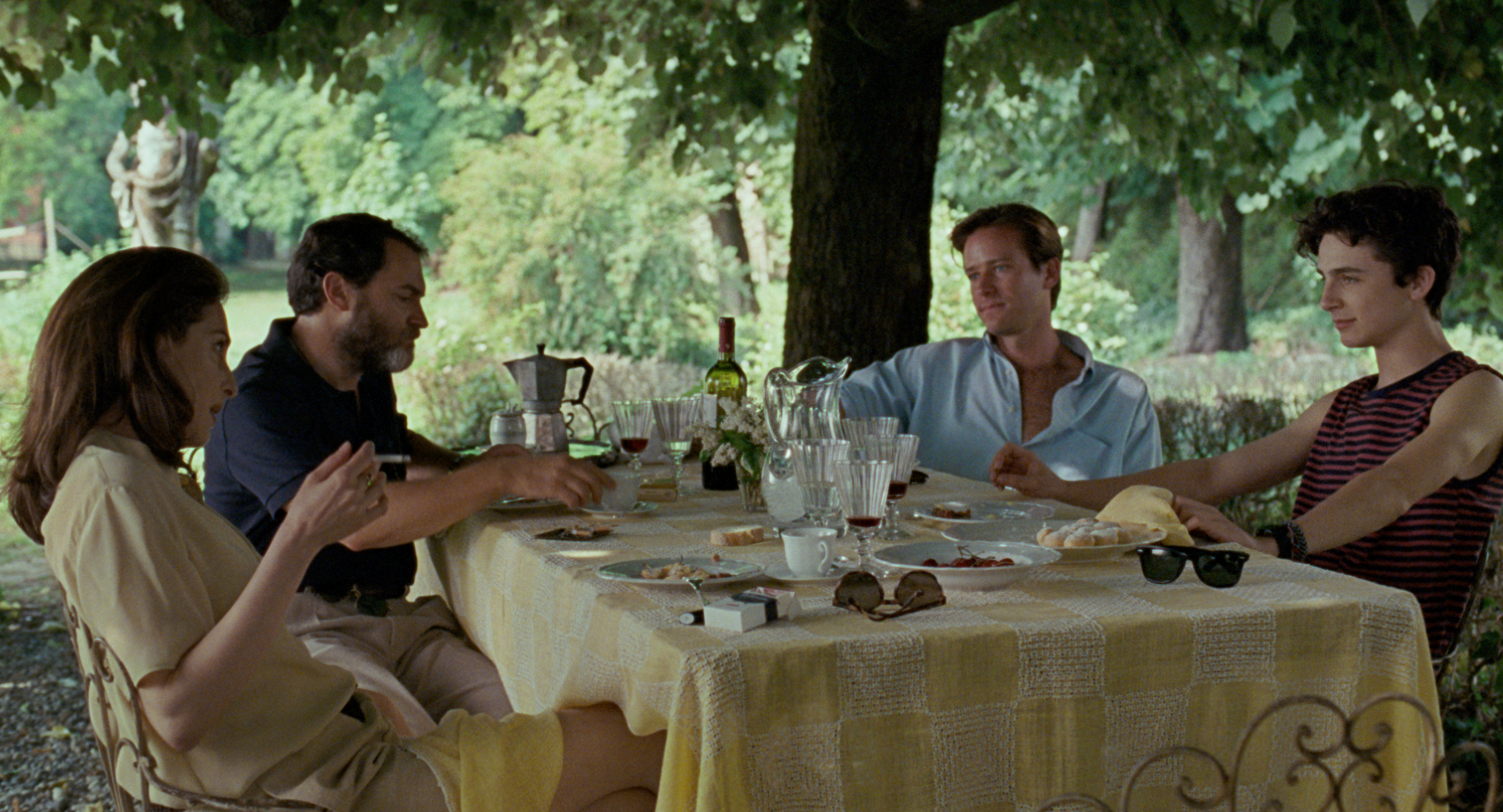
It’s here that seventeen-year-old Elio (Timothy Chalamet) spends his summer with his archeologist father (played by Michael Stuhlbarg), mother Annella (Amira Caeser) and Oliver (Armie Hammer, more leg than man in this movie) his father’s strapping summer research assistant. Elio spends his days writing music, drinking fresh apricot juice and having casual romantic flings. What a life. But it won’t last forever.

Directed by Luca Guadagino, “Call Me By Your Name” acutely captures the joyous highs and bittersweet lows of summer vacation. You can do anything you want. You can sleep in. You can sit by the pool and read your book all day. You can go skinny dipping at midnight.  You can even have an affair with an older American college student (more on that soon). Obligations to work and school are nil. Time itself seems to have stopped.  Of course, we know all this pleasure and freedom is short lived. Summer will end and reality will set in.  The same can be said for the film’s central relationship—it’s impassioned and felt but also transient. Like the summer in Italian Eden, it must also come to end.
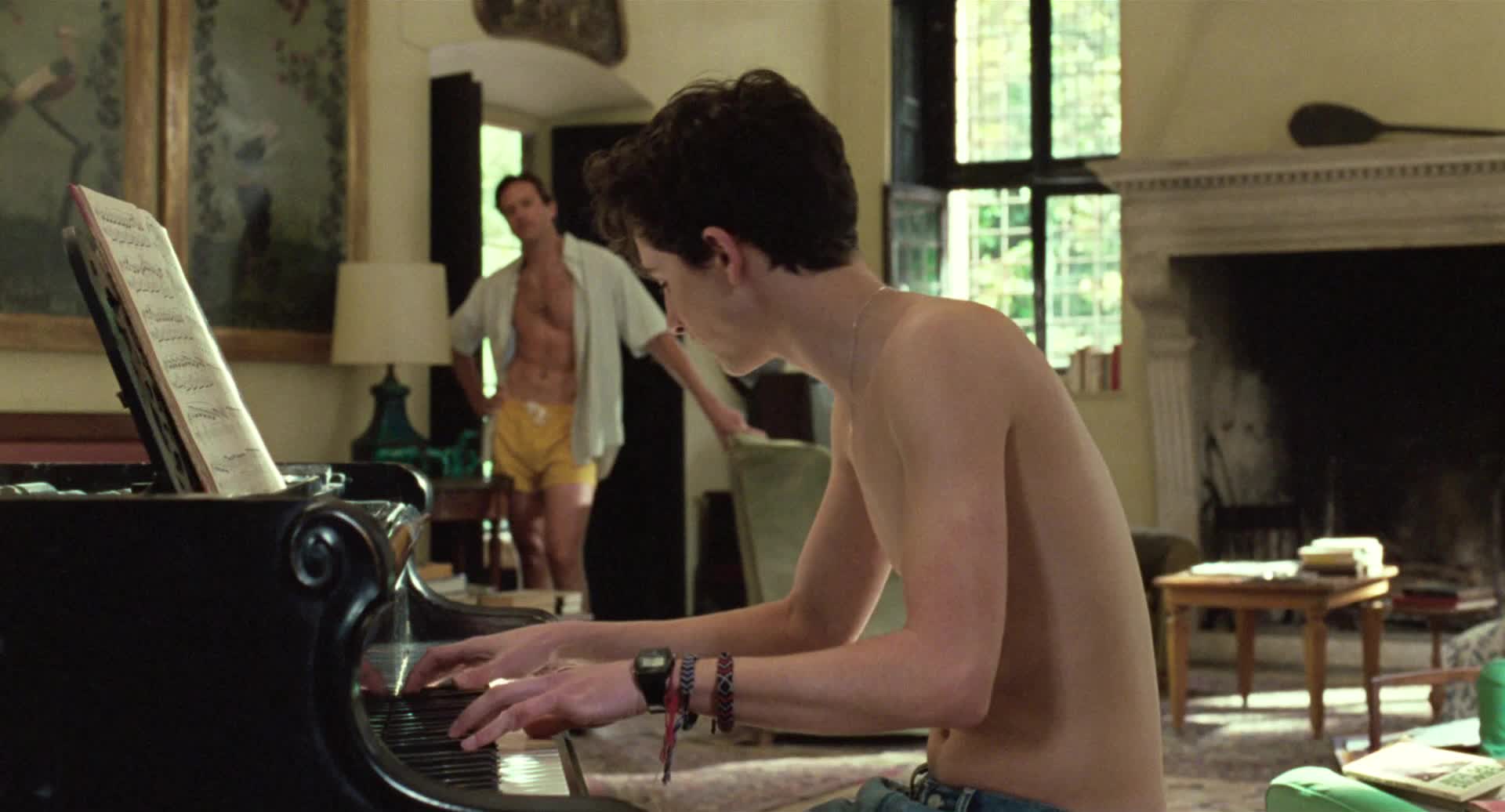


The movie put me in such a relaxed state of mind that I was more than ready to be invested in the drama of the central romance. Elio begins a relationship with Oliver. Oliver is smoother and more assured of himself while Elio is a little awkward and still trying to figure out who he is.  They share a quiet and thoughtful bond. There are no lengthy courting sessions; they don’t have effortless romantic banter. Sometimes there are days where they barely interact with each other.

The relationship is based more on subtle glances and physical gestures. It’s a physical relationship without being overly sexual, although it does eventually reach that point. There’s a natural energy between them that gradually turns to lust. Guadagino takes his time in developing their attraction, which makes the moment they finally consummate the relationship immensely satisfying and even a little surprising.


I can’t finish this review without mentioning the controversial aspect of “Call Me By Your Name:” Oliver is twenty-five and Elio is seventeen. It’s an uncomfortable, divisive issue that the movie doesn’t directly address. Some viewers (especially American) will be unable to look past the age difference and I can’t really fault them for that. But aside from the fact that the movie is set in nineteen eighty-three and in Italy (where the age of consent is fourteen) I wasn’t bothered by the relationship because of how well Guadagino handles it. Their relationship could have been more explicit and exploitive but instead it’s tender and respectful. Had Oliver been more of manipulator or an abuser, I would have a harder time with the film but he and Elio are so gentle and considerate in their one on one scenes. We can feel their affection. In theory, the relationship is problematic but when you see the way they look at each other that concern melts away.


Ultimately, I think I was charmed by “Call Me By Your Name” more for the romanticized setting and the breezy summer vibes it emits in every sundrenched frame than Elio and Oliver’s affair but their relationship is still passionate and meaningful, making the film’s inevitably bittersweet resolution devastating to watch.

Monday, April 17, 2017

Free Fire Review (2017)


A light and easily digestible genre treat, “Free Fire” is pure cinematic joy.  At a scant eighty minutes the film is succinct (throwing us into its nutty and ultraviolent scenario) and freewheeling--fueled by snappy comedic dialogue, bullets and gore. Directed by rising British auteur Ben Wheatly, (“Kill List” “High Rise”) “Free Fire” giddily illustrates how easy it is for a seemingly stress free underworld deal to go terribly wrong. How exactly? Just throw ten testy, aggressive gangsters with fragile egos into an abandoned warehouse (circa 1978) and watch as chaos ensues over the course of a single night.

At the beginning of the night, two gangs arrive at an old Boston warehouse for a gun deal. They make small talk with one another, the usual tough guy ribbing for the most part. It’s nothing too serious, yet. But during the next ten minutes Wheatly shows how little things like petty insults can eventually snowball into something bigger. Other issues arise; the gang selling the guns brought the wrong type and personal vendettas between rival gang members find their way into the mix. The water quickly boils over and before long the first shot has been fired and the two gangs find themselves in a gunfight.

But even that doesn’t go as smoothly as it should. Instead of being a nonstop barrage of bullets and mayhem the gun battle is slow and clumsy, happening in fits and spurts. From time to time, they even forget why they’re fighting in the first place. The gangsters trade shots at one another—both gunshots and more petty insults. There’s an awful lot of bickering and joke making throughout but that’s what makes “Free Fire” so entertaining. Wheatly’s script (co written with Amy Jump) is full of delightful rapid-fire banter and one liners (“I’m not dead, I’m just regrouping”). It’s not enough for these impulsive, thin-skinned gangsters to shoot one another, they have to insult one other first. Wheatly seamlessly blends comedy with absurdist violence, violence that gets increasingly gory as the night goes on.


Wheatly assembles an impressive ensemble cast, including Cillian Murphy, Armie Hammer, Brie Larson and Sharlto Copley among others, who all deliver delectable scenery-chewing performances. Copley as an eccentric South African gangster, Hammer as the suave bushy bearded liaison between the two gangs and Larson as the token female and craftiest criminal of the bunch are the standouts.

And well, that’s pretty much it. “Free Fire” doesn’t have a lot of depth to it. The characters, while fun, remain fairly two-dimensional and I wish Wheatly would have established the setting/atmosphere a little more. There’s no real substantial reason why the action is set in the 70’s. Additionally, the film isn’t nearly as weird or as ambitious as some of Wheatly’s previous pictures. “Kill List” and its genius blend of mundane crime thriller and “The Wicker Man” remains his best work. Never the less, “Free Fire” is still a violent and funny good time.

Thursday, October 6, 2016

The Birth of a Nation Review (2016)


Nate Parker’s directorial debut “The Birth of a Nation” (A biographical/historical film centering on the Mississippi slave Nat Turner who led a slave revolt in August, 1831) has clearly been made with a lot of passion and energy. Parker spent six years trying to make the movie (ultimately having to go out and get it made himself) and that determination shines through. Also, it’s certainly an important and timely film not only because it sheds light on a historical figure and event that isn’t well known by the general movie going audience but also its focus on fair treatment for African Americans relates to the recent string of police shootings and the rise of the Black Lives Matter Movement.

As a film, “Birth of a Nation” is well acted across the board. The cinematography by Elliot Davis is crisp and polished while Geoffrey Kirkland’s period production design is rich and detailed. That being said it’s is very much a directorial debut (and an ambitious one at that), meaning Parker’s writing and directing doesn’t always match the significance of the subject matter (or his apparent passion for it) in terms of quality. Sometimes that passion translates to heavy-handedness and lazy screenwriting. And the last third of the film, focusing on the actual rebellion, is sparse and underwhelming to say the least.

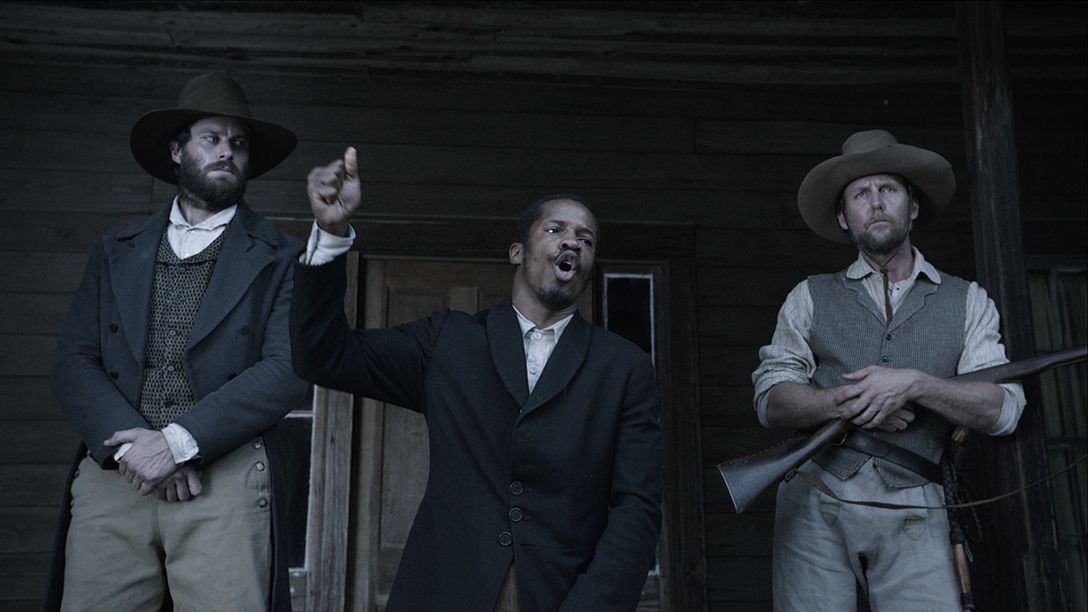
Most of the film focuses on Turner before the revolt as a young a preacher preaching to fellow slaves, working in the cotton fields and meeting his future wife Cherry (Aja Naomi King). He’s also exposed to the horrors of slavery on a daily basis. These sequences of brutality are impossible to watch without feeling uncomfortable. During one particularly gruesome moment, a slave’s front teeth are chipped out with a pick so he can be force fed with a funnel. In another scene, after Turner’s master Samuel (Armie Hammer) buys Cherry as a present for his little sister Catherine, (Katie Garfield) she squeals like a little girl whose just been given a new doll. While not as overtly violent, the scene is just as sickening and infuriating as the tooth scene.


However the film doesn’t just fixate on the brutality of slavery. We also see the romance blossom between Cherry and Turner. These are some of the best moments in the entire film as they give Turner some much-needed character dimension. In these intimate, quiet moments Turner isn’t the authoritative preacher or resistance fighter in training but a gentle and charming man. Parker’s direction here is tender and understated and his and King’s chemistry is effortless. In one amusing scene, as he’s giving a sermon, Cherry walks in and her radiance forces him to get distracted and lose his train of thought. Even Turner is susceptible to the charm of a lady.

Though, what’s most fascinating and thought provoking about this pre revolt section of Turner’s life is the film’s commentary on the interpretation of religion and how the words of the bible can be used to promote polar opposite rhetoric/ action. On the one hand, the white slave owners use the bible as a form of oppression—telling illiterate slaves that they should obey their master because the bible commands it. Even Turner is oppressed by the bible; the only book he’s ever been able to read as a black man is the bible. And as a young preacher, Turner is initially recruited to preach submission and obedience to his fellow slaves. He’s being used to betray his own people. However, when Turner finally does decide to fight back the decision is motivated by religion; Turner sees the bible not as a text of oppression but a text of freedom and resistance. In both cases the bible is being used to fit two widely different agendas. Parker’s screenplay can be a little too preachy at times. You can’t make a Nat Turner movie without the religious component but there are some admittedly clunky conversational sequences; sometimes characters simply restate on the nose passages from the bible in place of actual dialogue, which is ineffective and lazy writing.

Though, the screenplay’s heavy-handedness doesn’t become a major problem until the problematic final stretch of the movie. Turner’s transformation from average preacher to resistance fighter is unconvincing. His a-ha moment and change in demeanor happens too abruptly, feeling forced. In reality Turner did believe he was chosen by God to lead the rebellion but I imagine that was a gradual process. I doubt he simply woke one day and decided to rise up and kill white people in the name of God. Being fed up is one thing, being fed up to the point of enacting bloody revenge is entirely different and I don't think Parker is successful in conveying this change.


The entire last section dealing with the rebellion feels choppy and abridged (as if Turner ran out of money) with valuable pieces of information missing. Why did that slave kid end up betraying Turner? When the rebellion reaches the armory how did the US Army know and have time to set up an ambush? Furthermore, we see very little of the initial planning of the rebellion outside of one brief scene in the forest where he meets with a group of fellow slave conspirators. It also would have been nice to see more of the relationship between Turner and those conspirators earlier on in the movie.

The rebellion, followed by Turner’s capture and subsequent execution resembles a montage in how quickly it moves along. The uprising should be the centerpiece of the film. It’s what everything else has been leading up to. Instead it plays like a cold, inert afterthought. The film either needed to be longer or Parker should have trimmed down the rest of the movie. In fact, the very first section involving Turner as a little kid could have been cut out entirely, or at least reduced to a couple scenes. I don’t think we needed see three different people tell Turner that he is “special.” And I know we didn’t need an old wise man sitting around a camp fire proclaiming that Turner has “been chosen by God” to do great things (again, really poor, obvious writing). As it stands, “The Birth of a Nation” is frustratingly anti-climactic, neglecting the most significant part of Nat Turner’s life. 


In the end I admire “Birth of a Nation” more than I like it. It’s an important film, not just because of its subject matter and relevance but also because we need more films about people of color made by people of color. Parker refused to give up on making the film and I respect that. I wish the film were better but Parker at least shows he has the potential to be a great director.


C+ 

Tuesday, August 11, 2015

The Man From U.N.C.L.E Review (2015)


British director Guy Richie has lost his way of late. I appreciated his attempt to inject the “Sherlock Holmes” story with adrenaline, making Holmes (played by Robert Downy Jr.) into an action hero. Though I still found myself caring more about Holmes as a genius detective, unraveling complex mysteries than whether he could beat someone up or use a gun. So, while I liked 2009’s “Sherlock Holmes” it also turned into another tedious action movie. Its sequel “Sherlock Holmes: A Game of Shadows” was more of the same: more cheeky Downy Jr., more repetitive action and an uninspired storyline.

 The slick, Cold War era spy throwback “The Man From U.N.C.L.E.” (based on the T.V show) reinvigorates Richie’s career. He still directs with his trademark kinetic style and sense of cool but this time action and coolness take a back seat to character. The movie is still very cool but that style wouldn’t matter much if the central spy duo (played by Henry Cavill and Armie Hammer) weren’t strong.

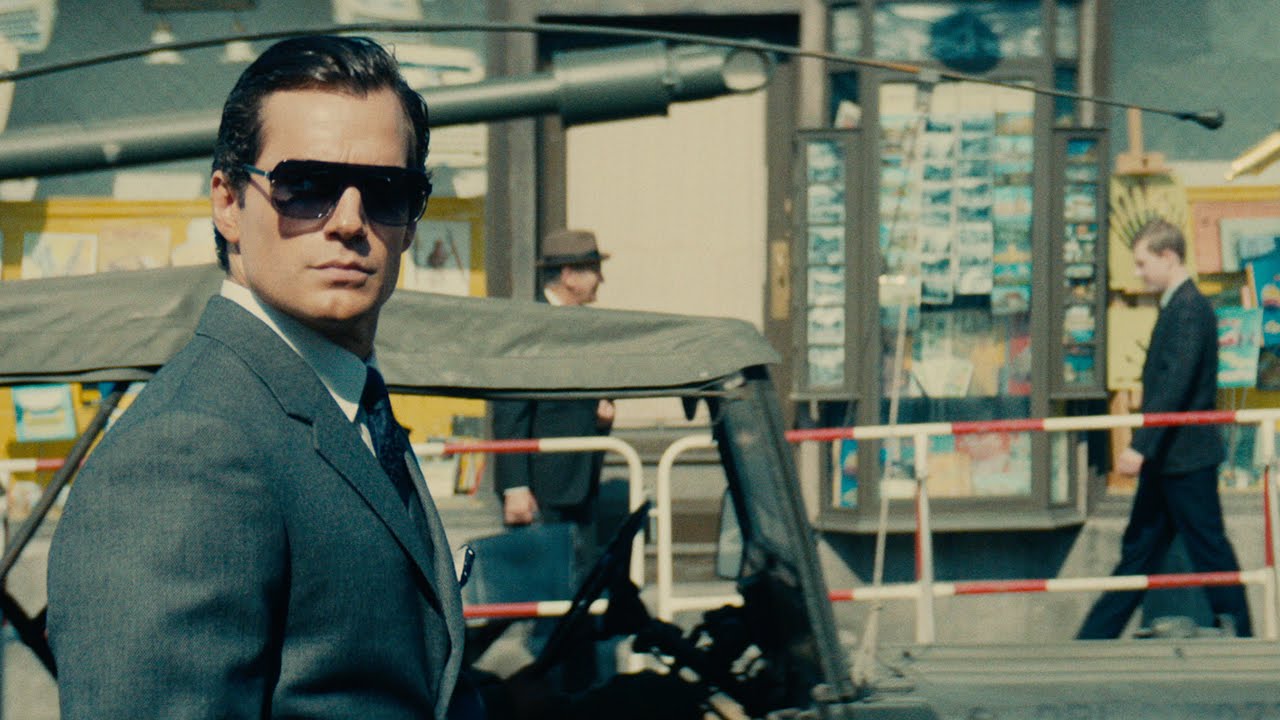
With perfect skin, neatly combed hair and a rich, soothing voice you could listen to for hours, Cavill plays ultra suave American spy Solo. Cavill’s performance is basically the polar opposite of his brooding self-serious turn in “Man of Steel.” Cavill displays near perfect comedic timing and exudes charisma in every scene. Solo handles just about every situation with wit and grace, practically strutting from one scene to the next. Even when he’s strapped into an electric chair about to be experimented on by an ex Nazi surgeon he retains a level of cool. In the span of just two movies Cavill demonstrates impressive range. Who knew the bland Superman actor could be so smooth and funny.

Meanwhile (sporting a thick Russian accent) Hammer plays the intense Soviet spy Illya. He’s an intimating six feet five inches and, in the words of another character, “built like a power lifter.” Illya isn’t someone you’d want to get cornered by in a dark alley. Even Solo is a little taken aback by his presence at first; “he ripped the back off my car!” he exclaims in puzzlement after Illya chases him down a dark Berlin street on foot like the T-1000 from “Terminator 2.” Though Hammer also gets to be playful and charming. For example, when German mechanic and fellow spy Gabby (Alicia Vikander) is trying on clothes to go undercover as his wife, Illya intervenes, claiming that a Soviet wife wouldn’t wear the clothes she’d tried on and proceeds to pick out the outfit for her. Hammer hasn’t done much of note since his duel performance as the Winklevoss twins in “The Social Network.” Here, he gives his first accomplished leading performance.


Together Cavill and Hammer are immaculate, playing off each other wonderfully and giving the movie balance. We don’t want too much of the suave agent, just as we don’t want too much of the menacing one. Richie keeps the focus of the picture on their turbulent, banter-ey dynamic. As enemy spies being forced to work together Solo and Illya are constantly trying to one up each other-- putting mini tracking devices in each other’s stuff or seeing who has the best gadget to cut through a chain-link fence to sneak into a top secret facility. At the same time, through their begrudging rivalry, we begin see a common understanding between them that makes Solo and Illya into an effective team. They’re both talented at what they do and acknowledge their status as puppets in a war between two major countries. The nationalistic tension still exists but there’s a mutual respect.

Perhaps the most surprising thing about “U.N.C.L.E.” is the action and how little there is. Both “Sherlock Holmes” features were full of relentless, nonstop action but in “U.N.C.L.E.” the action is used sparingly and effectively. There are only about five  major action set pieces that are well spaced throughout the movie’s one hundred and sixteen minute running time. And they play second fiddle to the Hammer/Cavill relationship, instead of being the focal point of the film.


On top of that, Richie finds new and clever ways to capture the action. Boat chases have become such a tired cliché in action cinema; in “U.N.C.L.E.” however, Richie stages his boat chase from Solo’s perspective as he sits in a truck, watching Illya fend for himself on the water. The song “Che Vuole Questa Musica Stasera” by Peppino Gagliardi plays on the truck radio in the background. The sequence is funny and the change in perspective makes it fresh and exciting. We also see innovation in Richie’s handling of the nighttime raid on a small island. What could be a generic, fifteen-minute raid sequence is turned into a brief five-minute montage using split screen (sometimes the screen is divided in up to eight small segments). Again, Richie makes this standard action scene feel new and makes good use of the tacky split screen device.

Also worth singling out is the lively and diverse soundtrack. In addition to using existing songs from the time period, Daniel Pemberton’s original score pays homage to the old school orchestral spy scores by Jerry Goldsmith and Lalo Schifrin, as well as other cinematic legends like Ennio Morricone. The score is a crucial component-- enhancing the action and strengthening the film’s fun, chic 1960’s atmosphere.


The actual plot of “U.N.C.L.E.” involving Nazis, nuclear warheads and the retrieval of yet another flash disk, is slight but the movie is light on its feet and the attention to character is so strong that it doesn’t matter much. The only major flaw in Richie’s movie is that Alicia Vikander is underused. Vikander is another rising star that has been on a roll this year (in movies as diverse as “Ex Machina” and “The Testament of Youth”). While Gaby certainly isn’t weak, she’s forced to be a third wheel to Solo and Illya. Vikander still gets to be funny and sexy but the character doesn’t play as prominent a part as our two male spies.

Even so, “The Man From “U.N.C.L.E.” is smart, funny, stylish character driven picture. There’s just enough action to keep things from feeling repetitive or draining. It’s Guy Richie’s best film since “Snatch” and it showcases the immense talents of three up and comers. I’ll be curious to see how the film does at the box office. I don’t think there’s much interest (among young movie-goers) in a “Man from U.N.C.L.E.” movie and the marketing makes it look like yet another generic action heavy spectacle.

B+