Showing posts with label Ben Wheatley. Show all posts

Monday, April 17, 2017

Free Fire Review (2017)


A light and easily digestible genre treat, “Free Fire” is pure cinematic joy.  At a scant eighty minutes the film is succinct (throwing us into its nutty and ultraviolent scenario) and freewheeling--fueled by snappy comedic dialogue, bullets and gore. Directed by rising British auteur Ben Wheatly, (“Kill List” “High Rise”) “Free Fire” giddily illustrates how easy it is for a seemingly stress free underworld deal to go terribly wrong. How exactly? Just throw ten testy, aggressive gangsters with fragile egos into an abandoned warehouse (circa 1978) and watch as chaos ensues over the course of a single night.

At the beginning of the night, two gangs arrive at an old Boston warehouse for a gun deal. They make small talk with one another, the usual tough guy ribbing for the most part. It’s nothing too serious, yet. But during the next ten minutes Wheatly shows how little things like petty insults can eventually snowball into something bigger. Other issues arise; the gang selling the guns brought the wrong type and personal vendettas between rival gang members find their way into the mix. The water quickly boils over and before long the first shot has been fired and the two gangs find themselves in a gunfight.

But even that doesn’t go as smoothly as it should. Instead of being a nonstop barrage of bullets and mayhem the gun battle is slow and clumsy, happening in fits and spurts. From time to time, they even forget why they’re fighting in the first place. The gangsters trade shots at one another—both gunshots and more petty insults. There’s an awful lot of bickering and joke making throughout but that’s what makes “Free Fire” so entertaining. Wheatly’s script (co written with Amy Jump) is full of delightful rapid-fire banter and one liners (“I’m not dead, I’m just regrouping”). It’s not enough for these impulsive, thin-skinned gangsters to shoot one another, they have to insult one other first. Wheatly seamlessly blends comedy with absurdist violence, violence that gets increasingly gory as the night goes on.


Wheatly assembles an impressive ensemble cast, including Cillian Murphy, Armie Hammer, Brie Larson and Sharlto Copley among others, who all deliver delectable scenery-chewing performances. Copley as an eccentric South African gangster, Hammer as the suave bushy bearded liaison between the two gangs and Larson as the token female and craftiest criminal of the bunch are the standouts.

And well, that’s pretty much it. “Free Fire” doesn’t have a lot of depth to it. The characters, while fun, remain fairly two-dimensional and I wish Wheatly would have established the setting/atmosphere a little more. There’s no real substantial reason why the action is set in the 70’s. Additionally, the film isn’t nearly as weird or as ambitious as some of Wheatly’s previous pictures. “Kill List” and its genius blend of mundane crime thriller and “The Wicker Man” remains his best work. Never the less, “Free Fire” is still a violent and funny good time.

Thursday, April 28, 2016

High Rise Review (2016)


Ben Wheatley’s weird, ambitious new feature “High Rise” (based on the 1975 novel by famed post-modern author JG Ballard) certainly sticks with you long after the end credits. It’s a surrealistic black comedy and a macabre nightmare about urban living rolled into one.

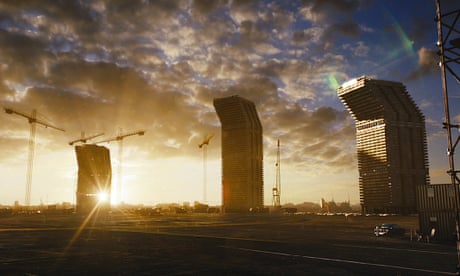
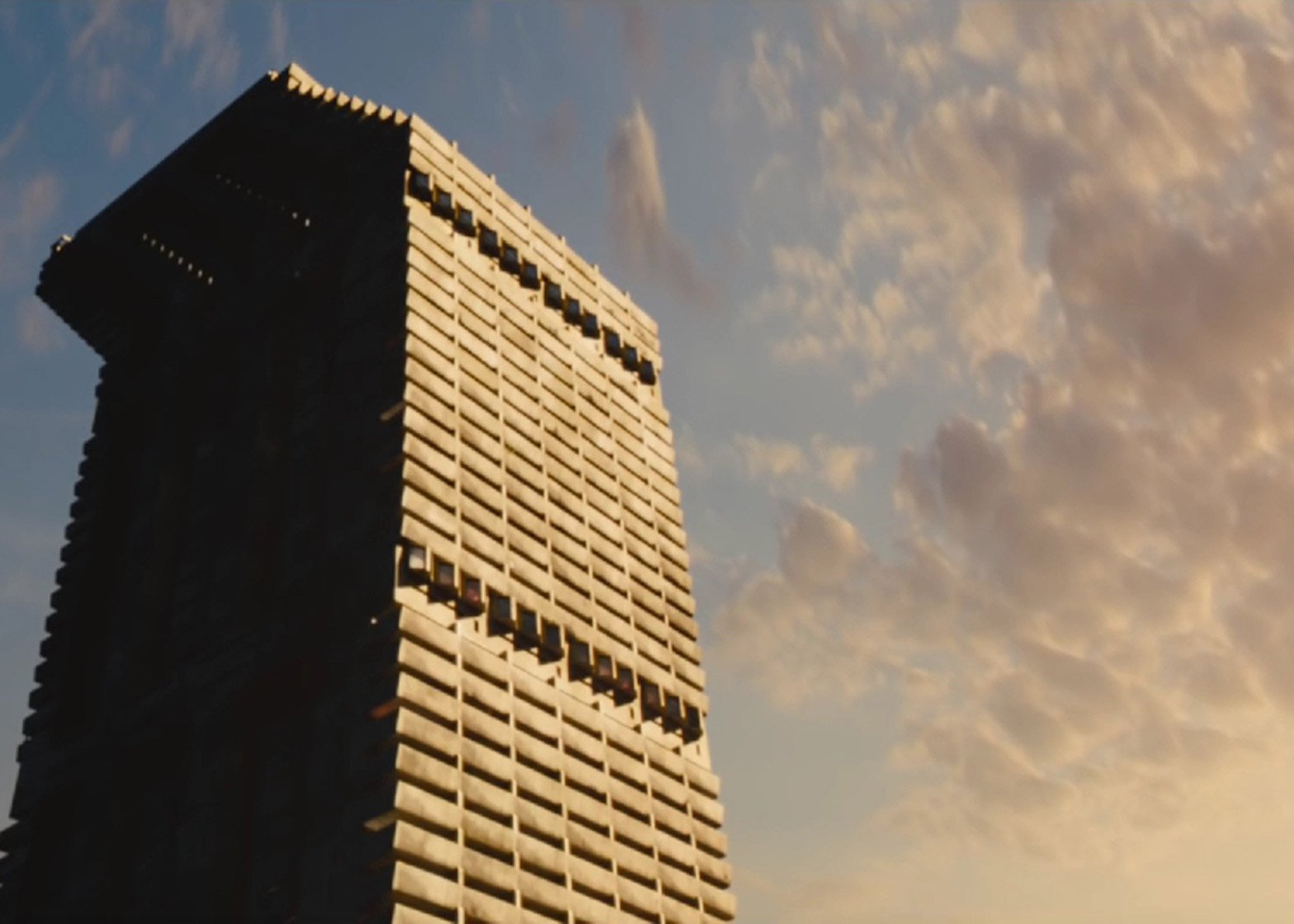
As the title suggests, most of the action takes place at a massive high-rise apartment building. While located in London, the building is nevertheless isolated from the rest of the city. With its slanted and jagged modern art design (inside doorways and archways are mostly triangular in shape), the building is luxurious and welcoming. At the same time, it’s overwhelmingly grey in color (the entire building is made of concrete) and the barren, shabby parking lot surrounding it makes the structure look like an ominous, rundown prison. In fact, as the film goes on, “prison” becomes a more apt term to describe the building rather than “luxury high rise” and both the residents trapped inside the building and the viewer experience an intense feeling of claustrophobia.

In England during the 1950’s, 60’s and 70’s, there was a boom in high-rise construction. These structures were meant to exhibit post-war progress and modernity; instead they were a hassle. Often times they were cheaply and hastily made, leading to frequent maintenance problems. There were also issues of security (break ins, vandalism etc.) and an unpleasant feeling of isolation; residents felt cut off from society.  

Ballard’s original novel was clearly addressing this unsavory situation, however, the book (as well as the movie) goes much further by presenting a far more bleak, apocalyptic vision of high-rise living and modern life in general. This state of the art structure, that’s supposed to signal progress, causes societal regression and the de-evolution of our species.  Bleak indeed.

Complementing this apocalyptic viewpoint is the film’s overt themes of class division and warfare. Due to its all-inclusive nature (a shopping mall, swimming pool and even a school are included) the building becomes a microcosm for society, with the wealthier residents living on the top floors and poorer residents near the bottom. In between lies the film’s protagonist Dr. Robert Laing (Tom Hiddelson, equal parts understated and sinister) the building’s newest resident, who makes friends from both the lower and higher floors, most notably Anthony Royal (Jeremy Irons) the building’s architect and “ruler” of sorts. The upper floor residents are grotesque caricatures of wealthy people, who frequently throw elaborate parties (involving booze and orgies) that take power away from the lower floor rooms. This tension between the upper and lower floor residents drives the action of the first half.

Can the movie feel a little too blatant and heavy-handed? Yes. Wheatley hits the “building-is-society” and “class divide” themes pretty hard talking down to his audience in the process. The screenplay by Amy Jump contains some stupid, ham-fisted dialogue that tends to over explain and snaps you out of the moment. For example, during a scene where Laing is walking up the stairs, he’s stopped by a wealthy tenant who says, “Social climbing…are we?” And later on Laing tells Royal right out: “you hold the key to the building…symbolically.”

However, “High Rise” remains watchable thanks to its sheer nuttiness and unpredictability. The film is a hypnotic fever dream that becomes more delirious and dislocated from our reality with each passing minute. The focus shifts from class warfare to chaos and anarchy, a trajectory that proves to be far more compelling and terrifying than a simply rich vs. poor conflict because there are no clear-cut good and bad guys.


Everyone, upper floor and lower floor, goes mad-- reverting back to savagery, roaming around in small factions causing damage and mayhem. Socioeconomic status becomes superfluous.   The building itself eventually loses power for good while the hallways and corridors become trashed. The once luxurious, all-inclusive high rise is now a disheveled industrial ruin populated by deranged squatters who seem to have no regard for one another. In this feverish state, the picture inspires both moments of inspired, twisted humor and horror in equal measure. A rape sequence (or rather the moment right before the rape and after) involving two supporting characters that used to be friends is genuinely disturbing and icky.

“High Rise” can be repetitive and tedious; there are too many slow motion party/orgy montages that cause the film to drag every now and then. Additionally, some people may find the movie difficult to enjoy because Laing and the rest of the residents are so emotionally distant as characters. There isn’t anyone you can fully connect or sympathize with mainly because they don’t connect or sympathize with one another, especially when all hell breaks loose.


Even so, Wheatley has crafted a bizarre, thought provoking feature about modernity and urban living gone horribly wrong.


B-