Showing posts with label Kristen Stewart. Show all posts

Sunday, July 16, 2017

A Ghost Story Review (2017)


I’m ready to declare 2017 the year of the art house ghost movie. Both Oliver Assayas’ “Personal Shopper” and now David Lowery’s “A Ghost Story” are mundane, quietly eerie supernatural dramas about grappling with grief and finding closure. “Personal Shopper,” which came out in March, starred Kristen Stewart as an amateur medium desperately trying to make contact with the spirit of her recently deceased twin brother. Meanwhile, “A Ghost Story” takes the point of view of a grieving ghost stuck in a purgatorial state.

That ghost is/was C, (Casey Affleck) a musician who died in a sudden car accident. After his widow M (Rooney Mara) goes to identify his body at the morgue, the ghost…wakes up. He stands up and proceeds to walk out of the room with a white sheet still covering him. Out in the hallway, a portal containing a blinding white light materializes in front of him, presumably a door to the afterlife. However C chooses not to go and instead walks across roads and fields, back to his suburban house to see his grieving wife. What does he do? Does he try to make contact with her? Does he help her make pottery? No, he just watches her, still dawning that white bed sheet, now with a pair of eyeholes, reminiscent of a child’s Halloween costume. This low-tech costume choice is oddly effective--creepy, mysterious and refreshing.

Of the two films, “A Ghost Story” is more experimental and abstract. Aside from containing very little plot and action, it’s primarily composed of lengthy single take shots that sometimes go on for five to seven minutes. This deliberate visual style mimics C’s onscreen behavior and desires. He wants to spend as much time as he can with M before he passes on. He wants to cherish every moment, every movement and every grief inspired breakdown. There’s a palpable, aching feeling of longing and sorrow pulsing through these lengthy scenes.


Admittedly, these scenes can be frustrating at times. There’s a much talked about scene involving M grief eating an entire pie while C watches from beyond that’s kind of painful to sit through. It’s moving and Mara’s performance is subtly devastating but it’s also a…really really long scene of a woman eating an entire pie. A really long scene. I admit I zoned out during the picture a few times. “A Ghost Story” may be the longest hour and twenty-seven minute movie I’ve ever seen.


“A Ghost Story” can be difficult to endure but after the first thirty minutes or so, the movie really picks up steam. Time itself accelerates, while space rapidly changes shape. Days, years, decades, centuries pass before our eyes in a matter of seconds. Before you even have a chance to blink, a small suburban house materializes into a mighty skyscraper. It’s exhilarating and beautiful. “A Ghost Story” goes from being a claustrophobic film about a wandering soul (yanked out of his body too soon) trying to find closure with his beloved, to a more expansive, ambitious affair. It morphs into a lyrical mediation on the fluidity of time, the nature of legacy, the significance a certain place (a cherished family home, a plot of land) can hold for someone, the vastness of the universe and our minuscule place in it. Lowery manages to pack quite a bit into such a brief run time.

The film becomes one long, surreal, mind-bending montage. Time keeps pushing forward until suddenly it stops and starts over from the beginning, taking our white sheet-wearing friend with it like a current pushing a stick down a river. If you were bored and frustrated with the film before, you won’t be able to take your eyes off it now. “A Ghost Story” can be rough going, especially at the beginning but once it changes into this bigger, more thought provoking film, it’s endlessly absorbing.

B


Thursday, March 16, 2017

Personal Shopper Review (2017)


“Personal Shopper,” the hypnotic and quietly unsettling new film from French director Olivier Assayas, asks us to consider the concept of ghosts in more of a subjective sense rather than an objective one. Ghosts aren’t empirical beings that wander around the land of the living on their own but entities born from our own emotional state of mind. That’s why some people claim to experience ghostly presences while others don’t. They’re projections of our fears and anxieties, our guilt and sorrows, our regrets and even our curiosity. Ghosts can be a source of terror and torment but they can also be a source of self-help. Someone who goes to a Medium or Psychic to make contact with a deceased loved one does so for his or her own well-being, for a sense of emotional closure. Perhaps that person feels guilty for their loved ones death or they just haven’t accepted that they’re gone.

Maureen (Kristen Stewart), the protagonist of “Personal Shopper” hasn’t gotten over the death of her twin brother Lewis. So she waits patiently, hoping to make contact with him. She currently lives in Paris (where he lived) and works as a personal shopper for a fashion model to pay the bills, a job she hates but does well. Maureen’s been there for a little over three months and little progress has been made. She’s beginning to grow restless and agitated, struggling to keep her mental composure. It’s at this point that she starts conversing with a mysterious ghost via text message as she travels around Europe on various shopping excursions.

The ghost is a peculiar one to say the least. Sometimes it teases and toys with Maureen, other times it acts like a psychiatrist, asking her tough questions and forcing her to confront repressed feelings. And sometimes it can be erratic and intimidating, snapping at her like an unstable stalker. The ghost is a manifestation of her distraught, unbalanced state of mind that finds her at the right time. In her interactions with this entity, Maureen is able work through her problems; she comes face to face with her deep seeded anxieties and insecurities, not just in regards to her dead brother but in regards to her own sense of self purpose and uncertain future. Right now she’s on a clear mission, (to make contact with her brother) a mission that guides her and gives her purpose. Though once she makes contact, what then? What’s will she do next? What will her purpose be? And when she does make contact with Lewis will that really bring her closure? These questions (and others) haunt Maureen at all times.


The tense, sometimes humorous, sometimes tender text message conversations are among the best scenes in the entire film. Watching Maureen’s progression (from initially resisting the ghost’s digital beckons, to slowly giving into its games and interrogations and ultimately opening herself up emotionally) is endlessly absorbing. “Personal Shopper” is a poignant and thoughtful portrait of personal grief and acceptance with the exhilarating slow burn pacing and structuring of a psychological thriller. Assayas lets the plot unfold with a subtle, unassuming tension and doesn’t spoon-feed the audience. Details concerning character and background are revealed organically, often times through casual conversation and some things are even left unstated.

Though “Personal Shopper” wouldn’t work nearly as well without Stewart’s understatedly magnetic performance. Her natural, low-key onscreen presence is both comforting and hypnotic—she’s in nearly every frame of “Personal Shopper” and you can’t take your eyes off her. As the resilient but damaged Maureen, Stewart exudes an unshakable confidence and put-together-ness that allows her to function in her life as a personal shopper and also masks an internal emotional fragility threatening to overtake her. The brief moments where she allows herself to breakdown and succumb to her overwhelming grief are heart wrenching. In her interactions with the other characters she can be calmly snarky and quietly compassionate. Through her nuanced work here, Stewart continues to prove she’s one of the best working actors.


“Personal Shopper” stumbles a bit when it deals with a murder mystery subplot.  It’s fun to watch in the moment  (Assayas treats it with the same tautness as the rest of the picture) but it ultimately fizzles out, making you wonder why it was there in the first place. Then again, I could be wrong about that, in fact I could be wrong about my overall summation of the film--in regards to how it views ghosts/spirituality. Assayas wisely doesn’t make any definitive statements when it comes to the events and ideas in the picture, meaning you can interpret it any number of ways. “Personal Shopper” is a deceptively complex, intense and emotionally rewarding experience.

A-

Wednesday, October 19, 2016

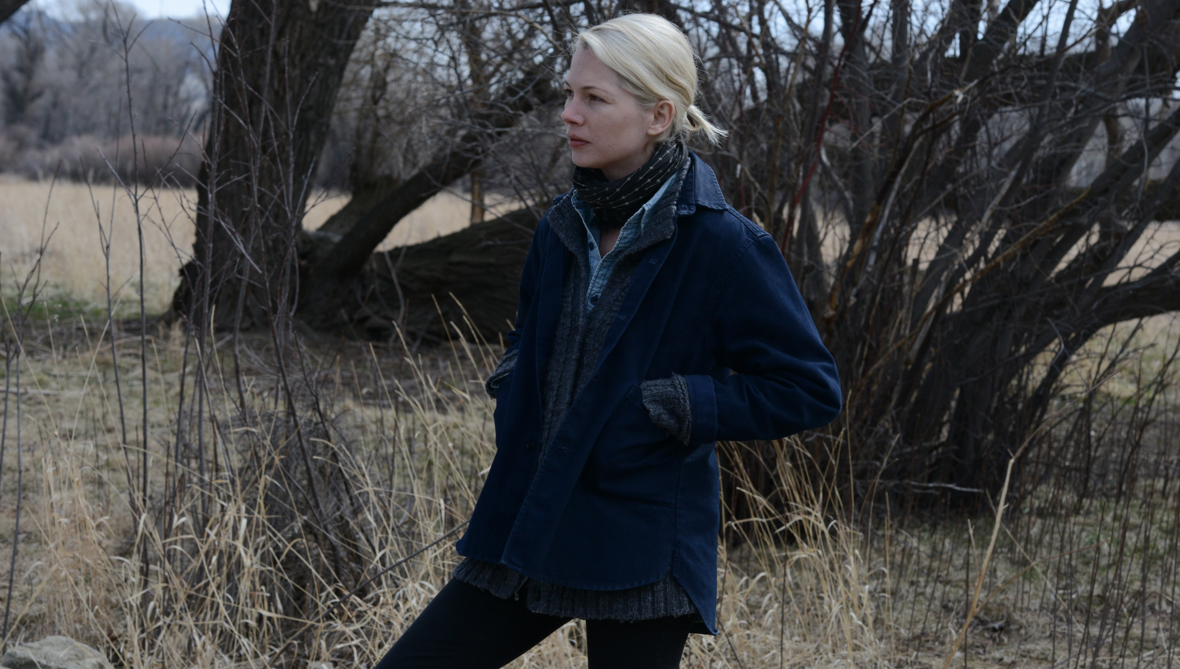
Certain Women Review (2016)


Not quite an anthology and not quite a “vignette” film, writer/director Kelly Reichardt’s patient, thoughtful “Certain Women” provides a glimpse into the mundane lives of three hardworking, ordinary women as they demand respect from those around them, try to make their mark on the world and seek out meaningful connections. For the most part, the picture is divided into three segments, each one focusing on a different woman, sort of like a short film.

The brilliance of “Certain Women” lies in Reichardt’s quiet and restrained approach-- an approach that puts all of the focus on character instead of plot and doesn’t talk down to the audience. The film is as understated as they come; Reichardt doesn’t spoon feed or over explain. A lot of the film’s substance is kept bellow the surface, implied through a facial gesture or a seemingly straightforward line of dialogue. While not confusing or intricate in terms of plot (in fact there’s not much in the way of plot), “Certain Women” still requires your undivided attention, as it’s a film about subtle gestures and observation.

Reichardt directs with unhurried grace and the three lead actresses (Laura Dern, Michelle Williams and Lily Gladstone) give impressively understated performances, performances that rely almost exclusively on subtle facial gestures and body language rather than lengthy monologues or dialogue heavy interactions.


The first segment focuses on Laura Wells (Dern), a small town lawyer. One of Laura’s clients, Fuller (Jared Harris, pathetic and heartbreaking. This might be his most tender, soulful performance) has been trying to sue his former employer for workers comp but is unable, making him mentally unstable and increasingly needy. This chapter is characterized by quiet frustration and guilt. You sense that Laura is dissatisfied with the way her career has been going thus far and feels like she isn’t being taken seriously. Fuller insists on meeting with another lawyer (a male lawyer) to tell him what she has been telling him for months.

There are times when Laura herself looks like she’s going to snap, at having to deal with such a needy, frustrating person. During a car ride, Laura has a look of utter irritation and anguish as she silently listens to Fuller complain about his life. Though, she also feels a sense of pity and regret—regret over the fact that she can’t do more to help her client. Again, most of this is implied rather than out rightly stated in the dialogue or action.

The second segment revolves around Gina Lewis (Williams), who’s currently in the process of building a house on a patch of land she purchased, along with her husband Ryan (James Le Gros) and angsty teen daughter Guthrie (Sara Rodier). This is probably the least compelling section in the entire film. Although Gina’s determination to get the house built and the underlying tension between her and her family is intriguing, the segment ultimately feels incomplete. The other two stories, as understated as they are, still have a sense of dramatic momentum and build to a satisfying conclusion. However, this story feels somewhat flat and anticlimactic.


And then there’s the final story, which is not only the best but also one that would make a great solo short film. It’s a tender, moving meditation on alienation and the distances we travel (literally and figuratively) to find and maintain meaningful connections with other people. An awkward, lonely horse ranch hand named Jamie (Gladstone) goes to a night school class taught by young overworked lawyer Beth Travis (Kristin Stewart). The two eat dinner afterwards at a nearby diner and Jamie develops an attachment towards Beth (whether Jamie’s attachment is plutonic or romantic is left up to you to decide) and keeps coming back to the class. The post class meals become the highlight of her day— giving her something to look forward to other than work.


As someone who’s also shy and often seeks isolation, this story resonated the most. Though I enjoy my alone time, I also greatly look forward to the meetings and interactions with my few companions. Even introverts need connections with other humans once in a while. Hell, we even treasure some of them. Throughout the day, I think Jamie is happy and content to take care of horses in isolation, but when she gets to see Beth, she’s ecstatic. During one night, the look of utter joy on her face as she silently gives Beth a ride on her horse to the diner is beautiful. Of all three stories, this one hit home and held me the entire way through, building to a bittersweet conclusion.

 “Certain Women” won’t be everyone’s cup of tea. Some will find it to be too slow or take issue with the film’s lack of plot. It’s not an easy film to watch, as it requires a lot of work on the part of the audience to find all the details and nuances. But for those who are patient enough, Reichardt’s picture proves to be a fascinating, varied portrait of women in smalltown America.

B+


Thursday, July 21, 2016

Cafe Society Review (2016)


Woody Allen never met a major city he couldn’t make beautiful and majestic. In his latest feature “Café Society,”—a nostalgic romantic comedy/drama set in the fabulous thirties—we get two for the price of one: New York and L.A.

Lush, sun-drenched shots of affluent L.A. neighborhoods dominate the first half while the sublime New York skyline dominates the second. Beverly Hills mansions with ornate swimming pools, patios and balconies are juxtaposed with exquisite upscale Manhattan penthouses and nightclubs. From a technical standpoint the film is simple yet elegant and neat. Allen seems physically incapable of making a city look less than perfect. Adding to all of this city porn are loving descriptions of said cities—at one point the narrator, Allen himself, says: “a beautiful dusk sky enveloped New York”—upbeat jazz music and a relationship between an older man and a young woman.

We’re in Woody Allen land all right.

Unfortunately, as beautiful as “Café Society” is it can’t help but feel frustratingly surface-level. The cities and the societies within them don’t come alive the way they have in previous Allen films. The two settings feel more like backdrops rather than three-dimensional environments. Additionally, the second half of the movie is a narrative mess, which leaves the viewer with a bitter taste in their mouth.

It’s a shame because the first thirty minutes or so are solid. Naïve neurotic New Yorker Bobby (Jesse Eisenberg, playing a younger version of the kind of nebbish character Allen used to play in his movies) moves to L.A and is taken under the wing of his somewhat brash, headstrong uncle Phil (Steve Carell, amusing with a hint of vulnerability), a Hollywood agent. At swanky cocktail parties Bobby is introduced to the Hollywood elite. However he’s more captivated by the down to earth charm of Vonnie (Kristen Stewart), Phil’s secretary and lover.

Stewart and Eisenberg are the best things about “Café Society.” Stewart continues to show that she’s so far above the “Twilight” franchise, giving a quietly charming and self-assured performance. Vonnie may be soft spoken but she isn’t passive and even though she becomes locked in a love triangle she remains strong and independent minded. Meanwhile, Eisenberg easily slides into the role of fidgety but kindhearted Bobby. It’s the kind of role Eisenberg can play in his sleep.

As a pair they’re effortless, transcendent even. Their flirty, banter-y conversations feel so natural and vivacious. The minute they get together they click and suddenly you want the whole movie to be just them walking around and talking.

But it isn’t.

Aside from the romantic angle, “Café Society” is about the social elite--in Hollywood and later on in Manhattan when Bobby goes back to help run a high-class nightclub-- and how it tries to corrupt these two innocent, genuine kids. Both Bobby and Vonnie are brought into this life and they think it’s what they want. However, in L.A. they feel more at home eating dinner at a shabby “hole-in-the-wall” Mexican restaurant than at a swanky party surrounded by rich folk. In other words, high society may be glamorous but it’s also superficial and unsatisfying. The film’s resolution, while mostly cheerful, has an underlying sense of melancholy and regret. Everything didn’t turn out the way it should have.


This is certainly an intriguing idea but Allen’s touch is often too soft and polite.  Because the film looks so magnificent, because there are so many lavish party sequences and because the tone is generally upbeat and jaunty it feels like Allen is more enamored with this lifestyle then critical of it. At one point Bobby says he wants to go back to New York because he finds L.A. to be “nasty” and “boring” and he can’t take all the “backstabbing” but we don’t see anything in the film that would warrant that kind of negative reaction. We see none of the “nastiness” or “backstabbing.”

If Allen is indeed more enamored with this lifestyle than critical that’s fine but his depiction of it is nevertheless shallow. More often than not it’s like we’re viewing a museum diorama. There’s a lot of name-dropping and listing in a lazy attempt to create atmosphere.  In L.A., famous Hollywood stars like Paul Muni and Ginger Rogers are mentioned in passing and in New York Allen’s narrator lists the various influential people who frequent the nightclub. In short, we don’t feel like we’re there because Allen doesn’t explore these worlds in great enough depth.

Making things worse, the second half is a total mess—unfocused and rushed. A thriller side plot involving Bobby’s gangster brother Ben (Corey Stoll) is poorly established and hastily resolved. Blake Lively shows up as a rival romantic partner for Bobby and is given absolutely nothing to do and Carrell is sadly pushed off to the side. Additionally, Allen manages to cram in a quick crisis of faith and philosophical conversations about love, death and religion into the mix, which further confuse things. It’s sloppy writing, pure and simple.

Woody Allen continues to write and direct one film a year; a work ethic I admire. However it also means that instead of taking some additional time to polish and refine his screenplays he churns and burns. As a result, he’s made a lot of decent but forgettable pictures. “Café Society” is sadly one of those and outside of Eisenberg/Stewart and the pretty cinematography/ production design there’s not much reason to see it.

C- 

Thursday, August 20, 2015

American Ultra Review (2015)


“American Ultra” is hard R Jason Bourne meets Cheech and Chong. A government conspiracy action comedy (with a romantic angle tossed in) dreamed up by two young stoners hot boxing their basement. “Dude! What if the C.I.A. made us into genetically altered government agents and then decided to kill us?” An intriguing idea that falters in execution— the movie falls victim to a dull, uninspired plot, repetitive action and an uneven tone.

Jesse Eisenberg plays Mike Howell, a stoner who’s been living happily with his cool stoner girlfriend Phoebe Larson (Kristen Stewart) for the past five years. Working his mundane job at a convenience store he writes and draws the adventures of Apollo Ape and plans on proposing to Phoebe. That is until everything gets crazy. Unbeknownst to him Mike is actually a C.I.A. agent and one night he’s “reactivated” by agent Victoria Lasseter (Connie Britton) when she receives word that Mike is going to be killed. Fellow C.I.A. agent Adrian Yates (Topher Grace) launches a full on offensive—practically taking over the small West Virginia town Mike and Phoebe live in. Things get off to a solid start. Director Nima Nourizadeh throws us into this chaos without much explanation (mirroring Mike’s own confusion) but we go along with it because we hope to find out why Mike is now Public Enemy Number One.


Soon enough however, the intrigue runs out and “American Ultra” becomes a drag. The screenplay by Max Landis runs out of ideas and surprises, turning into just another “On-the-run-from-government-agents” picture with hit and miss comedy sprinkled throughout. Yates is a one-dimensional bad guy. The action is repetitive and the scenes themselves lack creativity— they’re poorly shot in dim, disorienting shaky cam. I almost got seasick from watching them. The movie certainly doesn’t shy away from gore (it earns its R rating) but it gets to a point where you ask: who cares? The violence isn’t used inventively anyway and the story around it becomes so dull.

The origin of Mike’s abilities is vaguely established; by the end we still don’t know much about the government program he was a part of and more importantly we don’t know why Mike is such a liability. It doesn’t seem practical to waste the time and resources to kill this guy when things seemed fine to begin with. He lives a very simple unexciting life. He didn’t know he was an agent until Victoria reactivated him with a very specific verbal code that no one would know and he doesn’t become dangerous until he’s initially provoked. Mike doesn’t become a liability until the C.I.A. makes him into one. And the decision to kill him appears to come out of thin air; why is this lowly stoner all of a sudden the C.I.A.’s most wanted? Don’t they have better things to do? We’re never given an answer and frankly we stop caring after a while.


I could be looking into it too much. After all, isn’t “American Ultra” a comedy? Well yes but on some level it also wants to be taken seriously. As far as I can tell the movie isn’t trying to be a satire or parody-- it isn’t trying to comment on the government conspiracy action genre or the stoner comedy. Instead (with the shaky cam cinematography) the film feels planted in reality; it wants you to believe that Mike and Phoebe are a real stoner couple who get wrapped up with the C.I.A. The picture’s violence isn’t Quentin Tarantino “cherry-red-blood-spattered-all-over-the-wall” cartoon violence but brutal and realistic. At the same time “American Ultra” also wants to be zany, which creates tonal confusion. A scene depicting the town’s entire police force being massacred doesn’t exactly gel with John Leguizamo as an over-the-top drug dealer, or the scene in which Mike (hiding behind a kitchen cabinet) throws a frying pan up in the air and shoots a bullet that ricochets off said pan, killing a government crony. The film wants to be gritty and intense like the Bourne films but also goofy and outlandish like a stoner comedy, a combination that doesn’t entirely work. Nourizadeh should have taken a much more cartoonish approach.

On the bright side, Eisenberg and Stewart keep “American Ultra” watchable. Eisenberg’s typical fast-talking, nervous on screen persona is perfectly suited for paranoid mixed-up Mike, though Stewart does the best work. Ever since “Twilight,” Stewart has proven to be a very talented actress capable of playing a wide range of roles. Here she gives a lively, playful performance where she isn’t the helpless sidekick or the damsel in distress but gets to actively participate in the action. She’s as much an action hero as Mike is. Together they make for a likable couple and their relationship becomes the only remotely interesting aspect of the movie.

But even Eisenberg and Stewart aren’t strong enough to save “American Ultra.” The ending is ham-fisted and anticlimactic-- suggesting that all the trouble the C.I.A. went through trying to obtain and kill Mike was for nothing. Overall, the movie wastes a talented cast with an unimaginative story and a barrage of dull action sequences.

C-