Showing posts with label Michelle Williams. Show all posts

Friday, December 2, 2016

Manchester By the Sea Review (2016)


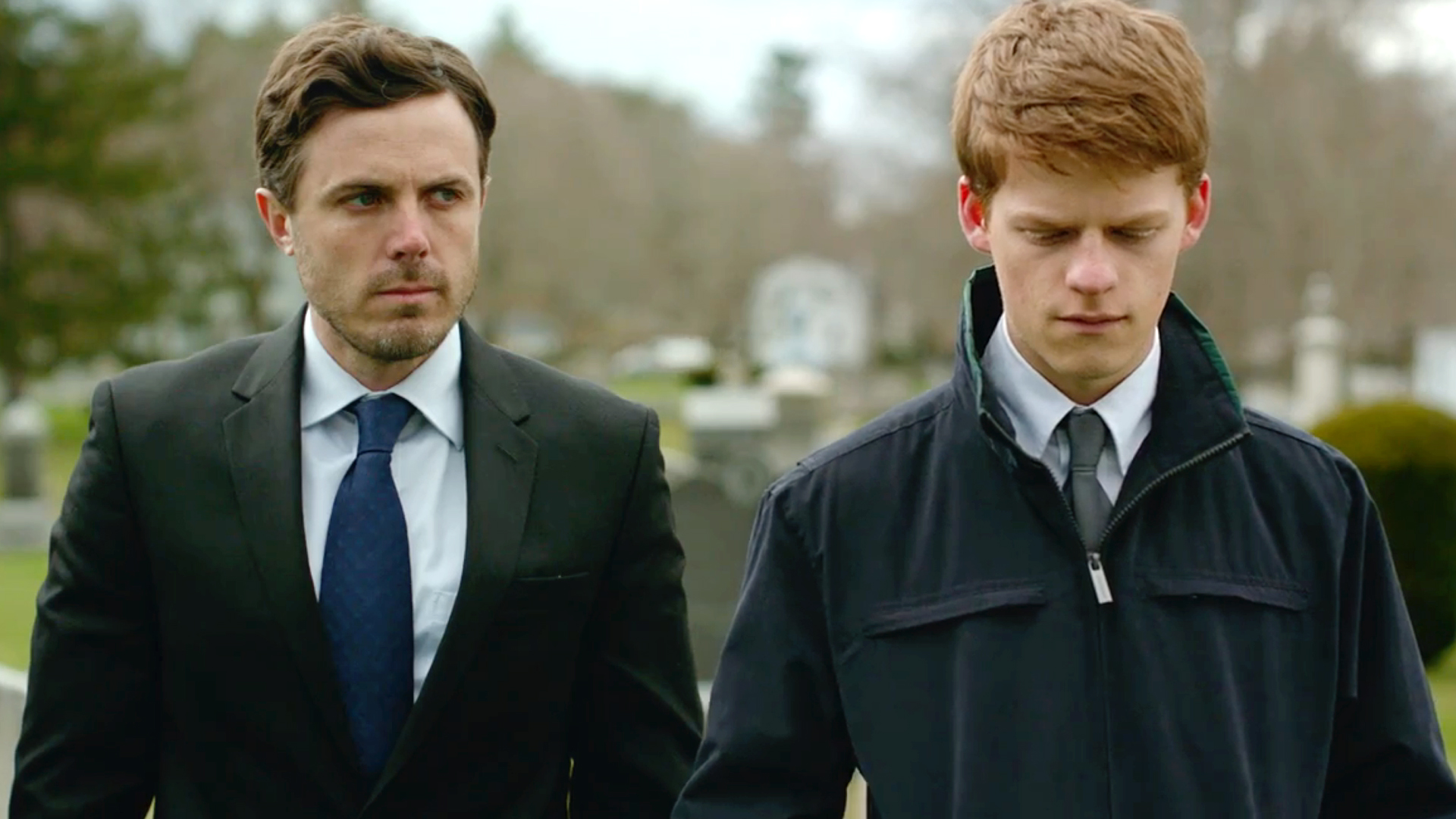
Wrought with tragedy, heartache and familial estrangement, writer/director Kenneth Lonergan’s “Manchester by the Sea” certainly isn’t an easy film to watch. You may find yourself fighting back tears or you may find yourself in a puddle of tears when the credits roll. However, thanks to a deliberate, gripping narrative style a magnificent performance from Casey Affleck and the use of humor to warm the film’s chilly demeanor, you’ll be unable to take your eyes off the screen no matter how somber the film gets.

“Manchester by the Sea” begins with a pleasant scene on the water in Manchester-by-the-Sea, Massachusetts, where Lee Chandler (Affleck) is on a fishing boat with a young boy. From there, the picture moves to Boston where we catch a glimpse into Chandler’s life as a handy man in an apartment building; he comes off apathetic and little defensive. At a bar one night, a woman purposefully spills her drink on him to strike up a conversation—he shows zero interest. And later on he picks a fight with a random patron.

Already there’s a sense of tension brewing beneath the surface of film; we wonder who this guy is and what the film is going to be about; maybe a lose slice-of-life feature about a troubled handy man? And why was he on that boat earlier? And who was that kid? Lonergan is in no hurry to provide answers. “Manchester by the Sea” moves at patient, steady pace; most of the scenes are extended, meticulously crafted single takes. Lonergan lets his camera linger on characters and interactions, capturing awkward silences and bits of trite small talk, allowing the scenes and the emotions within them to breathe.

A few scenes later, Lee receives a phone call informing him that his brother has passed away (and we don’t find this out until a few scenes after). So, he drives to his hometown Manchester-by-the-Sea to make funeral arrangements. Once there, he’s told that his deceased brother Joe (Kyle Chandler) made him the legal guardian of his adolescent son Patrick (Lucas Hedges), a role that Lee isn’t sure he can handle.


Scene by scene, as the layers of the film are delicately pulled back like a tightly wound thriller, Manchester By the Sea” blossoms into a tense and thoughtful drama about grief and tragedy-- specifically how it takes a hold of us, cripples us, and how sometimes we can never fully shake it. Character and plot details are revealed in this measured and organic manner. Lonergan doesn’t over explain nor talk down to his audience. Flashbacks involving Chandler’s ex wife Randie (Michelle Williams) and Joe (Kyle Chandler) are worked seamlessly into the mix. This new family tragedy brings up past trauma. It turns out Lee has been through some truly awful stuff that still haunts him, leaving him damaged and emotionally stilted.

Affleck is tremendous. Currently, he may be our most underrated male actor, probably because unlike his older brother Ben he’s primarily acted in independent films. His powerfully understated turn here may be his best work to date. Lee is guarded and introverted; he’s one of those guys that would rather hold back his tears and emotions than express them. In one of the best scenes, at a police station, after hearing some terrible news the camera focuses on him in medium shot, slowly zooming in, as he tries with all of his might to keep from bursting (You will be too, watching this scene). He’d rather bottle up his emotions and distract himself from grief than handle it head on, a tactic that works in the short-term but long term can be greatly damaging.

Much like the deliberate style in which the narrative unfolds, Affleck slowly unravels the nuances and dimensions of Lee’s character. He never has a big emotional outburst (he’s not that kind of person) but by the end he’s left raw and exposed, much more than the apathetic handyman at the beginning. Additionally, he has great chemistry with Hedges. Lee’s relationship with his nephew is authentically messy and rough around the edges. They’ll be fighting one minute and finding common ground the next.


Maybe the most surprising thing about “Manchester” is that it’s funny, sometimes really funny. Lonergan knows that even in serious and tense situations humor can find its way in, as a defense mechanism for social discomfort, or as a coping device. Though Lonergan isn’t careless—he knows when to sprinkle in bits of offbeat humor to ease tension and tempers and when to dial it back (during the bigger dramatic moments, like when we find out what happened to Lee in the past or a present confrontation with Randi) and let the drama/tragedy play out plainly.

“Manchester” isn’t a fun watch by any means, yet it’s always watchable. Multiple times I found myself leaning forward in my seat, biting my nails, unable to move. Lonergan’s morose familial drama is highly absorbing at every turn.

A


Wednesday, October 19, 2016

Certain Women Review (2016)


Not quite an anthology and not quite a “vignette” film, writer/director Kelly Reichardt’s patient, thoughtful “Certain Women” provides a glimpse into the mundane lives of three hardworking, ordinary women as they demand respect from those around them, try to make their mark on the world and seek out meaningful connections. For the most part, the picture is divided into three segments, each one focusing on a different woman, sort of like a short film.

The brilliance of “Certain Women” lies in Reichardt’s quiet and restrained approach-- an approach that puts all of the focus on character instead of plot and doesn’t talk down to the audience. The film is as understated as they come; Reichardt doesn’t spoon feed or over explain. A lot of the film’s substance is kept bellow the surface, implied through a facial gesture or a seemingly straightforward line of dialogue. While not confusing or intricate in terms of plot (in fact there’s not much in the way of plot), “Certain Women” still requires your undivided attention, as it’s a film about subtle gestures and observation.

Reichardt directs with unhurried grace and the three lead actresses (Laura Dern, Michelle Williams and Lily Gladstone) give impressively understated performances, performances that rely almost exclusively on subtle facial gestures and body language rather than lengthy monologues or dialogue heavy interactions.


The first segment focuses on Laura Wells (Dern), a small town lawyer. One of Laura’s clients, Fuller (Jared Harris, pathetic and heartbreaking. This might be his most tender, soulful performance) has been trying to sue his former employer for workers comp but is unable, making him mentally unstable and increasingly needy. This chapter is characterized by quiet frustration and guilt. You sense that Laura is dissatisfied with the way her career has been going thus far and feels like she isn’t being taken seriously. Fuller insists on meeting with another lawyer (a male lawyer) to tell him what she has been telling him for months.

There are times when Laura herself looks like she’s going to snap, at having to deal with such a needy, frustrating person. During a car ride, Laura has a look of utter irritation and anguish as she silently listens to Fuller complain about his life. Though, she also feels a sense of pity and regret—regret over the fact that she can’t do more to help her client. Again, most of this is implied rather than out rightly stated in the dialogue or action.

The second segment revolves around Gina Lewis (Williams), who’s currently in the process of building a house on a patch of land she purchased, along with her husband Ryan (James Le Gros) and angsty teen daughter Guthrie (Sara Rodier). This is probably the least compelling section in the entire film. Although Gina’s determination to get the house built and the underlying tension between her and her family is intriguing, the segment ultimately feels incomplete. The other two stories, as understated as they are, still have a sense of dramatic momentum and build to a satisfying conclusion. However, this story feels somewhat flat and anticlimactic.


And then there’s the final story, which is not only the best but also one that would make a great solo short film. It’s a tender, moving meditation on alienation and the distances we travel (literally and figuratively) to find and maintain meaningful connections with other people. An awkward, lonely horse ranch hand named Jamie (Gladstone) goes to a night school class taught by young overworked lawyer Beth Travis (Kristin Stewart). The two eat dinner afterwards at a nearby diner and Jamie develops an attachment towards Beth (whether Jamie’s attachment is plutonic or romantic is left up to you to decide) and keeps coming back to the class. The post class meals become the highlight of her day— giving her something to look forward to other than work.


As someone who’s also shy and often seeks isolation, this story resonated the most. Though I enjoy my alone time, I also greatly look forward to the meetings and interactions with my few companions. Even introverts need connections with other humans once in a while. Hell, we even treasure some of them. Throughout the day, I think Jamie is happy and content to take care of horses in isolation, but when she gets to see Beth, she’s ecstatic. During one night, the look of utter joy on her face as she silently gives Beth a ride on her horse to the diner is beautiful. Of all three stories, this one hit home and held me the entire way through, building to a bittersweet conclusion.

 “Certain Women” won’t be everyone’s cup of tea. Some will find it to be too slow or take issue with the film’s lack of plot. It’s not an easy film to watch, as it requires a lot of work on the part of the audience to find all the details and nuances. But for those who are patient enough, Reichardt’s picture proves to be a fascinating, varied portrait of women in smalltown America.

B+