Showing posts with label Viola Davis. Show all posts

Tuesday, December 20, 2016

Fences Review (2016)


I think we can all agree that Denzel Washington has been consistently strong for a while now even when the movies themselves haven’t been very good. Washington has primarily been in mediocre action films of late (“The Magnificent Seven,” “The Equalizer,” etc.) but he manages to bring a sense of authority and charisma to each one, always making him compelling to watch. He makes the most of his characters even when the writing isn’t there to support them.

In “Fences” (an adaptation of August Wilson’s Pulitzer Prize winning play) Washington is given a juicy, nuanced role to sink his teeth into, resulting in his best acting work in years. As the working class husband/father Troy Maxson, Washington’s performance is one of unfiltered swagger and bombastic charm. Though Washington also cuts deeper, revealing a flawed, world-weary man fraught with insecurity and bottled up emotional trauma.

Troy is a man who loves to talk. In a film that’s driven by dialogue his voice can be heard the most, sometimes not allowing others to get a word in. Whether it’s politics, race, his job as a sanitation worker or baseball he has seemingly unlimited opinions to spout. Troy has a knack for spinning compelling yarns, like when he playfully tells a familiar story about his three day struggle with pneumonia to his wife Rose (Viola Davis) and friend Jim Bono (Stephen Henderson), making the experience more dramatic than it probably was. It’s captivating to watch. If you were you to run into him in a bar you could listen to him to talk all night.


However, through all his talk, through Troy’s need to dominate whatever conversation he’s in, an aggressive, abusive personality reveals itself. He can be downright cruel and self-absorbed. He routinely criticizes others, tells others how to live their lives, without acknowledging his own shortcomings. Troy seems unable and unwilling to connect with his two sons, or anyone from that generation. He prides himself on being a blue-collar worker and uses that status to flex superiority over them and others, seeing no meaningful lifestyle outside of learning a skill and getting a manual labor job (one son wants to play college football, the other is a struggling musician). Overall, Troy is unable to move outside of his experience and point of view. It’s his way or the highway.

Yet it’s a hell of an experience. Troy’s aggression and stubbornness comes from a place of shame and fear—in regards his own turbulent family upbringing and his racial identity. He is after all a black man living in 1950’s America and though we never see any blatant racism we don’t need to. The context is there, in every passionate word he speaks. In the way a friendly conversation about baseball turns into a weighty, emotionally charged discussion of racism in American athletics. Troy’s loud and hostile exterior thinly veils a deep seeded vulnerability; it’s how he’s been able to keep his head up in these harsh times.

Washington’s multilayered performance of energetic highs and aching lows (inspiring both frustration and empathy.  Troy is highly imperfect but he isn’t a one-dimensional monster) is the beating heart of the entire picture.


The rest of the acting in “Fences” is aces, particularly Davis. Rose’s personality is much more timid than her husband’s and at first she comes off one dimensionally passive—the loyal and submissive wife/mother. Though as the film goes on, the character gradually becomes more explosive and emphatic. While still understated in comparison to Troy, Rose blossoms into an assertive three-dimensional character, with her own set of problems and unwilling to take Troy’s verbal abuse (and later infidelities) lying down. She’s one of the few characters that calls him out on his selfishness and thoroughly dresses him down at crucial moments. Rose holds her own, firmly and consistently reminding Troy that she’s there too. Yet she never fully sheds her compassion and loyalty towards Troy, recognizing that vulnerability in him and finding the good.


Regarding the rest of the film, Washington (who also directs) embraces the theatricality of the material. Everything in “Fences” is communicated through acting and Wilson’s energetic, roughly poetic dialogue. Washington’s camera sits quietly and passively like a curious observer (capturing the action primarily in medium shots) allowing the performers to do their thing and the writing to speak for itself. It’s a strategy that largely works because the performances and dialogue are so enthralling.

Though sometimes Washington’s faithfulness to the theatrical style and structure holds it back as a film. With most of the action confined to the family house, things can feel too stagey and static when it doesn’t need to be. It’s as close as you can get to theater onscreen short of filming a live theatrical performance. Considering the story takes place in Pittsburg, Washington could have explored that urban atmosphere a little more; the few instances where we see the characters interacting outside of the home give the film some much needed movement and sense of place. The picture could have benefited from more. It would have been great to see more of Troy at his job--that off-screen meeting between he and his white boss about becoming a truck driver, for example. There’s not much of an adaptation process, which isn’t seriously detrimental but it keeps “Fences” from being a great cinematic experience.

B


Tuesday, August 2, 2016

Suicide Squad Review (2016)


There’s a compelling nugget of an idea buried within the loud, CGI laden superhero stew that is “Suicide Squad.” That is: a “Dirty Dozen”-esque action/buddy film with imprisoned DC supervillains.

The idea of a group of vulgar, crazy, self-motivated, ice-cold killing criminals coming together for the purposes of good is intriguing and different enough to work in this current superhero film climate. Warner Brothers found the right writer/director in David Ayer (“Training Day,” “Fury” “Sabotage” and “End of Watch”) who has a proven track record for writing compelling tough guy characters on both sides of the law and writing funny, authentic tough guy banter for them to hurl at each other. With “Suicide Squad” Ayer is given a potentially strong cast of villains to do his thing.

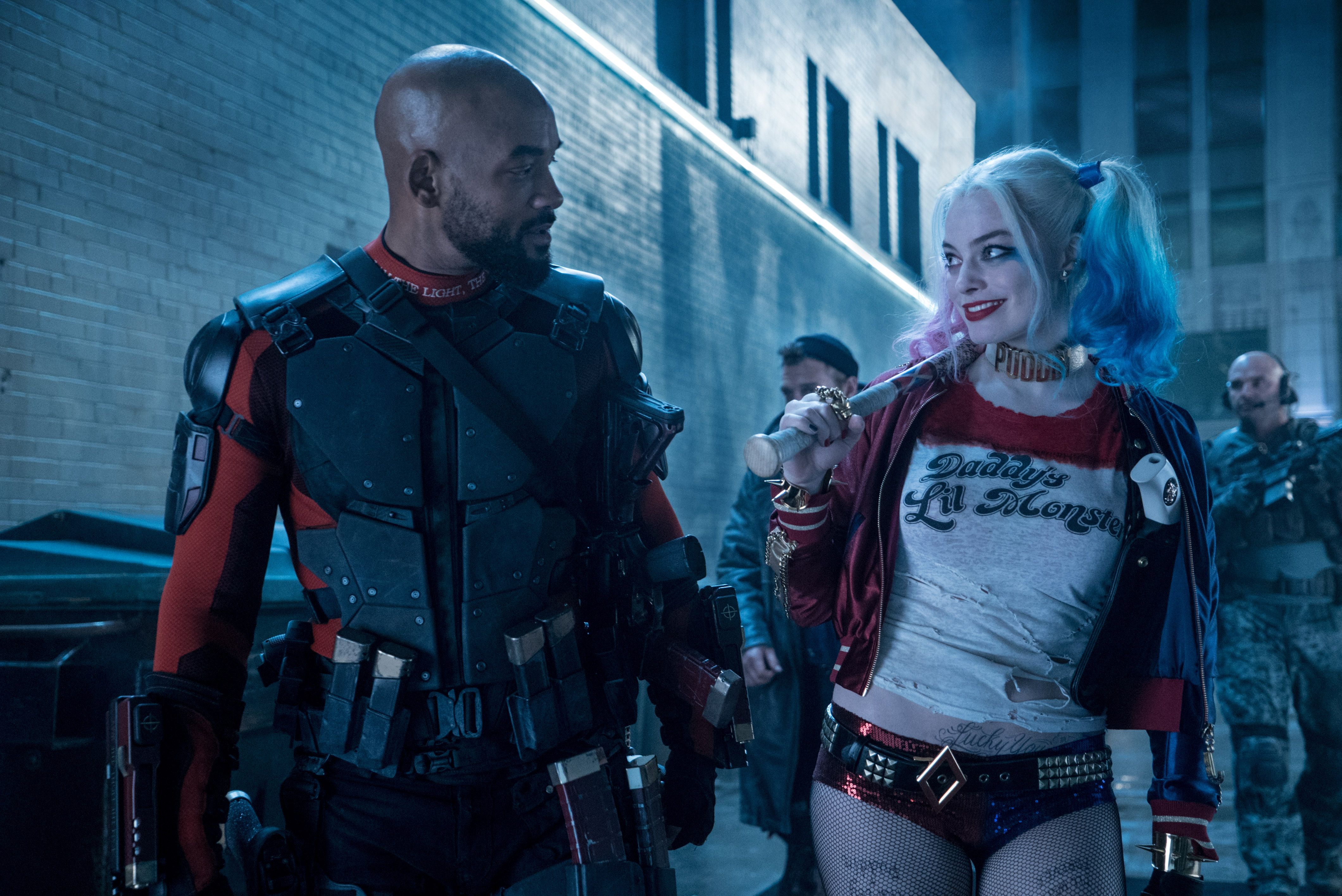
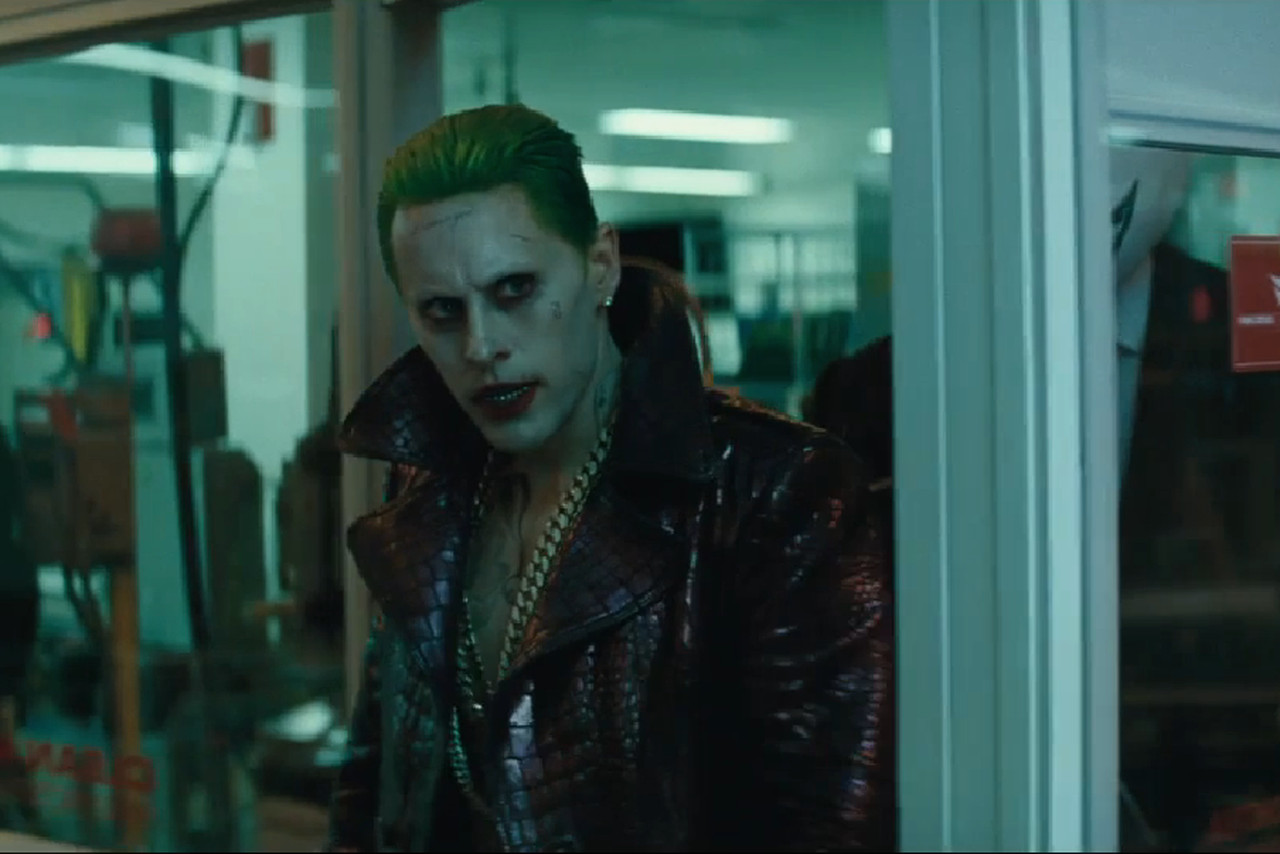
Our squad members include: the hit man Deadshot (a cocky, loose Will Smith that we haven’t seen in a while), the demented Harely Quinn (Margo Robbie, flirty, giggly, gleefully lethal), an Australian thief named Boomerang (Jai Courtney, who is surprisingly effective), a buff reptilian fellow called Killer Croc (Adewale Akinnuoye-Agbaje) and a Latino gangster version of the Human Torch, Diablo (Jay Hernandez).  In addition, the great Viola Davis plays the ice-cold government organizer of the squad and Joel Kinnaman plays a Spec Ops bro. Oh, and The Joker (Jared Leto) shows up sometimes.*

The picture is at its best when Ayer lets the squad shoot the shit together. If “Batman v Superman” was overwhelmingly gloomy and serious, “Suicide Squad” is more loose and playful because the characters (and the actors) look like they’re having fun. They’re have a good time being bad guys and being in the presence of other bad guys, trading jokes and insults. Unlike Superman, they don’t have to worry about etiquette or maintaining a public image. In fact they don’t give a damn what you think of them. Because of the PG-13 rating, the film isn’t quite as edgy or brash as it should be but the cast members still make their character’s malevolence and impoliteness apparent.


Unfortunately “Suicide Squad,” like a number of studio manufactured superhero movies, succumbs to certain nagging genre tropes and undercooked plot points that dilute the authentic stuff, namely, a one-dimensional antagonist with poorly defined abilities and motives. She is The Enchantress (Cara Delevingne), a witch from another dimension. It would be too lengthy and convoluted to explain exactly how she becomes a threat (in the movie it’s sloppily established) so lets just say she wants to destroy the world. How? Using a big beam of blue energy that shoots into the sky causing destruction somehow I don’t quite know how it works.  

All I know is that the “big-beam-of-energy-shooting–into-the-sky” cliché needs to go away. It’s a lazy, poorly established excuse for spectacle and CGI. This trope is part of the larger issue with “Suicide Squad:” it turns into yet another generic, predictable superhero spectacle with the group saving the day and stopping bigger supervillains. And in its attempt to be so epic and monumental (through the blurry, chaotically photographed action scenes and blaring orchestral score) it undercuts the tightknit, playful dynamic of its core characters. In other words, the film becomes dictated more by plot and spectacle than character.

It also doesn’t help that the beginning is bogged down in exposition and set up. There are a lot of characters to introduce and the picture does it in the blandest way possible. Using a top-secret government binder, Davis’ character quickly reads each of the characters names and attributes, which is followed by brief flashbacks. Riveting stuff, I know. There are simply too many characters for me to care about any of these introductions. I don’t need to see a Reader’s Digest version of Deadshot’s backstory, or Quinn’s. I don’t care if Deadshot has a daughter because the relationship is surface level.


Instead of giving us a bulleted list of the characters and flashbacks that slow the pace down it would have been better to just put these people together; establish their character and personality through interaction and experience, like Ayer did in both “Fury” and “Sabotage.” Let certain details of their backstory come out organically through conversation and the action they’re involved with presently. Once all the group members are set up at the beginning scarce character development happens in the later sections (with the slight exception of Diablo).


There are some funny one-liners and the enthusiasm and playfulness of the cast kept me from totally checking out. But for the most part, the back half of the picture is one dull, murky action scene after another--ultimately leading to a bigger, duller and murkier action sequence involving a torrential downpour of rain and that goddamn beam of blue energy.

I could go on but I think I’ll stop here. “Suicide Squad” is better than “Batman v Superman.” It’s more fun, it’s not as bloated nor does it feel like a commercial for upcoming DC Extended Universe movies (though it is clearly set after the events of “Batman v Superman”).

Sadly, that’s not saying much. The “Suicide Squad” itself is used to tell the same bland superhero tale we’ve seen before.

 C-


*Similarities to Heath Ledger are immediately apparent in the way Leto over enunciates his words and drags out his sentences. However, the Ledger Joker was an all out anarchist who wore a dorky purple suit while Leto plays more of an eccentric gangster. In addition to the white makeup and green hair, he’s tatted up, wears flashy suits and lots of gold bling, resembling a skinny Tony Montana. I wish I had more to say about him considering all the attention he and Leto’s method acting process got leading up to the film’s release but he makes a minor impression here; he could be cut without disrupting the movie. There is a romance between him and Quinn but there just isn’t enough room for it to blossom into anything substantial.