Showing posts with label Robert Pattinson. Show all posts

Thursday, August 24, 2017

Good Time Review (2017)


Good Time” is a tense and hypnotic ride through the streets of New York. Directed by up and comers Josh and Benny Safdie, the film tells the story of degenerate bank robber Connie Nikas (Robert Pattinson) who tries to get his mentally handicapped younger brother Nick (Benny Safdie) out of police custody following a heist. However, over the course of one exhausting night, with the cops on his trail, his life collapses into queasy neon lit chaos.

The Safdie Brothers, along with cinematographer Sean Price Williams capture this chaos via kinetic and intimate hand held photography— most of the time the characters are framed through tight, claustrophobic close ups. Accompanying this oppressive visual style is a loud, grinding, frenzied electronic score by composer Oneohtrix Point Never (complete with arcade game bleeps and blorps and even horror movie strings) that makes even the most mundane run through a deserted hospital hallway nail bitingly intense. Sometimes the score can feel overbearing and unnecessary, especially when it blares up during a casual conversation, undercutting the drama. But by and large it gives the film an eerie, otherworldly dimension.

 “Good Time” finds a sweet spot between rough around the edges realism and a disorienting, semi psychedelic stylishness. On the one hand, it uses handheld cameras, real locations, a low budget, and nonprofessional actors mixed in with established ones. The performances are energetic but natural, while the dialogue sounds conversational and unscripted. At the same time, the film is very deliberate in its frenetic editing, score and narrative tightness. The film is both freewheeling and meticulously crafted-- a dreamy and gritty urban odyssey.


Narratively, the picture is a high-octane tour through dingy, unglamorous New York and a visceral, dour crime film (a sort of modern, ADHD tinged “Mean Streets”) featuring a truly detestable screwup protagonist.

From the very beginning Connie is actively unlikable. He drags Nick out of a psychiatric program that he thinks is damaging to Nick and proceeds to immediately throw him into harms way, via the bank robbery. Connie is reckless and self-centered. He sets out on his mission to bail Nick out of jail, relying on the generosity and resources of friends (his older girl friend, played by Jennifer Jason Leigh, tries to use her mother’s credit card) and random strangers. In his reckless and single-minded ways, Connie screws over just about every person he comes into contact with, including a sixteen-year-old girl (played by Taliah Webster). He’s a running disaster.

It can be difficult to watch “Good Time” because of all this; many times I wished for Connie to get apprehended or simply hit by a bus. He’s not even a sympathetic or a tragic figure and there isn’t much character growth. Scene after scene he continues on a downward spiral, on a mission that was doomed from the start. By the end, I rooted for his inevitable demise. However, what makes Connie’s disastrous odyssey at least partially fascinating is his delusional and gradually destructive entitlement. Connie spends the entirety of “Good Time” taking advantage of others (taking their cars, phones, apartments) while still viewing himself as the victim--blaming others for his own idiotic screw-ups. At one point he even accuses another person he meets named Ray (Buddy Duress) of being entitled and dependent on welfare. Uh, didn’t you just force your girlfriend to use her mother’s credit card for bail money a few hours ago?
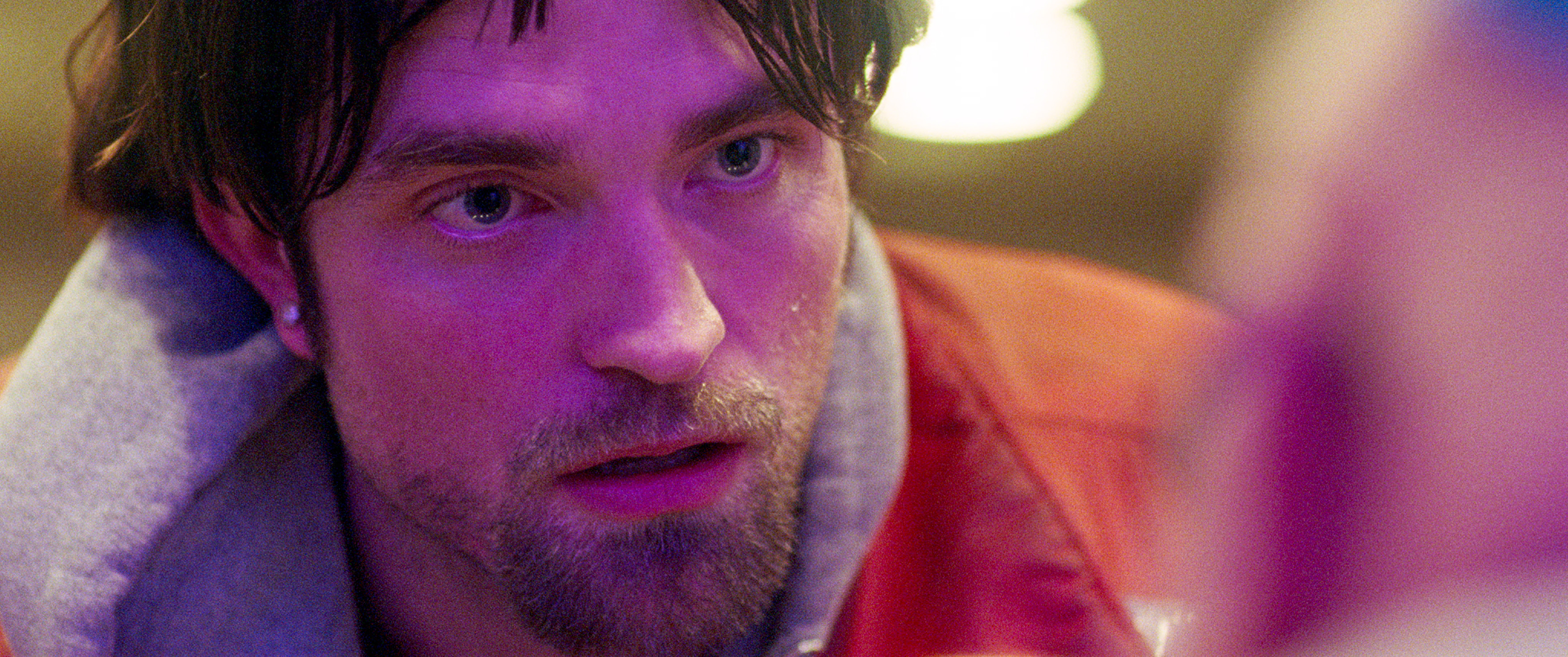


As the film moves along Connie’s sense of entitlement strengthens and his actions become increasingly heinous. His lowest moment comes near the end when he and Ray break into a closed amusement park to retrieve a hidden sack of drug money. When he encounters the security guard, (played by Oscar nominee Barkhad Abdi) Connie beats him to a pulp, force feeds him liquid LSD and takes his uniform as the cops arrive, essentially stealing his identity and framing this poor man for his own crime.


Pattinson is terrific as Connie—nervous and unhinged in a way that never turns into caricature or becomes melodramatic. Like Kristen Stewart, he’s blossomed into a superb actor post “Twilight,” able to disappear completely into every role he takes on. As gloomy and infuriating as “Good Time” can be, Pattinson’s commitment and energy to such an unpleasant character, along with the Shafdi Brother’s kinetic style, make it intense and absorbing.

B

Wednesday, April 5, 2017

Queen of the Desert Review (2017)


German director Werner Herzog is usually at his best when he tackles ambitious, obsessive, larger-than-life (and a little delusional) explorers and thrill seekers who create their own destiny and try to make a name for themselves whatever physical or psychological cost. Characters that somewhat mirror Herzog’s own drive as an artist and explorer. Sometimes these characters fail miserably, like in the case of “Aguirre: The Wrath of God” or “Grizzly Man,” and sometimes they succeed like in “Fitzcarraldo.” Either way, it’s an unforgettable and hypnotic cinematic journey.

Unfortunately, in the case of his latest picture “Queen of the Desert,” about the life of explorer Gertrude Bell, the journey is mostly just dull and repetitive, which is especially disappointing. Even Herzog’s lesser films are still eccentric and enigmatic enough to hold your interest.

Born to an affluent family, Bell (Nichol Kidman) quickly escaped a life of bland domesticity in England and headed off for the Middle East. At the dawn of the twentieth century she traveled around Greater Syria, Mesopotamia, Asia Minor and Arabia, writing down her observations, working as an archeologist and made lasting friendships and political partnerships with the native people. Eventually her work was used by the British government to establish the countries of Saudi Arabia, Iraq and Iran following the Arab revolt.


 “Queen of the Desert” may be Herzog’s most glossy and romanticized film. The seventy four year old director loves the infinite sun drenched sand dunes (with people on camelback crossing over them) contrasted against the cloudless, baby blue sky. And as the title suggests, Herzog clearly has great affection and admiration for his subject—portraying Bell in such a radiant and glamorous light. She’s intelligent and fiercely independent--traversing this dangerous terrain unescorted with confidence and some stubbornness. At the same time, Bell is graceful and down to earth in her interactions with the local people. She treats them as fellow human beings (with respect and dignity) and not as imperial subjects, or worse, as “the other.”

However, “Queen of the Desert” never finds its footing. This is partly due to the picture’s immense scope and traditional biopic structure; there’s enough material here to fill a three-hour film or a miniseries. But at two hours and eight minutes the picture feels frustratingly abbreviated—mechanically moving through various chapters in Bell’s life without any of them really making an impression. Bell’s expeditions and meetings with different Arab tribes are interesting but far too brief in duration. During one expedition, there’s a great moment where Bell bonds with a Sheik over their shared love of the poet Virgil. But after this quick moment of genuine and unexpected human-to-human connection the action cuts to Bell’s next expedition. It would have been nice to see more of her interactions with this particular Sheik and his people.

The expeditions should be the meat of the film but far too often they fizzle out or get glossed over so Herzog can have more repetitive “Lawrence of Arabia”-esque montages of Bell riding her camel through the desert, or showing her writing in her journal, or pensively staring out into the horizon. Furthermore, the film’s abbreviated nature renders the Arab people that Bell comes into contact with one-dimensional. Even Bell’s trusted assistant/guide Fattuah, (Jay Abdo) who was apparently important enough in real life to warrant his own epilogue in the film’s closing minutes is treated like a thinly sketched acquaintance.


The only material that makes any kind of lasting impression is Bell’s romantic life. Herzog devotes a large chunk of the movie to Bell’s affair with British Embassy secretary Henry Cagdon (James Franco) and later she has an affair (mostly via letters) with British army officer Charles Doughty-Wylie (Damien Lewis). This is all well and good but considering “Queen of the Desert” is about an independent minded explorer it feels weird (and little insulting) that her romantic life is the only resonant aspect of the film.

 Near the end, the picture introduces a potentially interesting wrinkle: the tension between Arab independence and British colonialism. Even after helping them revolt against the Ottoman Empire, Britain still wanted control/influence over that area. After all, they’re the ones who cut up the land and determined the boundaries of those countries. However this intriguing dilemma (and Bell’s own conflicted role in it) comes too late and ends up feeling like an afterthought, another stale bullet point. In its attempt to be a sweeping period romance, a biopic and an epic adventure picture, “Queen of the Desert” is ultimately bland and unfocused.

 C-