Wednesday, September 6, 2017

It Review (2017)


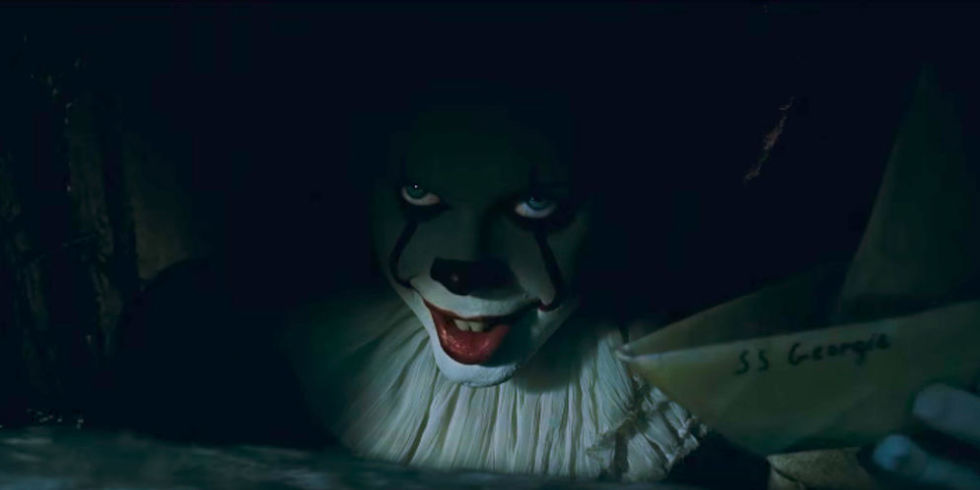
The biggest problem with “It” (an adaptation of horror master Stephen King’s 1986 novel of the same name) is that it’s, well, not very scary, which is disappointing considering the premise involves a shape shifting supernatural being (who primarily takes the form of a demonic looking clown called Pennywise) that torments and feeds on children.

The prologue is admittedly terrific—a tense, drawn out scene that takes place on a dark and stormy afternoon and involves a doomed little boy and his paper boat. Its juxtaposition of imagined, childhood terror (being afraid of the basement) and absurd but very real terror (a demonic clown in a sewer) is ominously unsettling and the scene culminates in one of the most shocking, gruesome movie moments of the year. You may have seen a condensed version of this scene before “Annabelle: Origins” a few weeks ago but trust me you didn’t see the pay off.  

After that, however, most of the remaining scares don’t quite match the intensity of the opening. Instead of using subtlety and the gradual building up of dread, “It” wants to immediately grab and shake you scene after scene. The terror sequences (particularly the nightmare visions that Pennywise concocts to taunt and frighten his kid victims) often feel overblown and strained. There’s a heavy reliance on gore and gross out, too much ear shattering horror movie bass and an overbearing score by Benjamin Wallfisch. The film’s scares eventually become exhausting and repetitive.


The lack of real terror in “It” is partly due to the fact that the screenplay (by Chase Palmer, Cary Fukunaga and Gary Dauberman) balances nostalgic, “Goonies”-esque adventure and gnarly R rated horror with mixed results. The plot revolves around the lives of seven kids in the town of Derry, Maine. Right on the cusp of puberty, the group consists of: Bill, (Jaeden Lieberher) Ben, (Jeremy Ray Taylor) Beverly, (Sophia Lillies) Richie, (Finn Wolfhard) Mike (Chosen Jacobs) Eddie, (Jack Dylan Grazer) and Stanley (Wyatt Oleff). Stalked by Pennywise (Bill Skarsgard) the kids join forces to defeat the demonic clown before “it” kills them.

Along the way, they learn to appreciate their friendship with one another, come to terms with their growing, changing bodies and overcome their deep seeded fears/personal traumas. Adults in the film are nonexistent, inconsequential or outright abusive.  So, it’s up to the kiddies to take care of their own problems. Overall, director Andy Muschietti captures the childishness of the central septet extremely well. They sound and act like naïve, stupid kids; the immature trash talking and ribbing between the boys is embarrassingly authentic. In his overly talkative, cocky ways, the character of Richie will drive you crazy until you remember that you probably had a friend like him who thought he was funnier than he really was (and in actuality, very insecure). Or, perhaps you were that person in your friend group.

Also appreciated is the film’s focus on character. Over the course of the two hour and fifteen minute run time, each kid is sufficiently fleshed out, making the group’s climactic battle with Pennywise absorbing and their subsequent cheesy bonding moment feel earned. They’ve all got some kind of substantial personal trauma to beat, (whether it be guilt over a loved ones death, sexual abuse or hypochondria) which sounds a little contrived but Muschietti handles these traumas with honesty and sensitivity. In a genre that often takes characterization for granted, I appreciate that Muscietti and co. take the time to develop likable, relatable young characters.


Ultimately, as a comic-horror coming of age adventure, “It” can be quite fun and heartfelt. But the film also wants to scare you like a straightforward horror movie. There are a handful of creepy and disturbing moments yet nothing gets under your skin or haunts your psyche the way great horror films do. Outside of the opening, I was never shaken or tense. The film didn’t make me dread going to sleep afterwards. There’s a lot more comedy in the film than I expected, which is fine but it also undercuts the attempts at legitimate horror, creating a sense of safety and distance rather than unease.

For what its worth, Skarsgard is menacing and demented as Pennywise. He’s not in the movie as much as you’d expect, keeping the character mysterious and therefore more terrifying. Thankfully, the film avoids going into extensive background on Pennywise and actually leaves a great deal out from King’s original novel, preventing the narrative from being overstuffed.


In the end, I walked out of “It” feeling both satisfied and underwhelmed: pleased with the coming of age material and characters but disappointed with the execution of the horror elements.

B-

Thursday, August 24, 2017

Good Time Review (2017)


Good Time” is a tense and hypnotic ride through the streets of New York. Directed by up and comers Josh and Benny Safdie, the film tells the story of degenerate bank robber Connie Nikas (Robert Pattinson) who tries to get his mentally handicapped younger brother Nick (Benny Safdie) out of police custody following a heist. However, over the course of one exhausting night, with the cops on his trail, his life collapses into queasy neon lit chaos.

The Safdie Brothers, along with cinematographer Sean Price Williams capture this chaos via kinetic and intimate hand held photography— most of the time the characters are framed through tight, claustrophobic close ups. Accompanying this oppressive visual style is a loud, grinding, frenzied electronic score by composer Oneohtrix Point Never (complete with arcade game bleeps and blorps and even horror movie strings) that makes even the most mundane run through a deserted hospital hallway nail bitingly intense. Sometimes the score can feel overbearing and unnecessary, especially when it blares up during a casual conversation, undercutting the drama. But by and large it gives the film an eerie, otherworldly dimension.

 “Good Time” finds a sweet spot between rough around the edges realism and a disorienting, semi psychedelic stylishness. On the one hand, it uses handheld cameras, real locations, a low budget, and nonprofessional actors mixed in with established ones. The performances are energetic but natural, while the dialogue sounds conversational and unscripted. At the same time, the film is very deliberate in its frenetic editing, score and narrative tightness. The film is both freewheeling and meticulously crafted-- a dreamy and gritty urban odyssey.


Narratively, the picture is a high-octane tour through dingy, unglamorous New York and a visceral, dour crime film (a sort of modern, ADHD tinged “Mean Streets”) featuring a truly detestable screwup protagonist.

From the very beginning Connie is actively unlikable. He drags Nick out of a psychiatric program that he thinks is damaging to Nick and proceeds to immediately throw him into harms way, via the bank robbery. Connie is reckless and self-centered. He sets out on his mission to bail Nick out of jail, relying on the generosity and resources of friends (his older girl friend, played by Jennifer Jason Leigh, tries to use her mother’s credit card) and random strangers. In his reckless and single-minded ways, Connie screws over just about every person he comes into contact with, including a sixteen-year-old girl (played by Taliah Webster). He’s a running disaster.

It can be difficult to watch “Good Time” because of all this; many times I wished for Connie to get apprehended or simply hit by a bus. He’s not even a sympathetic or a tragic figure and there isn’t much character growth. Scene after scene he continues on a downward spiral, on a mission that was doomed from the start. By the end, I rooted for his inevitable demise. However, what makes Connie’s disastrous odyssey at least partially fascinating is his delusional and gradually destructive entitlement. Connie spends the entirety of “Good Time” taking advantage of others (taking their cars, phones, apartments) while still viewing himself as the victim--blaming others for his own idiotic screw-ups. At one point he even accuses another person he meets named Ray (Buddy Duress) of being entitled and dependent on welfare. Uh, didn’t you just force your girlfriend to use her mother’s credit card for bail money a few hours ago?


As the film moves along Connie’s sense of entitlement strengthens and his actions become increasingly heinous. His lowest moment comes near the end when he and Ray break into a closed amusement park to retrieve a hidden sack of drug money. When he encounters the security guard, (played by Oscar nominee Barkhad Abdi) Connie beats him to a pulp, force feeds him liquid LSD and takes his uniform as the cops arrive, essentially stealing his identity and framing this poor man for his own crime.


Pattinson is terrific as Connie—nervous and unhinged in a way that never turns into caricature or becomes melodramatic. Like Kristen Stewart, he’s blossomed into a superb actor post “Twilight,” able to disappear completely into every role he takes on. As gloomy and infuriating as “Good Time” can be, Pattinson’s commitment and energy to such an unpleasant character, along with the Shafdi Brother’s kinetic style, make it intense and absorbing.

B

Tuesday, August 15, 2017

Logan Lucky Review (2017)


While watching “Oceans Eleven” back in 2001 did you ever wonder what that heist comedy (directed by prolific auteur Steven Soderbergh) would be like if it was not about glamorous thieves robbing a snazzy Las Vegas casino but about a group blue collar folks from West Virginia and North Carolina who decide to rob a NASCAR track? Well, Soderbergh did, and he’s come out of retirement (from feature filmmaking) to make “Logan Lucky--” the exuberant redneck “Oceans Eleven” remake you didn’t know you wanted.

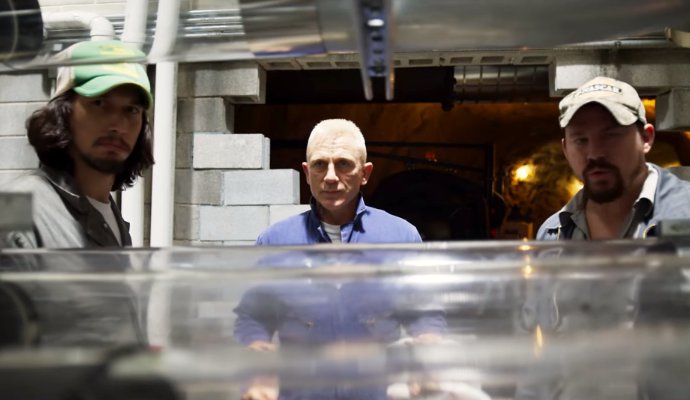
The film primarily revolves around brothers Jimmy (Channing Tatum, in his fourth collaboration with Soderbergh) and Clyde Logan (Adam Driver) who are down on their luck. Jimmy was a high school football star/failed NFL prospect, while Clyde got his hand blown off in Iraq. Believing that their entire family is cursed, they decide to rob the Charlotte Motor Speedway during a major race. It’s one of those elaborate, outrageous heists that can only be pulled off in the movies. Among other components, the brothers will need to break well-known safe buster Joe Bang (Daniel Craig) out of jail for the job and then sneak him back into jail without anyone noticing. The Logan brothers also enlist the help of Joe’s brothers, Sam (Brian Gleeson) and Fish (Jack Quaid).


Despite how that plot synopsis might read, the dramatic stakes aren’t particularly high in “Logan Lucky.” The picture’s tone is loose and playful, while the pacing is relaxed all the way through. The mechanics of the heist can be confusing and not a lot of things really go wrong, even during the extended heist sequence itself. There are a few minor narrative hiccups the characters run into along the way but overall everything goes very smoothly, perhaps too smoothly for a film about a heist. In this regard,  “Logan Lucky” can feel predictable.

On top of that, the motivation for wanting to rob the racetrack in the first place is hazy and lacking in urgency. Soderbergh and screenwriter Rebecca Blunt (who may or may not be a real person) don’t establish the Logan brothers as desperate people who are caught in a bind and forced to commit a crime. Yes, they’re middle to lower class and Jimmy loses his blue-collar job at the beginning but the decision to execute the heist is treated very casually. That might have been okay, except that the film also doesn’t establish these characters as the career criminal types who would want to pull off such an elaborate crime.


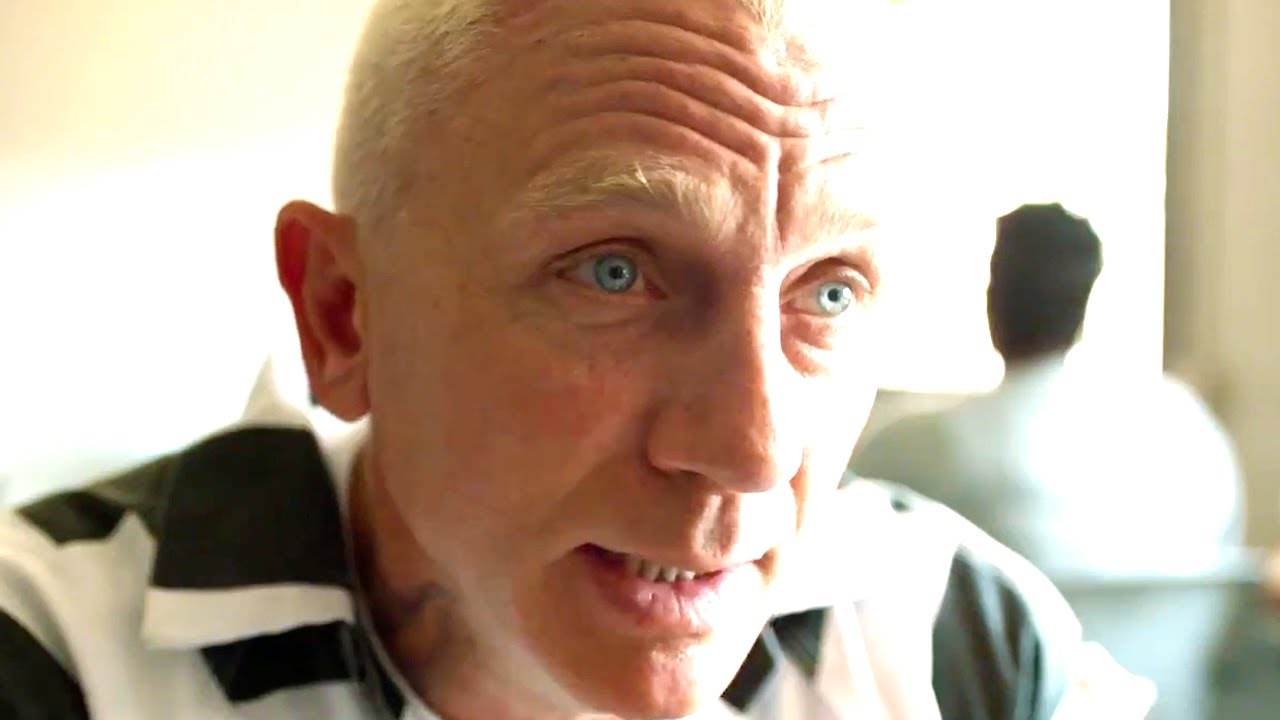
And yet, “Logan Lucky” is still a lot of fun, primarily due to the cast and Blunt’s witty screenplay. In addition to Tatum and Driver, who turn in amusing and earnest performances, Soderbergh assembles a superb ensemble cast made up of young and old talent including: Daniel Craig, Riley Keough, Katie Holmes, Dwight Yoakam, Hilary Swank and Katherine Waterston, among others. Some of these actors only pop in for a scene or two (usually in a nonchalant manner) but they always make a memorably goofy impression. Also, can I say how great it is to see Craig playing a character that isn’t Bond, especially an eccentric, bleach blonde haired safe buster? Mr. Craig, you’ve been missed.

Aside from the cast, what keeps us engaged in “Logan Lucky” are the small comedic moments and details rather than the broad narrative beats. The nutty, bumbling interactions between the Logan and Bang brothers as they painstakingly plan the robbery. Those little quirks that make the characters feel human instead of comedic caricatures (Clyde’s insistence that he lost his hand and not his arm). Those off beat, absurdist scenes that make you forget about the film’s predictable nature.

For example, the Logan brothers meet one of Joe’s contacts nicknamed “The Bear” to acquire some materials for the heist, who turns out to be a man in a bear suit; a delightfully out of left moment that generated a hardy laugh from the audience at my preview screening. On a scene-by-scene basis, “Logan Lucky” is packed with laughs. It may not be great but Soderbergh’s return to filmmaking is a light, entertaining affair.

 B


Thursday, August 3, 2017

The Dark Tower Review (2017)


Nikolaj Arcel’s “The Dark Tower (based on the seven book series by Stephen King) is a jumbled mess of Sci fi, Fantasy and Western. We’re thrown into a brand new world and introduced to a fresh, fairly complicated mythology. When done well, this can be a wondrous experience (think “Star Wars”) but  “The Dark Tower” is frequently confusing and sometimes plain incoherent. Arcel moves the action along quickly-- at the expense of valuable world building and character development. Reading the Wikipedia entry on the entire series after my screening provided some clarification about what went on but I shouldn’t have to do that. The picture doesn’t stand on its own feet.

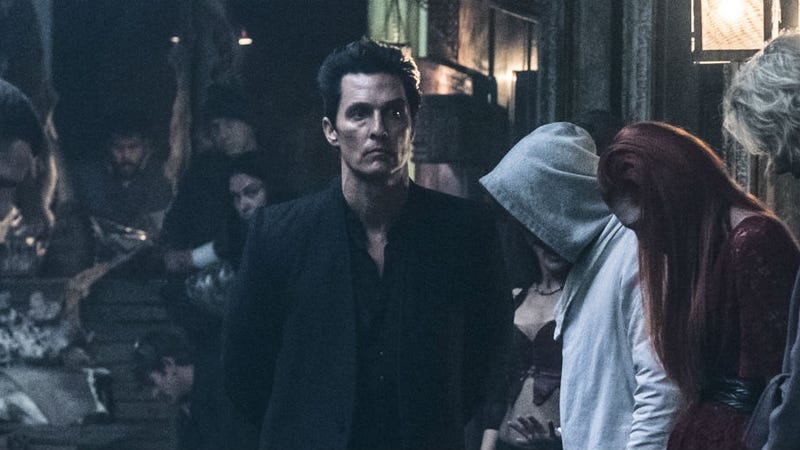
In the “Dark Tower” universe, there are two earths: the regular earth with technology and civilization and a second earth that’s in a barren, post apocalyptic state. At the center of the universe is The Dark Tower, a literal dark tower that keeps things in balance and prevents a force of demons from invading the worlds. The antagonist of a story is The Man In Black, (played with campy menace by Matthew McConaughey) a sorcerer who wears black and has telekinetic powers and really likes killing people. He wants to destroy The Tower and let the demons in because…he’s evil? That’s pretty much the extent of his motivation. How will he do this? He’s somehow built a state of the art power station on Earth 2, which has a device that can transform children’s minds into energy bolts because only children’s minds can destroy The Tower apparently. You still with me?

To assist him in his master plan, The Man has an army of loyal creatures that wear human suits for some reason. Are they aliens? Mutants? Demons? Do they originally come from Earth Two? How did they come into contact with The Man and why do they serve him? Are they at all connected with the force of demons threatening to break in? None of these questions are answered. Some of the human suit creatures also live on Earth One, blending in with regular society, so they can abduct more kids. They take them back to Earth Two using a portal. Oh yeah…there are also portals between worlds.


There’s plenty more but I’m starting to get a headache. Unlike a traditional adaptation that would center on one book, this film apparently incorporates elements from all seven "Dark Tower" books, making for an extremely messy result. All of this Sci fi/fantasy material is haphazardly crammed into a relatively brisk hour and thirty-five minutes, rendering it trite and surface level. A longer run time might have actually provided some clarity and depth. The picture has to cover so much ground that this universe never feels like a coherent, three-dimensional space. The screenplay by Arcel, Akiva Goldsman, Jeff Pinkner and Anders Thomas Jensen is utterly sloppy and lacking in focus while Arcel’s direction is rushed; the internal logic goes from inconsistent to nonsensical. In general, I don’t need every plot point and bit of exposition to be sounded out but this movie plays out as though everyone in the audience is as well versed in the “Dark Tower” mythos as King is. It feels like the third or fourth film in a series rather than an introductory chapter.

As a result of all this confusion, “Dark Tower” is flat line most of the time as it rushes through its convoluted story. There’s little in the way of tension or suspense; the central threat (demons trying to invade the universe) is hollow and vaguely defined. Making matters worse, the plot builds to the predictable and bland climactic fight sequence that’s become commonplace in recent super hero films. The movie doesn’t quite come down to an inter-dimensional portal having to be closed but it’s pretty close to that.


Luckily, the casting is superb. McConaughey looks like he’s having a blast and Idris Elba is very good as the film’s co protagonist, a supernatural/mythical gunslinger named Roland Deschain who wants to kill The Man in Black. Elba is cool and understated, with a touch of deadpan humor. The scenes where he visits New York on Earth One contain some wonderful fish-out-of-water humor. Honestly, I stopped caring about Elba’s character (the mythology involving Deschain is just as muddled and poorly defined as the rest of the film) and kept thinking about how great it would be for the forty four year old actor to be the gunslinger in an actual Western. He’s certainly got the swagger and gravitas; the scene where Deschain takes on an entire room full of human suit creatures with only two six shooters is giddy and exhilarating.

Thanks to Elba and McConaughey, “The Dark Tower” is never entirely unwatchable but they belong in a much better, more cogent film.

D+ 

Thursday, July 27, 2017

Atomic Blonde Review (2017)


David Leitch’s “Atomic Blonde” is a sleek and stylish action/thriller set at the tail end of the Cold War. It’s easy to get lost in the airbrushed 80’s aesthetic, Jonathan Sela’s lush, meticulously crafted visuals and the all around unruffled attitude the film (and its characters) exhibits in every frame. There is a plot but it’s extremely rote and superficially complex; at about the halfway point I simply stopped caring about where things were going. Still, the picture oozes style. It’s more about secret agents looking cool and smoking cigarettes and beating each other up than anything else. Furthermore, the film is bolstered by a magnetic Charlize Theron who plays the titular badass blonde, a character that combines the classiness of James Bond with the brutality of John Wick.

Visually, “Atomic Blonde” is marked by two distinct styles: during the day the color palette is muted, dominated by grey and white. But at night, Berlin transformers into a neon lit wonderland--multicolored lights are everywhere, at the various bars and clubs. A cramped, unassuming watch shop where cold war spies sometimes do business is lit in curious green. The hotel room where MI6 agent Lorraine Broughton (Theron) stays is aggressively lit by blue, pink and red. In fact, the neon lighting appears to be installed underneath and behind her bedframe. The lighting design gives the film a seedy yet romantic glow.

The various spies and authority figures that populate “Atomic Blonde” are always cool and mysterious, trying to act nonchalant (and not doing a very good job at it most of the time. They really do a poor job of blending in with their environment) as they conduct their shady spy business in the streets of paranoia drenched Berlin and fight one other. Relationships are surface level and loyalties are for sale--the characters are driven by their own agendas. They walk around with a detached, self-assured swagger. Leitch turns Berlin into a colorful, hypnotic labyrinth, teeming with Cold War dread.


The coolest and most mysterious of the characters is Lorraine. She wears nothing but snazzy outfits— a new elegant and sexy dress every night. During the daytime she wears a pristine white pea coat, red heels and large shades, an outfit that compliments her straightened blonde hair. Lorraine’s movements are graceful and calculating. She knows instinctively when she’s in trouble, or being set up (which happens a lot in this movie) and quickly switches into action mode. Her hands turn into lethal melee weapons and she takes care of business, looking good while doing it. Even when Lorraine simply sits in her neon lit hotel room smoking a cigarette she emits an effortless glamour, like a Femme Fatal in an old school film noir. Theron is mesmerizing. Understated and ruthless, cold and detached but also very aware of the alluring effect she has on the men around her, which she uses to her advantage. 

The espionage narrative is expectedly twisty and underwhelming. It’s simultaneously convoluted and not as clever as it thinks it is. Most of the major plot twists and character revelations are obvious long before they happen. The screenplay by Kurt Johnstad (based on a graphic novel series by Antony Johnson and Sam Hart) relies on a lot of well-worn spy movie clichés. Lorraine and the rest of the characters are after a top-secret list containing the true identities of thousands of agents from the around the world, an overused MacGuffin. Overall, the film contains a lot of bland, familiar plotting that adds up to very little.


 Ultimately, “Atomic Blonde” is too derivative and muddled to be a great film but it’s still entertaining thanks to its enthralling style and Theron’s onscreen radiance. There’s also a much buzzed about five minute long single take action sequence that’s a real doozy. It’s captured with a blunt handheld clarity. The melee combat is brutal and visceral (you can feel every punch, kick and shove) and clumsy and sluggish at the same time.  Lorraine and the various henchmen take turns slugging each other and then go to catch their breath. It plays out in a more realistic manner, rather than being choreographed like a dance. The sequence is exhilarating and it gives Lorraine’s character a layer of vulnerability. It might be worth the price of admission alone.


B-